
| |
|
|
 Look for the Math Around You: Patterns by Alice Aspinall English | November 18, 2020 | ISBN: 1777473233 | 54 pages | PDF (conv) | 44 Mb Look for the Math Around You: Patterns is a collection of real-life photos with question prompts to help start math conversations with children. Patterns are everywhere - in nature, our homes, in the classroom, and even on clothes! When children notice patterns in the world around them, they begin to make connections to patterning and algebra concepts in mathematics. Perfect for reading at home or in the classroom, this book will help children see math in their daily lives. Use the prompts or go off-script and have fun looking for the math around you!  Look for the Math Around You: Geometry by Alice Aspinall English | November 18, 2020 | ISBN: 1777225582 | 54 pages | PDF (conv) | 61 Mb Look for the Math Around You: Geometry is a collection of real-life photos with question prompts to help start math conversations with children. Shapes, lines, and angles are everywhere around us; together, they make up the beauty of our world. When children can see geometry concepts all around them, they begin to make connections to what they learn about in the classroom. Perfect for reading at home or in the classroom, this book will help children see math in their daily lives. Use the optional prompts or go off-script and have fun looking for the math around you!  Look for the Math Around You: Estimation by Alice Aspinall English | November 18, 2020 | ISBN: 1777473209 | 54 pages | PDF (conv) | 32 Mb Look for the Math Around You: Estimation is a collection of real-life photos with question prompts to help start math conversations with children. Estimating is a skill we use every day. When children learn to hone their estimating skills, they begin to estimate everything around them - correct answers to math problems, materials needed for an art project, and even how long it will take them to fold their laundry! Perfect for reading at home or in the classroom, this book will help children see math in their daily lives. Use the optional prompts or go off-script and have fun looking for the math around you!  Norman Bancroft Hunt, "Living in Ancient Mesopotamia" English | 2008 | ISBN: 0816063370 | 96 pages | PDF | 28,9 MB Living in Ancient Mesopotamia covers the period from 4000 BCE (Sumer) and 1000 to 500 BCE (Assyria and Babylonia). It examines the day-to-day lives of ancient Mesopotamians, from kings and priests to slaves.  Leonard Cohen on Leonard Cohen: Interviews and Encounters (Musicians in Their Own Words) by Jeff Burger English | August 1, 2015 | ISBN: 1613731787 | 624 pages | EPUB | 1.77 Mb Leonard Cohen, one of the most admired performers of the last half century, has had a strange and eventful life. Now, for the first time, he tells his story in his own words, via more than fifty interviews conducted worldwide between 1966 and 2012. 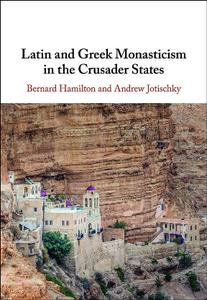 Latin and Greek Monasticism in the Crusader States by Bernard Hamilton and Andrew Jotischky English | 2020 | ISBN: 0521836387 | 565 Pages | PDF | 6.56 MB  James Deem, "Kristallnacht: The Nazi Terror That Began the Holocaust " English | ISBN: 1598453459 | 2011 | 128 pages | EPUB | 10 MB On November 10, 1938, Francis Schott slept peacefully in his bed. Suddenly, a group of Nazis broke into his house and began to destroy it. They wanted to demolish everything because Francis's family was Jewish. For days, violent attacks like this took place throughout Nazi Germany and came to be known as Kristallnacht, the "Night of Broken Glass." The Nazis destroyed thousands of Jewish homes and businesses, burned down hundreds of synagogues, and murdered many people. The brutal assault came to an end, but it marked the beginning of something much worse: the Holocaust.  Jesus for the Non-Religious By John Shelby Spong 2007 | 341 Pages | ISBN: 0060762071 | PDF | 2 MB Writing from his prison cell in Nazi Germany in 1945 Dietrich Bonhoeffer, a young German theologian, sketched a vision of what he called ''religionless Christianity.'' In this book, John Shelby Spong puts flesh onto the bare bones of Bonhoeffer's radical thought. The result is a strikingly new and different portrait of Jesus of NazarethвЂ"a Jesus for the non-religious. Spong challenges much of the traditional understanding that has for so long surrounded the Jesus of history, from the tale of his miraculous birth to a virgin, to the account of his cosmic ascension into the sky at the end of his life. Spong questions the historicity of the ideas that Jesus was born in Bethlehem, that he had twelve disciples, and that the miracle stories were meant to be descriptions of supernatural events. He also speaks directly to those contemporary critics of Christianity who call God a ''delusion'' and who write letters to a ''Christian nation'' and describe how Christianity has become evil and destructive. Spong invites his readers to look at Jesus through the lens of both the Jewish scriptures and the liturgical life of the first-century synagogue. Dismissing the dispute about Jesus' nature that consumed the church's leadership for the first 500 years of Christian history as irrelevant, Spong proposes a new way of understanding the divinity of Christ: as the ultimate dimension of a fulfilled humanity. Traditional Christians who still cling to dated concepts of the past will not be comfortable with this book; however, skeptics of the twenty-first century will not be quite so certain that dismissing Jesus is the correct pathway to walk. Jesus for the Non-Religious may be the book that finally brings the pious and the secular into a meaningful dialogue, opening the door to a living Christianity in the post-Christian world.  Java ans C computer programming for beginners: 2 BOOK IN ONE A practical beginners guide to learn Java and C programming, fundamentals and code by Will Norton English | 2020 | ASIN: B08R2864KF | 241 Pages | EPUB | 3.45 MB  Ralph Bravaco, Shai Simonson, "Java Programming: From the Ground Up" English | 2009 | ISBN: 007018139X | PDF | pages: 1136 | 23.7 mb Java Programming, From The Ground Up, with its flexible organization, teaches Java in a way that is refreshing, fun, interesting and still has all the appropriate programming pieces for students to learn. The motivation behind this writing is to bring a logical, readable, entertaining approach to keep your students involved. Each chapter has a Bigger Picture section at the end of the chapter to provide a variety of interesting related topics in computer science. The writing style is conversational and not overly technical so it addresses programming concepts appropriately. Because of the flexibile organization of the text, it can be used for a one or two semester introductory Java programming class, as well as using Java as a second language. The text contains a large variety of carefully designed exercises that are more effective than the competition. |

 :
:
