
| |
|
|
 Catie Catterwaul | Duration: 0h 25m | Video: H264 1920x1080 | Audio: AAC 48 kHz 2ch | 194 MB | Language: English + SUB Learn how to use SwiftUI's Gestures to add dynamic touch interactions to your apps. Quickly add one of SwiftUI's five basic gestures, customize gestures for more control, and combine multiple gestures to build more sophisticated interactivity. Who is this for?  Catie Catterwaul | Duration: 0h 37m | Video: H264 1920x1080 | Audio: AAC 48 kHz 2ch | 293 MB | Language: English + SUB Learn how to leverage RealityKit and Reality Composer to build engaging AR experiences focused on tracking facial movement and expression, add props and behaviors to face anchors in Reality Composer, and drive animations for 3D content in augmented reality with your facial expressions. Who is this for?  Catie Catterwaul | Duration: 0h 37m | Video: H264 1920x1080 | Audio: AAC 48 kHz 2ch | 244 MB | Language: English + SUB Learn how to detect hand and body landmarks in live video with help from the Vision framework. Explore the kind of data Vision can provide, and use it to evaluate hand and body poses for simple gestures. Who is this for?  Duration: 9h 13m | by Michael Geers | Video: 1280x720, 48kHz | 3 GB Genre: eLearning | Language: English Micro Frontends in Action teaches you to apply the microservices approach to the frontend. You'll start with the core micro frontend design ideas. Then, you'll build an e-commerce application, working through practical issues like server-side and client-side composition, routing, and maintaining a consistent look and feel. Finally, you'll explore team workflow patterns that maximize the benefit of developing application components independently.  Duration: 3h 18m | Updated: Jul 2, 2021 | Video: 1280x720, 48kHz | 416 MB Genre: eLearning | Language: English | Level: Intermediate This course will teach you the skills required to plan and manage mail architecture, and to prepare you for the MS-203 certification exam.  MP4 | Video: h264, 1280x720 | Audio: AAC, 44.1 KHz, 2 Ch Skill Level: Intermediate | Genre: eLearning | Language: English + srt | Duration: 2h 25m | Size: 413.6 MB Mobile augmented reality (AR) is currently the most popular and pervasive form of AR in the market. The applications of AR for the architecture, engineering, and construction (AEC) industries have already started to prove themselves indispensable. In this course, learn how to use the Unity game engine to create an AR mobile application for iOS or Android to view and interact with a 3D model in the real world. As a bonus, instructor Roger Miller also looks at working with the Unity Reflect plugin to help get CAD and BIM data into Unity. If you are an AEC professional, or a Unity engineer looking to break into the augmented reality space, this course is for you.  MP4 | Video: h264, 1280x720 | Audio: AAC, 44.1 KHz, 2 Ch Skill Level: Intermediate | Genre: eLearning | Language: English + srt | Duration: 2h 11m | Size: 290.2 MB If there is one constant in the software industry, it is the need for both speed and accuracy. GitOps can help fill both needs. GitOps is an operational model that extends DevOps with additional concepts that allow teams to accelerate the delivery of cloud native applications in a manner that is more consistent, reliable, transparent, and secure. In this course, instructor Kevin Bowersox walks you through the basics of the GitOps pattern, its key principles, and its practical use. Using hands-on demonstrations with Kubernetes, Kevin explains building blocks such as declarative configuration, automated change delivery, reconciliation, and more. Throughout the course, you'll be introduced to a variety of tools you can use that take a GitOps approach, including Terraform, Argo CD, Flux, and Flagger. 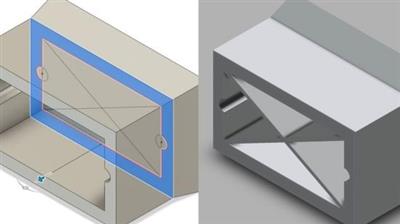 MP4 | Video: h264, 1280x720 | Audio: AAC, 44.1 KHz, 2 Ch Skill Level: Intermediate | Genre: eLearning | Language: English + srt | Duration: 2h 10m | Size: 434.1 MB In this course, Aram Goganian introduces the fundamentals of sketching in Fusion 360. Aram begins with the tools you will use in Sketch for Fusion 360, including the line tool, circle tool, patterns tool, mirror tool, and many more. Next, Aram explains how to define, edit, and modify constraints and dimensions, as well as how to set up and use parameters. He walks you through inserting SVG, DXF, and image files into Sketch, then demonstrates how to use text within Sketch. Aram goes over the 3D sketch environment and shows you how to navigate the environment and how to take yourself from basic level through advanced 3D sketching. He steps through how to create solid bodies and surfaces from a sketch, shares useful tips and tricks, then concludes with a trio of practical use cases.  MP4 | Video: h264, 1280x720 | Audio: AAC, 44.1 KHz, 2 Ch Skill Level: Beginner | Genre: eLearning | Language: English + srt | Duration: 1h 28m | Size: 1.07 GB Artificial intelligence is a growing area of interest for the future of work. However, it can feel overwhelming to begin learning about AI given the vastness of the subject. In this course, Jim Sterne, a longtime marketing analyst passionate about advancing AI, shares the basics of what you need to know to get started using artificial intelligence. First, Jim reviews the basics of what artificial intelligence truly is. He then explores some additional concepts related to AI, such as natural language processing, computer vision, and machine learning. Then, Jim shares applications of machine learning, artificial intelligence, and how the two work together. He also reviews the relationship between humans and AI, and how you can use AI to your benefit. He closes by reviewing the future state of artificial intelligence. Upon completion of this course, you will have a solid base of knowledge to begin leveraging AI to your advantage.  MP4 | Video: h264, 1280x720 | Audio: AAC, 44.1 KHz, 2 Ch Genre: eLearning | Language: English | Duration: 31 Lessons (5h 47m) | Size: 2.16 GB OOP is the programming paradigm that follows the 'classes and objects' approach. This makes code more compact and accurate. Rather than defining each and everything individually, in OOP, we create objects and recall them whenever needed. This also makes a code compact and easily accessible. This course will teach you about OOP and how to write codes using OOP. We will learn this with Java Enterprise Edition. |

 :
:
