
| |
|
|
 John F. L. Ross, "The Rise of Little Big Norway" English | ISBN: 1785271938 | 2019 | 386 pages | EPUB | 725 KB "The Rise of Little Big Norway" explores the unlikely rise of Norway from peripherality to today's global steward with an enviable work-life balance, influential oil fund and Arctic front-row seat. Drawing on wide-ranging source material, John Ross's original approach combines astute observation, thoughtful analysis and a flowing essay style, leavened with the comparative insight that only a seasoned observer of the region can bring. The book examines the settings, histories and niche elements that lend Norway its distinctiveness and differentiate it from its Nordic neighbors. It gives special attention to the northern and Arctic dimensions of Norwegian life and elaborates a connecting thematic thread, the mobility that once took Vikings across the Atlantic in open boats and makes today's Norwegians the most-traveled people on the planet. The result is a carefully crafted general study of Norway, a country long overlooked in favor of its Nordic neighbors but now a quiet force in its own right and a touchstone for twenty-first century issues ranging from identity politics to the Arctic melt. This book fills a major gap in the literature on Norway and the Nordic region.  Hannah Lambie-Mumford, "The Rise of Food Charity in Europe" English | ISBN: 1447340000 | 2020 | 272 pages | EPUB | 631 KB As the demand for food banks and other emergency food charities continues to rise across the continent, this is the first systematic Europe-wide study of the roots and consequences of this urgent phenomenon. Leading researchers provide case studies from the UK, Finland, Germany, Italy, the Netherlands, Slovenia and Spain, each considering the history and driving political and social forces behind the rise of food charity, and the influence of changing welfare states. They build into a rich comparative study that delivers valuable evidence for anyone with an academic or professional interest in related issues including social policy, exclusion, poverty and justice. 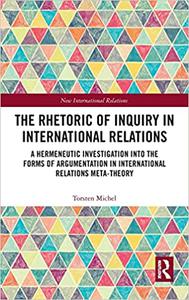 Torsten Michel, "The Rhetoric of Inquiry in International Relations: A Hermeneutic Investigation into the Forms of Argumentation in Inter" English | ISBN: 0367703971 | 2021 | 196 pages | EPUB | 691 KB This book argues that our current lack of recognising and understanding the different forms meta-theorising takes hampers the ways in which fruitful engagement between meta-theories can be conducted.  Robert C. Rowland, "The Rhetoric of Donald Trump: Nationalist Populism and American Democracy" English | ISBN: 0700631968 | 2021 | 280 pages | EPUB | 965 KB The Rhetoric of Donald Trump identifies and analyzes the nationalist and populist themes that dominate the rhetoric of President Trump and links those themes to a persona that has evolved from celebrity outsider to presidential strongman. In the process Robert C. Rowland explains how the nationalist populism and strongman persona in turn demands a vernacular rhetorical style unlike any previous modern president-a style that makes no attempt to lay out a case, requires constant lies, and breaks every norm for how a presidential candidate or president should talk. In stark contrast, our most effective presidents have used rhetoric to present a positive vision of what the nation could achieve. The three most effective presidential uses of rhetoric in the past century-FDR, Reagan, and Obama-all presented a coherent ideological message that, while focused on problems of the moment, was also rooted in a fundamental optimism. In contrast, Trump's message is fundamentally negative.  The Racial Muslim : When Racism Quashes Religious Freedom by Sahar F. Aziz English | 2022 | ISBN: 0520382285 | 357 Pages | True PDF | 6.78 MB 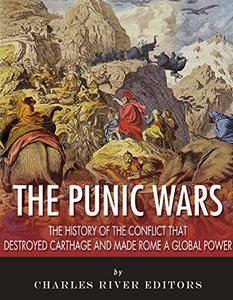 The Punic Wars: The History of the Conflict that Destroyed Carthage and Made Rome a Global Power by Charles River Editors English | July 15, 2015 | ISBN: 1515075990 | 110 pages | EPUB | 2.07 Mb *Includes pictures *Includes ancient accounts about the wars *Includes online resources and a bibliography for further reading *Includes a table of contents "Ceterum autem censeo Carthaginem esse delendam." ("Furthermore, I consider it imperative that Carthage be destroyed.") - Cato the Elder Carthage was one of the great ancient civilizations, and at its peak, the wealthy Carthaginian empire dominated the Mediterranean against the likes of Greece and Rome, with commercial enterprises and influence stretching from Spain to Turkey. In fact, at several points in history it had a very real chance of replacing the fledgling Roman empire or the failing Greek poleis (city-states) altogether as master of the Mediterranean. Although Carthage by far preferred to exert economic pressure and influence before resorting to direct military power (and even went so far as to rely primarily on mercenary armies paid with its vast wealth for much of its history, it nonetheless produced a number of outstanding generals, from the likes of Hanno Magnus to, of course, the great bogeyman of Roman nightmares himself: Hannibal. However, the Carthaginians' foreign policy had one fatal flaw; they had a knack over the centuries of picking the worst enemies they could possibly enter into conflict with. The first serious clash of civilizations which Carthage was involved with was Greece, which rapidly became hostile when the Carthaginians began pushing to spread their influence towards the colonies known as Magna Graecia ("Great Greece"), which had been established in southern Italy and Sicily by several Greek poleis. These territories would become a casus belli of the First Punic War. Certain foreign policy decisions led to continuing enmity between Carthage and the burgeoning power of Rome, and what followed was a series of wars which turned from a battle for Mediterranean hegemony into an all-out struggle for survival. Although the Romans gained the upper hand in the wake of the First Punic War, Hannibal brought the Romans to their knees for over a decade during the Second Punic War. While military historians are still amazed that he was able to maintain his army in Italy near Rome for nearly 15 years, scholars are still puzzled over some of his decisions, including why he never attempted to march on Rome in the first place. After the serious threat Hannibal posed during the Second Punic War, the Romans didn't wait much longer to take the fight to the Carthaginians in the Third Punic War, which ended with Roman legions smashing Carthage to rubble. As legend has it, the Romans literally salted the ground upon which Carthage stood to ensure its destruction once and for all. Despite having a major influence on the Mediterranean for nearly five centuries, little evidence of Carthage's past might survives. The city itself was reduced to nothing by the Romans, who sought to erase all physical evidence of its existence, and though its ruins have been excavated, they have not provided anywhere near the wealth of archaeological items or evidence as ancient locations like Rome, Athens, Syracuse, or even Troy. Today, Carthage is a largely unremarkable suburb of the city of Tunis, and though there are some impressive ancient monuments there for tourists to explore, the large majority of these are the result of later Roman settlement. The Punic Wars: The History of the Conflict that Destroyed Carthage and Made Rome a Global Power chronicles the three wars and the decisive impact they had on the history of Western Europe. Along with pictures of important people, places, and events, you will learn about the Punic Wars like never before, in no time at all.  Ed Mylett, "The Power of One More: The Ultimate Guide to Happiness and Success" English | 2022 | ISBN: 1119815363 | 272 pages | PDF (conv) | 1.8 MB You're one more intentional thought and action away from discovering your best life  Scott Gilbert, Edward J. Larson, Jane Maienschein, "The Panda's Black Box: Opening up the Intelligent Design Controversy" English | 2007 | pages: 184 | ISBN: 080188599X | PDF | 0,8 mb The debate over Intelligent Design seemingly represents an extension of the fundamental conflict between creationists and evolutionists. ID proponents, drawing on texts such as Darwin's Black Box and Of Pandas and People, urge schools to "teach the controversy" in biology class alongside evolution. The scientific mainstream has reacted with fury, branding Intelligent Design as pseudoscience and its advocates as religious fanatics.  The Off-Grid Bible * 3-in-1 Companion to Self-Sufficient Living: From the Grounds of your homestead to the solar panels on your roof. The Only Guide You'll Ever Need for your Back-to-Basics Journey by Tom Mayer English | 2022 | ISBN: N/A | ASIN: B0B7FFM8PS | 630 pages | EPUB | 6.16 Mb 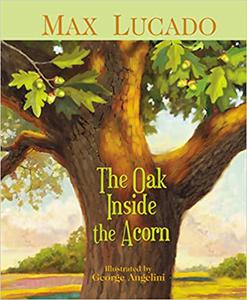 Max Lucado, "The Oak Inside the Acorn" English | 2011 | ISBN: 1400317339, 1400306019 | EPUB | pages: 48 | 1.5 mb Every person is tasked with learning why they were created and the unique gifts that make them special. Written byNew York Timesbestselling author Max Lucado,The Oak Inside the Acornteaches about the incredible miracle inside each of us while reminding us that we were created by God for a special purpose. |

 :
:
