
| |
|
|
 WORK FROM HOME: How to start and launch your online business by Jonathan Pius English | 2022 | ISBN: N/A | ASIN: B0B8PHSYVD | 50 pages | EPUB | 0.12 Mb As the world is fast evolving, you need to flow with it or you get left out.  Vertigo: A Clinical Guide by Shabih H. Zaidi, Arun Sinha English | PDF | 2013 | 202 Pages | ISBN : 3642364845 | 1.8 MB Vertigo is an enigma. It is a malady for all ages. It is also a greatly misunderstood and underrated clinical condition. Most physicians see vertiginous patients in their daily practice but no consensus has yet been reached on the true extent of this highly debilitating condition. Vertigo has diverse causes and forms. Diagnosis usually relies heavily on a detailed history and thorough clinical examination, but imaging techniques and a range of vestibular tests are also helpful. Most patients can be treated conservatively with anti-vertiginous drugs and/or rehabilitation therapy, but some require surgical intervention.  Utamakura, Allusion, and Intertextuality in Traditional Japanese Poetry By Edward Kamens 1997 | 336 Pages | ISBN: 0300068085 | PDF | 24 MB A central feature of traditional Japanese poetry (waka) is the use of utamakura―a category of poetic words, many of which are place-names or the names of features associated with them―to cultivate allusion and intertextuality between individual poems and within the tradition. In this book Edward Kamens analyzes a wide selection of poems to show how utamakura came to wield special powers within Japanese poetry. He reveals how poets in generation after generation returned, either in person or in imagination, to these places and to poems about them to encounter again the forms, styles, and techniques of their forebears, and to discover ways to create new poems of their own. Kamens focuses especially on one figure, "the buried tree," which refers to fossilized wood associated in particular with an utamakura site, the Natori River, and is mentioned in poems that first appear in anthologies in the early tenth century. The figure surfaces again at many points in the history of traditional Japanese poetry, as do the buried trees themselves in the shallow waters that otherwise conceal them. After explaining and discussing the literary history of the concept of utamakura, Kamens traces the allusive and intertextual development of the figure of the buried tree and the use of the place-name Natorigawa in waka poetry through the late nineteenth century. He investigates the relation between utamakura and the collecting of fetishes and curios associated with utamakura sites by waka connoisseurs. And he analyzes in detail the use of utamakura and their pictorial representations in a political and religious program in an architectural setting―the Saishoshitennoin program of 1207.  Urban Prepping 101 for Families and Beginner Preppers: 10-Step Guide to Filter Water, Store Food, Stockpile Medicine and Create a Disaster-Ready Home to Be Prepared for Any Suburban Shtf Scenario by SHTF FUNDAMENTALS English | 2022 | ISBN: N/A | ASIN: B0B8SBZ2DT | 190 pages | EPUB | 1.42 Mb The End Of The World As We Know It (TEOTWAWKI) is not just  Upconverting Nanoparticles - From Fundamentals to Applications English | 2022 | ISBN: 3527349650 | 545 Pages | PDF EPUB (True) | 110 MB This modern reference explains photon upconversion technology using nanoparticles from first principles to novel and future applications in imaging, sensing, catalysis, energy technology, biomedicine, and many other areas. Expert authors discuss both established and novel materials and applications, going far beyond the coverage of previously published books on the subject. Key topics covered in the book include:  Paulo C. Chagas, "Unsayable Music: Six Reflections on Musical Semiotics, Electroacoustic and Digital Music" English | 2014 | pages: 279 | ISBN: 9058679942 | PDF | 5,9 mb Unsayable Music presents theoretical, critical and analytical reflections on key topics of contemporary music―including acoustic, electroacoustic, and digital music―and audiovisual and multimedia composition. Six essays by Paulo C. Chagas approach music from different perspectives such as philosophy, sociology, cybernetics, musical semiotics, media, and critical studies.Chagas's practical experience, both as a composer of contemporary music and sound director of the Electronic Music Studio of Cologne, nourishes his observations on the specific creativity that emerges with the use of the technical apparatus, the development of the electronic music studio, the different aesthetics of electroacoustic music, and the forms of audiovisual and multimedia composition. The title Unsayable Music is a reference to Wittgenstein, who suggested that sound is only the surface of music and that the musical work conceals something more profound that can hardly be described by philosophical models or scientific theories.  Unleash Core dаta: Fetching Data, Migrating, and Maintaining Persistent Stores English | 2022 | ISBN: 1484282108 | 285 Pages | PDF EPUB | 6 MB With many frameworks, there's a point in the learning curve where you stop fearing the mountain of knowledge to learn and just enjoy the power to play and develop. For some reason many developers feel that point seems harder to reach with Core Data. And that's unjustified―Core Data is a great framework that with powerful, optimized tools right out of the box. So it's time you stopped fearing the journey and took your steps further out into the world of enjoying the power of Core Data.  Unique Methods for Analyzing Failures and Catastrophic Events: A Practical Guide for Engineers English | 2022 | ISBN: 1119748259 | 334 Pages | EPUB (True) | 63 MB Unique Methods for Analyzing Failures and Catastrophic Events is designed to assist practicing engineers address design and fabrication problems in manufacturing equipment to support safe process operation. Throughout the book, a wealth of real-world case studies and easy-to-understand illustrated examples demonstrate how to use simplified failure analysis methods to produce insights for a wide range of engineering problems.  Undertaker of the Mind: John Monro and Mad-Doctoring in Eighteenth-Century England (Medicine and Society): 11 By Jonathan Andrews 2001 | 388 Pages | ISBN: 0520231511 | PDF | 22 MB As visiting physician to Bethlem Hospital, the archetypal "Bedlam" and Britain's first and (for hundreds of years) only public institution for the insane, Dr. John Monro (1715-1791) was a celebrity in his own day. Jonathan Andrews and Andrew Scull call him a "connoisseur of insanity, this high priest of the trade in lunacy." Although the basics of his life and career are well known, this study is the first to explore in depth Monro's colorful and contentious milieu. Mad-doctoring grew into a recognized, if not entirely respectable, profession during the eighteenth century, and besides being affiliated with public hospitals, Monro and other mad-doctors became entrepreneurs and owners of private madhouses and were consulted by the rich and famous. Monro's close social connections with members of the aristocracy and gentry, as well as with medical professionals, politicians, and divines, guaranteed him a significant place in the social, political, cultural, and intellectual worlds of his time. Andrews and Scull draw on an astonishing array of visual materials and verbal sources that include the diaries, family papers, and correspondence of some of England's wealthiest and best-connected citizens. The book is also distinctive in the coverage it affords to individual case histories of Monro's patients, including such prominent contemporary figures as the Earls Ferrers and Orford, the religious "enthusiast" Alexander Cruden, and the "mad" King George III, as well as his crazy would-be assassin, Margaret Nicholson. What the authors make clear is that Monro, a serious physician neither reactionary nor enlightened in his methods, was the outright epitome of the mad-trade as it existed then, esteemed in some quarters and ridiculed in others. The fifty illustrations, expertly annotated and integrated with the text, will be a revelation to many readers. 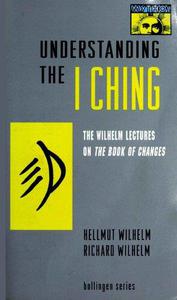 Understanding the I Ching: The Wilhelm Lectures on the Book of Changes By Hellmut Wilhelm, Richard Wilhem 1995 | 339 Pages | ISBN: 0691001715 | PDF | 4 MB The West's foremost translator of the I Ching, Richard Wilhelm thought deeply about how contemporary readers could benefit from this ancient work and its perennially valid insights into change and chance. For him and for his son, Hellmut - Wilhelm, the Book of Changes represented not just a mysterious book of oracles or a notable source of the Taoist and Confucian philosophies. In their hands, it - emerges, as it did for C. G. Jung, as a vital key to humanity's age-old collective - unconscious. Here the observations of the Wilhelms are combined in a volume that will reward specialists and aficionados with its treatment of historical context-and that will serve also as an introduction to the I Ching and the meaning - of its famous hexagrams."Heraclitus, who held that life was movement and that it developed through the conflict of opposites, also conceived a harmonious world order, the Logos, that shapes this chaos. But to the Chinese, as we shall see, the two principles, movement and the unchanging law governing it, are one: they know neither kernel nor husk-heart and mind function together undivided." -Hellmut Wilhelm Originally published as 'Change: Eight Lectures on the "I Ching"' by Hellmut Wilhelm and 'Lectures on the "I Ching": Constancy and Change' by Richard Wilhelm. |

 :
:
