
| |
|
|
 Why the Police Should be Trained by Black People By Natasha C. Pratt-Harris (editor) 2022 | 314 Pages | ISBN: 0367716054 | PDF | 22 MB Why the Police Should be Trained by Black People aligns scholarly and community efforts to address how Black people are policed. It combines traditional models commonly taught in policing courses, with new approaches to teaching and training about law enforcement in the U.S. all from the Black lens. Black law enforcement professionals (seasoned and retired), scholars, community members, victims, and others make up the contributors to this training textbook written from the lens of the Black experience. Each chapter describes policing based on the experience of being Black in the US, with concern about the life and life chances for Black people. With five sections readers will be able to: Describe the history and theory of law enforcement, policing, and society in Black communities Critically address how law enforcement and the nature of police work intertwine with race-based societal and governmental norms and within law enforcement administration and managementUnderstand the variation in pedagogy, recruitment, selection, and training that has impacted the experience of police officers, including Black police officers, and Black people in the USExplore the role of law enforcement as crime control and crime prevention agents as it relates to policing in Black communities and for Black peopleAddress issues related to race and use of force, misconduct, the law, ethics/valuesAssess research, contemporary issues, and the future of law enforcement and policing, especially related to policing of Black people. Why the Police Should be Trained by Black People brings pedagogical and scholarly responsibility for policing in Black communities to life, revealing that police involved violence, community violence, and relative lived experiences do not exist in a vacuum. Written with students in mind, it is essential reading for those enrolled in policing courses including criminology, criminal justice, sociology, or social work, as well as those undertaking police academy and in-service police training. 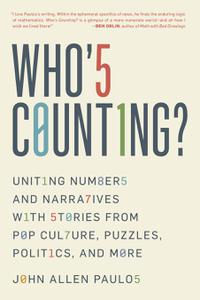 Who's Counting?: Uniting Numbers and Narratives with Stories from Pop Culture, Puzzles, Politics, and More by John Allen Paulos English | September 15th, 2022 | ISBN: 1633888126 | 227 pages | True PDF | 1.38 MB For decades, New York Times best-selling author John Allen Paulos has enlightened readers by showing how to make sense of the numbers and probabilities behind real-world events, political calculations, and everyday personal decisions. Who's Counting? features dozens of his insightful essays-original writings on contemporary issues like the COVID-19 pandemic, online conspiracy theories, "fake news," and climate change, as well as a selection of enduring columns from his popular ABC News column of the same name.  Who Dares Wins by Nigel Cawthorne English | July 5, 2022 | ISBN: N/A | ASIN: B0B5XW7JSL | 320 pages | EPUB | 0.36 Mb 'A gripping story, told with insight and pace...' Richard Foreman  White Unwed Mother : The Adoption Mandate in Postwar Canada By Valerie Andrews 2018 | 252 Pages | ISBN: 1772581720 | EPUB | 13 MB In postwar Canada, having a child out-of-wedlock invariably meant being subject to the adoption mandate. Andrews describes the mandate as a process of interrelated institutional power systems which, together with socio-cultural norms, ideals of gender heteronormativity, and emerging sociological and psychoanalytic theories, created historically unique conditions in the post WWII decades wherein the white unmarried mother was systematically separated from her baby by means of adoption. This volume uncovers and substantiates evidence of the mandate, ultimately finding that at least 350,000 unmarried mothers in Canada were impacted. 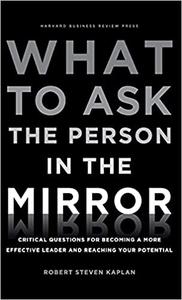 Robert S. Kaplan, "What to Ask the Person in the Mirror: Critical Questions for Becoming a More Effective Leader and Reaching Your Potentia" English | ISBN: 1422170012 | 2011 | 288 pages | MOBI | 400 KB Successful leaders know that leadership is less often about having all the answers―and more often about asking the right questions. The challenge lies in being able to step back, reflect, and ask the key questions that are critical to your performance and your organization's effectiveness. 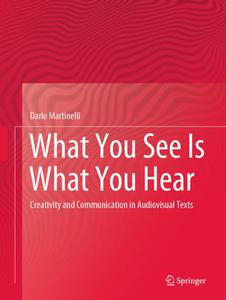 What You See Is What You Hear: Creativity and Communication in Audiovisual Texts by Dario Martinelli English | EPUB | 2020 | 293 Pages | ISBN : 3030325938 | 152.7 MB What You See Is What You Hear develops a unique model of analysis that helps students and advanced scholars alike to look at audiovisual texts from a fresh perspective. Adopting an engaging writing style, the author draws an accessible picture of the field, offering several analytical tools, historical background, and numerous case studies.  Pierre Jacob, "What Minds Can Do: Intentionality in a Non-Intentional World " English | ISBN: 0521574013 | | 312 pages | EPUB | 670 KB Some of a person's mental states have the power to represent real and imagined states of affairs: they have semantic properties. What Minds Can Do has two goals: to find a naturalistic or nonsemantic basis for the representational powers of a person's mind, and to show that these semantic properties are involved in the causal explanation of the person's behavior. In the process, the book addresses issues that are central to much contemporary philosophical debate. It will be of interest to a wide range of readers in philosophy of mind and of language, cognitive science, and psychology. 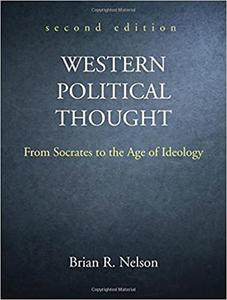 Brian R. Nelson, "Western Political Thought: From Socrates to the Age of Ideology, Second Edition" English | 2015 | ISBN: 1478627638 | PDF | pages: 409 | 19.7 mb Written simply and directly but without sacrificing intellectual depth this widely acclaimed text explores the preeminent theorists of Western political thought from the pre-Socratics to the contemporary era. The author provides an in-depth analysis of a limited number of major thinkers, which allows for a richly detailed examination of each philosopher in historical context. Western Political Thought, Second Edition, presents the fundamental terms, ideas, and dilemmas of Western political philosophy in a straightforward, easy-to-understand manner. It organizes the theorists historically, explains basic concepts in depth, and draws out and analyzes the implications of various political theories. Moreover, this cohesive volume employs an overarching theme, examining each thinker in terms of the changing relationships of ethics and politics in Western political philosophy.  Web Application Architecture: Principles, Protocols and Practices by Leon Shklar, Richard Rosen English | October 22, 2003 | ISBN: 0471486566 | 374 pages | PDF | 3.59 Mb An in-depth examination of the core concepts and general principles of Web application development.  We, the Japanese People: World War II and the Origins of the Japanese Constitution (2 Volume Set) By Dale Hellegers 2002 | 896 Pages | ISBN: 0804734542 | PDF | 34 MB This is the definitive story of how the United States attempted to turn Japan into a democratic and peace-loving nation by drafting a new constitution for its former enemy―and then pretending that the Japanese had written it. Based on scores of interviews with participants in the process, as well as exhaustive research in Japanese and American records, the book explores in vivid detail the thinking and intentions behind the drafting of the constitution.Confusion and strife marked planning for the democratization of Japan, first in Washington, then in occupied Tokyo. Policy makers in the State, War, and Navy departments, the Joint Chiefs, and the White House contended bitterly over how to devise an "unconditional surrender" that would minimize Allied casualties while according the victor supreme authority over a soundly defeated Japan. By war's end, there were still no firm guidelines on a host of crucial issues, including how the Japanese system of government could be made acceptably democratic.The first months of occupation were chaotic, with General MacArthur organizing his staff around loyal followers and edging out experts sent from Washington. Hampered by a narrow interpretation of the terms of surrender and wishful thinking about Japanese compliance with American expectations, MacArthur set in motion a fiasco. Because of a translator's error, Prince Konoye, three-time Prime Minister of Japan, thought MacArthur had entrusted him with revising the Japanese constitution and assembled a staff of constitutional law experts and set to work. However, conservatives in the Japanese cabinet denounced his efforts and produced their own version, which MacArthur found unacceptable. MacArthur then secretly instructed his staff, with its very limited knowledge of either Japan or constitutional law, to draft a new Japanese constitution, which amazingly they did in a week's time. Expecting approval of its own draft, the Japanese cabinet was stunned when presented with a completely different American document. So unrelenting was the pressure exerted by MacArthur's officers that it was clear to members of the cabinet they had no choice but to adopt the American draft more or less intact, and publish it as their own.Because of the broad range of its meticulous research, the book will be a standard reference not only for students of Japanese history but also for legal scholars, diplomatic historians, and political scientists. |

 :
:
