
| |
|
|
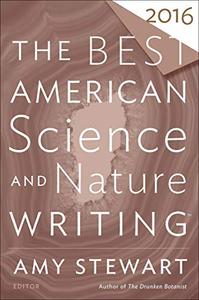 Tim Folger, "The Best American Science And Nature Writing 2016" English | 2016 | pages: 320 | ISBN: 0544748999 | EPUB | 2,1 mb Science writers get into the game with all kinds of noble, high-minded ambitions. We want to educate. To enlighten," notes guest editor Amy Stewart in her introduction to The Best American Science and Nature Writing 2016. "But at the end of the day, we're all writers . . . We're here to play for the folks." The writers in this anthology brought us the year's highest notes in the genre. From a Pulitzer Prize-winning essay on the earthquake that could decimate the Pacific Northwest to the astonishing work of investigative journalism that transformed the nail salon industry, this is a collection of hard-hitting and beautifully composed writing on the wonders, dangers, and oddities of scientific innovation and our natural world. 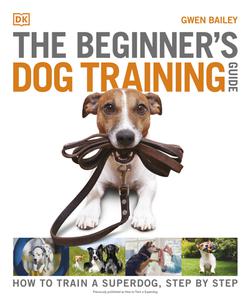 The Beginner's Dog Training Guide: How to Train a Superdog, Step by Step by Gwen Bailey English | February 6th, 2023 | ISBN: 0744064880 | 256 pages | True EPUB | 310.62 MB Unleash your dog's potential and build a rewardingrelationship that will last a lifetime  Robert Hutchinson, "The Audacious Crimes of Colonel Blood: The Spy Who Stole the Crown Jewels and Became the King's Secret Agent" English | 2016 | ISBN: 1681771446, 1681774224 | EPUB | pages: 352 | 3.4 mb The gripping story of one of the most enigmatic and alluring figures in British history: a dangerous double agent and Irish rogue in King Charles II's court  The Art of the Creative Commons Openness, Networked Value and Peer Production in the Sound Industry by Miłosz Miszczyński and Kozminski University English | May 12, 2022 | ISBN: 9004504230 | 228 pages | PDF | 1,6 MB The Art of the Creative Commons is a book about peer-to-peer production, providing a unique model of commons from the creative industries.  The Art of Drawing Sexy Anime Characters: A Beginner's Guide to Drawing Sexy Characters in Japanese Style by Leo Glass English | 2022 | ISBN: N/A | ASIN: B0BLNTX74K | 115 pages | EPUB | 7.55 Mb Do you want to learn how to draw sexy, attractive female anime characters that will stand out?  The Anthropology of Infectious Disease: International Health Perspectives (ICC Publication) By Peter J. Brown, Marcia C. Inhorn 1998 | 512 Pages | ISBN: 9056995561 | PDF | 13 MB Anthropological contributions to the study of infectious disease and to the study of actual infectious disease eradication programmes have rarely been collected in one volume. In the era of AIDS and the global resurgance of infectious diseases such as tuberculosis and malaria, there is widespread interest and concern about the cultural, ecological and political factors that are directly related to the increased prevalence of infectious disease. In this book, the authors have assembled the growing scholarship in one volume. Chapters explore the coevolution of genes and cultural traits; the cultural construction of 'disease' and how these models influence health-seeking behaviour; cultural adaptive strategies to infectious disease problems; the ways in which ethnography sheds light on epidemiological patterns of infectious disease; the practical and ethical dilemmas that anthropologists face by participating in infectious disease programmes; and the political ecology of infectious disease. 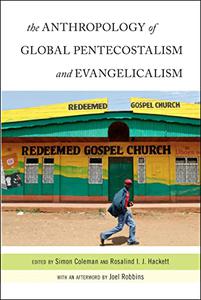 Simon Coleman, Rosalind I. J. Hackett, Joel Robbins, "The Anthropology of Global Pentecostalism and Evangelicalism" English | 2015 | ISBN: 0814772595 | PDF | pages: 273 | 2.8 mb The phenomenal growth of Pentecostalism and evangelicalism around the world in recent decades has forced us to rethink what it means to be religious and what it means to be global. The success of these religious movements has revealed tensions and resonances between the public and the private, the religious and the cultural, and the local and the global. This volume provides a wide ranging and accessible, as well as ethnographically rich, perspective on what has become a truly global religious trend, one that is challenging conventional analytical categories within the social sciences. 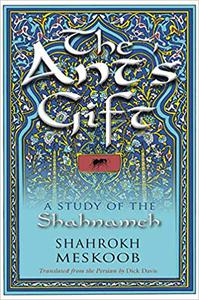 Shahrokh Meskoob, "The Ant's Gift: A Study of the Shahnameh " English | ISBN: 0815637012 | 2021 | 248 pages | EPUB | 3 MB Shahrokh Meskoob was one of Iran's leading intellectuals and a preeminent scholar of Persian literary traditions, language, and cultural identity. In The Ant's Gift, Meskoob applies his insight and considerable analytical skills to the Shahnameh, the national epic of Iran completed in 1010 by the poet Abul-Qâsem Ferdowsi. Tracing Iran's history from its first mythical king to the fall of the Sasanian dynasty, the Shahnameh includes myths, romance, history, and political theory. Meskoob sheds new light on this seminal work of Persian culture, identifying the story as at once a historical and poetic work. While previous criticism of the Shahnameh has focused on its linguistic importance and its role in Iranian nationalism, Meskoob draws attention to the work's pre-Islamic cultural origins.  Joyce Meyer, "The Answer to Anxiety: How to Break Free from the Tyranny of Anxious Thoughts and Worry" English | ISBN: 1546029176 | 2023 | EPUB | 160 pages | 1 MB Renowned Bible teacher and #1 New York Times bestselling author Joyce Meyer teaches readers how to overcome anxiety by giving their worries to God.  A. Bleakley, "The Animalizing Imagination: Totemism, Textuality and Ecocriticism" English | 2017 | ISBN: 1349415294 | PDF | pages: 190 | 2.2 mb From Palaeolithic cave paintings to post-modern cyber-pets, animals appear in guises other than 'natural', or biological, beasts. While this spectrum of animal presences is not limited to the immediacy of literal, flesh-and-blood presentation, it may feed off the death of the literal, or spring like ghosts or spirits from the abandoned carcases. For animals also stalk our dreams, slither into our fantasies, haunt our mentalities, and frame our metaphors. We might dream of a snake biting us; use the animal as a linguistic trope, or figure of speech, such as a snaking queue; or thrill at the hyper-real snakes represented on our television screens from locations we will never visit. Such animals are photographed in vivid close-up, beyond the capacity of the human eye. Shots of the animal in the wild are spliced with 'studio' shots of 'stand-in' animals in zoos, so that the viewer has a seamless experience, believing all the footage to be 'wild', where the televisual animal actually becomes a simulacrum. We wonder at these beastly presences as we are anaesthetized to their worldly value, for we cannot smell, taste or touch their images. And their sounds are also simulations. They are recreated for TV-audience consumption, yet they remain extraordinarily 'other'. |

 :
:
