
| |
|
|
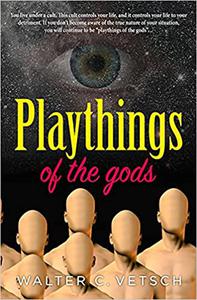 Walter C. Vetsch, "Playthings of the gods: Essays & Novels" English | ISBN: 1508442037 | 2015 | 274 pages | PDF | 6 MB You live under a cult. This cult controls your life, and it controls your life to your detriment. If you expect any relief from your situation in the future, you must at the very least become aware of the true nature of your situation. Otherwise you will continue to be "playthings of the gods"...Walter Carnot Vetsch was born in 1947 in Louisiana, with a gift that he himself defines as the "unlearned knowledge." Many of us, over the years, generally acquire a degree of wisdom, which cannot be learned in schools. When we pass away, this knowledge dissolves in the universal consciousness, so, when we're back here in our next incarnation, we usually have to start everything from scratch. This was not the case of Walter. From his earliest years, he knew exactly what "reality" really was, how it worked, and what were the forces that made it work. He knew that this knowledge was true, and the best cofirmation of it was that when, in the end of the 1960s, he decided to expose this knowledge in a book, those same forces violently opposed to it. "All that I write," Walter says, "is based on the material I was able to bring through from before I was born here. This is what triggered the people who look for that sort of stuff, persons with 'unlearned knowledge,' which could upset a system where knowledge is controlled."  Philosophy through Computer Science: An Introduction English | 2023 | ISBN: 1032221364, 1032221372 | 287 Pages | PDF (True) | 7 MB What do philosophy and computer science have in common? It turns out, quite a lot!  Giacomo Fronzi, "Philosophical Considerations on Contemporary Music" English | ISBN: 1443816981 | 2017 | 260 pages | PDF | 946 KB The musical universe of the 20th and 21st centuries is a force-field in which styles, instruments, personalities and stories can be found that are ascribable to conceptual frameworks that may differ greatly one from another. Such complexity cannot be traced back to single theories or all-encompassing interpretations, but may be tackled, philosophically, starting from certain characteristics. This book identifies nine such characteristics: namely, Extremes, Noise, Silence, Technology, Audience, Listening, Freedom, Disintegration, and New Media. Each of these permits us to open up unforeseen philosophical-cultural paths and interpret, in its multifarious variety, the developments of contemporary music, profoundly interwoven with the history of thought, culture and society. 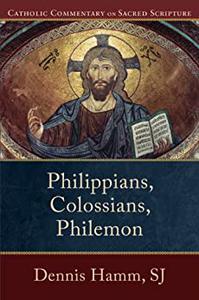 Philippians, Colossians, Philemon (Catholic Commentary on Sacred Scripture) by Dennis SJ Hamm, Peter Williamson, Mary Healy English | November 5, 2013 | ISBN: 0801036461 | 256 pages | EPUB | 8.90 Mb Philippians, Colossians, and Philemon, written by Paul from prison in the middle of the first century, were addressed to specific Christian communities facing concrete challenges. What did these letters mean at the time, and what do they mean for us today? 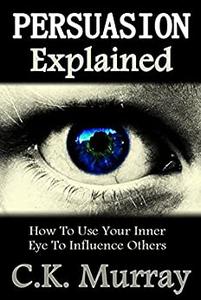 Persuasion Explained by C.K. Murray English | March 31, 2018 | ISBN: 1986829588 | 48 pages | EPUB | 0.13 Mb Awaken Your Inner Eye to the Power of Persuasion 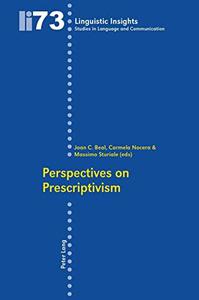 Perspectives on Prescriptivism By Massimo Sturiale (editor), Joan C. Beal (editor), Carmela Nocera (editor) 2008 | 269 Pages | ISBN: 3039116320 | PDF | 27 MB The colloquium Perspectives on Prescriptivism (20-22 April 2006) was hosted by the University of Catania - Faculty of Foreign Languages - in Ragusa. Until very recently, the received view among linguists was that prescriptivism was a 'bad thing', something only worth considering in order to condemn it as a product of unenlightened thinking. The organisers wished to encourage participants to look at linguistic prescriptivism from a wide range of perspectives. Some of the main questions asked were: To what extent is the concept of prescriptivism to be considered a typical product of the 18th century? What is the attitude of 21st-century scholars and language guardians towards linguistic 'correctness'? To what extent were books more prescriptive - rather than descriptive - in what has generally been described as 'the age of correctness'? Some of the answers are to be found in this volume. 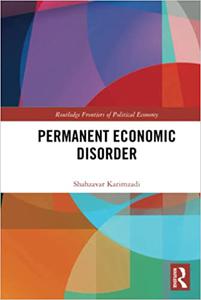 Shahzavar Karimzadi, "Permanent Economic Disorder " English | ISBN: 1032386991 | 2022 | 282 pages | PDF | 2 MB All schools of thought in economics, explicitly or otherwise, have referred to economic disorder as a self-evident fact. They have also unanimously considered it to be a temporary state. By contrast, this book contends that economic disorder is an interminable condition of human existence.  Performance Art: Education and Practice English | 2023 | ISBN: 1032055197 | 237 Pages | PDF (True) | 8 MB Performance Art: Education and Practice is an introduction to performance art through activities and practice prompts that are framed by seminal moments in the history of the medium as well as the current theoretical discussions surrounding performance.  Peace or Democracy?: Peacebuilding Dilemmas to Transition from Civil Wars English | 2023 | ISBN: 1032247576 | 340 Pages | PDF (True) | 9 MB Offering an innovative framework based on Philosophical, Actors, and Tactical considerations, Pereira Watts identifies 14 dynamic dilemmas in democratic peacebuilding, with respective trade-offs. She focuses on explaining the contradictions in modern post-conflict recovery, the challenges facing interim governments, and the international community's role. Based on an analysis of more than 40 countries between 1989 and 2022 and more than 60 UN peace operations, she presents critical issues that commonly need to be addressed in such scenarios: Elections and Political Parties; the Constitution; Checks, Balances and Power-sharing; Transitional Justice; Human Rights, Amnesty, Truth Commissions and War Crimes Tribunals; Disarmament, Demobilization, and Reintegration; and Media Reform and Civil Society. Solving any of these dilemmas leads to others that shape a complex apparatus for restoring peace and installing a new political regime. 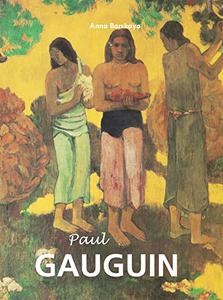 Anna Barskaya, "Paul Gauguin" English | 2005 | pages: 160 | ISBN: 1840135654 | PDF | 33,8 mb Paul Gauguin was first a sailor, then a successful stockbroker in Paris. In 1874 he began to paint at weekends as a Sunday painter. Nine years later, after a stock-market crash, he felt confident of his ability to earn a living for his family by painting and he resigned his position and took up the painter's brush full time. Following the lead of Cézanne, Gauguin painted still-lifes from the very beginning of his artistic career. He even owned a still-life by Cézanne, which is shown in Gauguin's painting Portrait of Marie Lagadu. The year 1891 was crucial for Gauguin. In that year he left France for Tahiti, where he stayed till 1893. This stay in Tahiti determined his future life and career, for in 1895, after a sojourn in France, he returned there for good. In Tahiti, Gauguin discovered primitive art, with its flat forms and violent colours, belonging to an untamed nature. With absolute sincerity, he transferred them onto his canvas. His paintings from then on reflected this style: a radical simplification of drawing; brilliant, pure, bright colours; an ornamental type composition; and a deliberate flatness of planes. Gauguin termed this style "synthetic symbolism". |

 :
:
