
| |
|
|
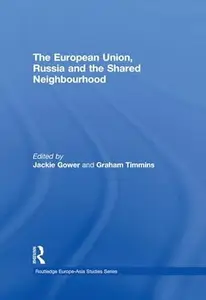 Free Download Jackie Gower, "The European Union, Russia and the Shared Neighbourhood" English | 2013 | ISBN: 0415851114 | EPUB | pages: 184 | 0.7 mb The conflict in South Ossetia in the summer of 2008 and the Ukrainian energy crisis in early 2009 served to highlight the tensions that continue to influence EU-Russia relations in regard to the region comprising the former republics of the Soviet Union or the 'shared neighbourhood'. 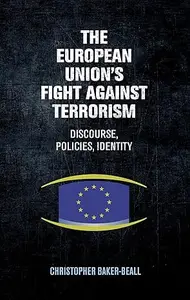 Free Download Christopher Baker-Beall, "The European Union's fight against terrorism: Discourse, policies, identity" English | 2016 | ISBN: 0719091063, 1526133849 | EPUB | pages: 216 | 0.5 mb This book examines the language of the European Union's response to the threat of terrorism. Since its re-emergence in the wake of the September 11 attacks, the 'fight against terrorism' has come to represent a priority area of action for the EU. Drawing on interpretive approaches to international relations, the book outlines a discourse theory of identity and counter-terrorism policy, showing how the 'fight against terrorism' structures the EU's response through the prism of identity, drawing our attention to the various 'others' that have come to form the target of counter-terrorism policy. Through an extensive analysis of the wider societal impact of the 'fight against terrorism' discourse, the various ways in which this policy is contributing to the 'securitisation' of social and political life within Europe are revealed. 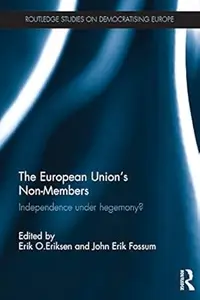 Free Download John Erik Fossum, "The European Union's Non-Members: Independence under hegemony?" English | 2015 | ISBN: 1138922455 | EPUB | pages: 264 | 0.5 mb The EU is a supranational organization, whose reach and influence extends well beyond its member states, especially to the many states that have signed various forms of association agreement with it. 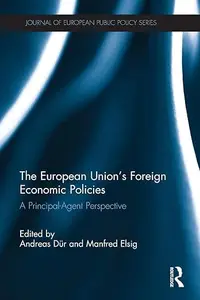 Free Download Manfred Elsig, "The European Union's Foreign Economic Policies" English | 2013 | ISBN: 0415853680 | EPUB | pages: 160 | 0.5 mb The European Union is a key actor in international economic governance. Through its foreign economic policies it plays a central role in the negotiation of international trade agreements, the global regulation of the financial services sector, and the provision of aid to developing countries. This book shows how principal-agent theory can be used to shed new light on this complex of policy areas. In particular, the contributions to this volume analyze delegation, control, and agent strategies in a variety of principal-agent relationships shaping the EU's foreign economic policies: mainly those involving interest groups and governments; governments and the European Commission; and the European Union and international organizations. 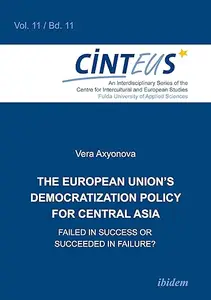 Free Download Vera Axyonova, "The European Union's Democratization Policy for Central Asia: Failed in Success or Succeeded in Failure?" English | 2014 | ISBN: 3838206940 | EPUB | pages: 220 | 0.4 mb The European Union has developed a range of instruments to promote democracy and human rights worldwide. However, the success of its democratization efforts remains questionable in countries that lack an EU membership perspective. The case of post-soviet Central Asia, where the EU declares democracy promotion among its key priorities yet is confronted with unfavorable domestic conditions for democratization and often fails to follow through, is an eye-opening example. Vera Axyonova's study offers the first comprehensive evaluation of the micro-level effects of the EU engagement in Kyrgyzstan and Uzbekistan and examines the factors that have made the EU efforts more or less successful in Central Asia. 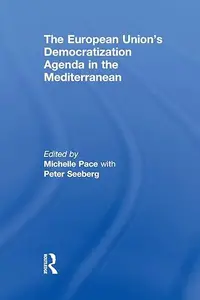 Free Download Michelle Pace, Peter Seeberg, "The European Union's Democratization Agenda in the Mediterranean" English | 2009 | ISBN: 0415551684, 0415847516 | EPUB | pages: 228 | 0.5 mb Democracy promotion in the Middle East and North Africa (MENA) remains a central pillar of the foreign policy the European Union (EU). Rather than concentrating on the relations between the incumbent authoritarian regimes and the opposition in the relevant countries, and on the degree to which these relations are affected by EU efforts at promoting democracy, human rights and the rule of law (an outside-in approach), this collection of articles inverts the focus of such relationships and attempts to look at them 'inside-out'. While some contributions also emphasise the 'outside-in' axis, given that this continues to be analytically rewarding, the overarching thrust of this book is to provide some empirical substance for the claim that EU policy making is not unidirectional and is influenced by the perceptions and actions of its 'targets'. Thus, the focus is on domestic political changes on the ground in the MENA and how they link into what the EU is attempting to achieve in the region. Finally, the self-representation of the EU and its (lack of a) clear regional role is discussed. 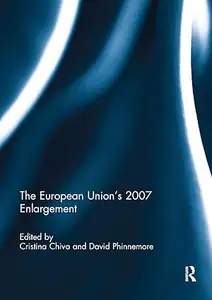 Free Download Cristina Chiva, David Phinnemore, "The European Union's 2007 Enlargement" English | 2011 | ISBN: 0415689651 | EPUB | pages: 132 | 0.7 mb This book fills a significant gap in recent literature on European Union politics by examining the EU's 'other' eastern enlargement, completed in 2007 with the accession of Bulgaria and Romania. It focuses on both the process and the effects of the 2007 enlargement within the wider context of the post-communist countries' accession to the EU, and, more broadly, within the context of the history of EU enlargement. The book brings together in-depth analyses of a wide range of issues, both from a comparative perspective and through single case studies. Individual contributions shed new light onto EU enlargement through a theoretical re-evaluation of the 'strategic action' paradigm, as well as through historical analyses of the 2007 enlargement and of its implications for future EU enlargements. Further insight into the process of EU enlargement is gained through systematic exploration of the impact of accession on policy-making and institutional structures in Bulgaria and Romania. Altogether, the contributions exemplify the multi-faceted nature of EU enlargement and accession, as well as the extent to which the process of acceding to the EU is not completed with membership, either for the EU or for the candidate countries. 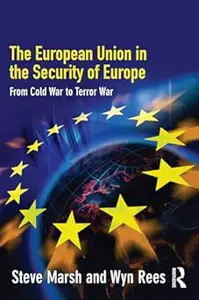 Free Download Steve Marsh, "The European Union in the Security of Europe: From Cold War to Terror War" English | 2011 | ISBN: 041534123X | EPUB | pages: 260 | 0.6 mb This book examines the European Union's contribution to providing security in Europe amidst an increasingly complex and challenging environment. 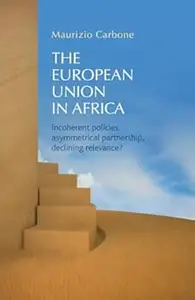 Free Download Maurizio Carbone, "The European Union in Africa: Incoherent policies, asymmetrical partnership, declining relevance?" English | 2016 | ISBN: 1784993875 | EPUB | pages: 320 | 0.6 mb The European Union in Africa: Incoherent policies, asymmetrical partnership, declining relevance? provides a comprehensive analysis of EU-Africa relations since the beginning of the twenty-first century and includes contributions from leading experts in the field of EU external relations. It seeks to explain how the relationship evolved through discussion of a number of different policies and agreements, ranging from established areas such as aid, agriculture, trade and security, to new areas such as migration, climate change, energy and social policies. 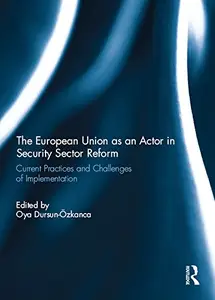 Free Download Oya Dursun-Ozkanca, "The European Union as an Actor in Security Sector Reform: Current Practices and Challenges of Implementation" English | 2013 | ISBN: 0415717760 | EPUB | pages: 192 | 0.6 mb This book critically analyzes the European Union's role in Security Sector Reform (SSR), a topical issue with regards to European security. While the literature on SSR has increased significantly in the past decade, too little remain in the way of comparative analyses of SSR case studies that are geared toward theory development. This collection strives to push the SSR literature in that direction. One key question it focuses on is whether the EU pursues a holistic approach vis-à-vis SSR. Another question the book addresses is why and how the EU activities towards SSR in conflict management, peacebuilding and statebuilding have produced a wide variety of outcomes that range from the failure to reform any or all of the sub-set of security sectors (police, justice, military, etc.) to complete and integrated reform. |

 :
:
