
| |
|
|
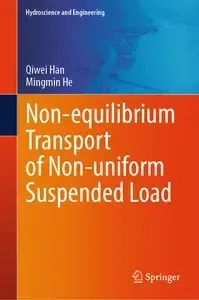 Non-equilibrium Transport of Non-uniform Suspended Load by Qiwei Han, Mingmin He English | October 5, 2024 | ISBN: 9819711223 | 690 pages | MOBI | 94 Mb The book is based on stochastic theory of sediment motion, particularly the theory of transition intensities. 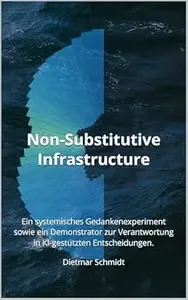 Non-Substitutive Infrastructure: Ein systemisches Gedankenexperiment sowie ein Demonstrator zur Verantwortung in KI-gestützten Entscheidungen. Deutsch | 1 Jan. 2026 | ASIN: B0GDJNLXHZ | 115 Seiten | Epub | 1.73 MB Non-Substitutive Infrastructure ist ein systemisches Gedankenexperiment - und zugleich ein Demonstrator: eine greifbare, nachvollziehbare Form, um über Verantwortung in KI-gestützten Entscheidungen zu sprechen, ohne sie auf Technik, Compliance oder einzelne Schuldfragen zu verkürzen. Wenn Entscheidungen zunehmend von Modellen vorbereitet, gerankt oder automatisiert werden, verschiebt sich Verantwortung: weg vom einzelnen Moment der Entscheidung hin zu Design, Daten, Zuständigkeiten, Prüfpfaden und den realen Folgen für Menschen. Dieses Buch beschreibt eine Infrastruktur-Idee, die genau dort ansetzt: nicht als Ersatz für menschliche Verantwortung , sondern als Rahmen, der Verantwortung sichtbar, verteilbar und überprüfbar macht. Der Text verbindet systemisches Denken mit praktischer Anwendung: Welche Rollen entstehen? Welche Informationen müssen mitwandern? Wie sieht ein „Verantwortungspfad" aus - und wie verhindert man, dass KI zum bequemen Substitut wird? Für alle, die KI nicht nur nutzen, sondern verantwortlich einbetten wollen: in Organisationen, Verwaltung, Unternehmen, Produktteams und Politik. 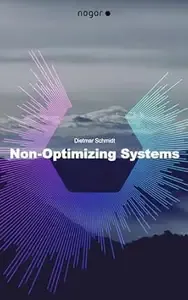 Non-Optimizing Systems Deutsch | 20 Dec. 2025 | ASIN: B0GB35GKBK | 77 Seiten | Epub | 1.56 MB Non-Optimizing Systems beschreibt eine Klasse von KI-Systemen, die bewusst auf Zieloptimierung und finale Entscheidungsfindung verzichtet. Statt optimale Aktionen zu berechnen, erzeugt das System temporäre Bedeutungsräume: Es aktiviert relevante Faktoren, identifiziert eine dominante Spannung und gibt genau einen minimalen Orientierungsschritt aus, der Spannung reduziert, ohne Abschluss zu erzwingen. Danach wird der Bedeutungsraum verworfen - ohne Gedächtnis, ohne Historie, ohne Akkumulation. Das Buch entwickelt einen begrifflichen Kern (Bedeutung, Spannung, Richtung, Non-Closure), beschreibt eine minimale Architektur und ein Kontrollregime (Non-Closure-Constraint), schlägt einen Evaluationsrahmen vor, der Verhalten statt „Accuracy" betrachtet, und dokumentiert ein Experiment als Existenznachweis. Für Leserinnen und Leser aus KI/Tech/Wissenschaft, die Freude an Denkmodellen haben, Ambiguität nicht als Fehler behandeln - und Systeme denken wollen, die unter Unentscheidbarkeit hilfreich bleiben, ohne Verantwortung zu übernehmen. 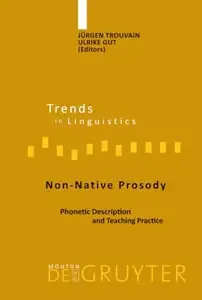 Non-Native Prosody: Phonetic Description and Teaching Practice (Trends in Linguistics: Studies and Monographs 186) (Trends in Linguistics. Studies and Monographs) By Juergen Trouvain (Editor), Ulrike Gut (Editor) 2007 | 262 Pages | ISBN: 3110195240 | PDF | 3 MB *With CD-ROM. Non-Native Prosody: Phonetic Description and Teaching Practice is a response to the increasing interest in the field of prosody in second language acquisition and teaching. The volume presents an overview of the state of the art in second language prosody learning and teaching and brings together linguistic research on the description and modelling of non-native prosodic structures with L2 teaching methods and practices. The first part comprises descriptions of non-native prosodic structures (including intonation, stress and speech rhythm) as well as methodological considerations of research in second language acquisition written by experts in the field. These overviews of current theoretical models and results from empirical studies are presented in a format accessible to language teachers. In the second part, some of the leading teaching practitioners and developers of phonological learning materials present a variety of methods and exercises in the area of prosody. The accompanying audio examples on a CD-ROM make a useful addition illustrating the descriptions and exercises for various target and source languages.  Non-Informative Order Flow and Its Impact on Capital Markets: An analytical passion project on liquidity, volatility, and price formation in the age of retail trading English | 5 Jan. 2026 | ASIN: B0GF2WL5YH | 38 pages | EPUB (True) | 366.13 KB Financial markets are noisy, chaotic, and full of contradictions - yet that is precisely what makes them so captivating. This book examines how non-informative order flows and the unprecedented rise of retail investors are challenging long-held assumptions about liquidity, volatility, and price discovery. Moving from classical theories of market microstructure to meme stocks and viral trading dynamics, it reveals how digital platforms, crowd behavior, and narrative-driven flows are transforming the way markets function. Both a warning and an invitation, it offers fresh perspectives on the risks, opportunities, and the uncertain future of investing in the 21st century.  Non-Deterministic Spec-Driven Development: From Principles to Practice -- A Companion to Non-Deterministic Software Engineering English | 17 Jan. 2026 | ASIN: B0GHF4WTZ2 | 179 pages | PDF | 4.40 MB Stop telling AI what to code. Start specifying what you need. This companion guide transforms how you work with AI coding assistants-from frustrating prompt engineering to systematic specification-driven development. Learn the methodology that turns vague requirements into precise, executable specifications that AI can actually implement correctly. The AI coding revolution has a problem: most developers are using it wrong. You've tried the AI assistants. You've written the prompts. And you've experienced the frustration: code that almost works, implementations that miss the point, and hours spent fixing what the AI got wrong. The problem isn't the AI-it's how we communicate with it. Spec-Driven Development (SDD) changes everything. This companion book to Non-Deterministic Software Engineering provides a complete, practical methodology for working with AI coding assistants like Claude Code, GitHub Copilot, Cursor, and others. Instead of hoping your prompts are clear enough, you'll learn to create specifications that eliminate ambiguity and produce correct implementations-consistently. What You'll Learn: * The paradigm shift from prompt engineering to specification engineering-why "intent is the source of truth" transforms AI collaboration * A four-phase process with explicit gates: Specification → Planning → Tasks → Implementation-no skipping ahead * GitHub Spec Kit mastery -the open-source toolkit that structures your specifications and integrates with 15+ AI assistants * Six battle-tested playbooks for every scenario: Greenfield projects (start right from day one) N+1 features (leverage existing patterns) Legacy integration (adopt SDD pragmatically) Emergency hotfixes (when production is down) Spike/exploration (structured learning) Multi-role teams (PO, FA, Dev, QA coordination) * Seven advanced patterns including the Constitution Pattern, Clarification Cascade, and Research-Before-Commit * When NOT to use SDD -critical guidance on scenarios where this approach doesn't fit Practical, Ready-to-Use Resources: Templates for every artifact type (constitution, clarification log, consistency report, research artifact) Two complete end-to-end examples : A notification feature (18 tasks) and Sprintify, a full enterprise application with Java, Spring Boot, Kafka, and OpenShift (24 tasks) Implementation scripts you can copy into your projects tomorrow Multi-role handoff checklists for team coordination Who This Book Is For: Developers frustrated with inconsistent AI outputs who want a systematic approach Tech leads building team workflows around AI-assisted development Architects designing specification patterns for enterprise adoption Engineering managers evaluating when and how to introduce SDD The Bottom Line: Six months from now, when someone asks "why does this feature work this way?"-the answer will be in your specification, not lost in chat history. Transform your AI collaboration from chaotic prompting to systematic engineering. About the Author Enrico Papalini brings extensive experience in software engineering and AI-assisted development to this practical guide. His focus on bridging theory and practice makes complex methodologies accessible to working developers.  Non-Attic Greek Vase Inscriptions By Rudolf Wachter 2002 | 481 Pages | ISBN: 0198140932 | PDF | 30 MB The inscriptions on non-Attic vases are an extremely important source for knowledge of ancient Greek, in particular colloquial language. Painted or incised before firing, this corpus of material cannot be held suspect as possible later additions. Wachter provides a detailed catalogue of the inscriptions together with an epigraphical and linguistic analysis and commentary.  No-Nonsense PR (6-Minute Smarts) by Lucy Werner English | November 5, 2024 | ISBN: 1788606795 | 142 pages | PDF | 0.99 Mb Become your own best publicist with these 10 top industry secrets from a PR professional. Packed with insider advice on how to get your business featured in the media, with zero fluff, it's your essential toolkit for standing out from the crowd.  No-Code/Low-Code AI Automation for Data Scientists and Biology Researchers. English | 9 Jan. 2026 | ASIN: B0GFQ1X6X8 | 174 pages | Epub | 575.64 KB Are you ready to rethink what automation , AI , and research look like in your work? Have you ever found yourself wondering, "How can I supercharge my data workflows without sinking months into coding?" or "Is there a way for biologists like me to use AI without becoming a full-time programmer?" That's exactly where No-Code/Low-Code AI Automation for Data Scientists and Biology Researchers by Peter Kent comes in and it might just transform the way you think about your next project. What if you could harness the full power of AI without writing complex code? Imagine this: instead of wrestling with syntax errors, debugging logic, and spending hours on implementation details, you focus on what truly matters your data, your hypotheses, your research questions. This book isn't about typing line after line of code. It's about empowering you to leverage AI automation at every stage of your workflow , whether you're analyzing large-scale datasets or planning experiments in the life sciences. Do you ever ask yourself: How can I accelerate my data analysis without getting bogged down in programming languages? Is there a way to automate repetitive machine-learning tasks so I can focus on innovation? Can biology researchers really benefit from AI even if they don't code? If these questions keep you up at night or even just in the back of your mind this book is your practical companion. It brings clarity to complex concepts by breaking them down into strategies and tools that require minimal to no coding experience . What makes this book so relevant today is that the pace of AI adoption in science and data work is faster than ever before. Trends like AutoML and low-code platforms are enabling professionals to build predictive models, preprocess data, and deploy intelligence into workflows without extensive coding democratizing capabilities that used to be reserved for developers and specialists. Curious how it actually helps you in real projects? Instead of abstract theory, you're guided through how to think like an AI-augmented researcher: how to prepare data thoughtfully, how to evaluate model performance, and how to integrate automation into your routine. It's like having a knowledgeable colleague who asks the right questions prompting you to explore deeper, work smarter, and produce better results with less friction. And if you're from the biology research world yes, this applies to you too. With AI being used to assist in complex biological data analysis and interpretation, the ability to automate tasks isn't just convenient it's a strategic advantage that can accelerate discoveries and uncover insights faster than traditional approaches. So let me ask you this: Do you want to be on the cutting edge of your field, or do you want to watch others get there first? Do you want to spend more time thinking creatively, or more time debugging? If your answer is "I want to lead, not lag," then this book is an invitation a challenge to elevate your work with AI automation that doesn't require you to be a coder first. It's not just a read it's a new mindset. Ready to transform how you do data science and biology research? Unlock the potential of AI automation and low-code workflows. Pick up your copy today and start asking and answering the next big questions in your field.  No Second Chances: The Inside Story of the Campaign for a Second EU Referendum English | 29 Jan. 2026 | ASIN: B0FD6SR1N2 | 272 pages | EPUB (True) | 1.28 MB Between 2016 and 2019, a unique coalition assembled within British politics. Combining Corbynite campaigners and Conservative Cabinet ministers, celebrities and grassroots activists, seasoned political veterans and novice political amateurs, this disparate assemblage of forces was brought together by one aim: stopping Brexit. What began as the unfocused, often deeply emotional belief that Britain must not leave the EU morphed, fleetingly, into a mass movement: the People's Vote campaign, a mess of organisations united by the call for a second referendum on Europe. From the stunts of youth campaigners and the online antics of new pro-EU influencers to the million-person marches of 2019 and the launch of new centrist parties, many people, serious and unserious alike, dedicated themselves to securing a new vote. A campaign premised on telling the nation that they had gotten it catastrophically wrong was always going to be hard, and it was only made more so by parliamentary maths that never seemed to quite add up. Based on interviews with the people who were there, No Second Chances tells the dramatic, bizarre, and (at times) embarrassing story of one of recent British history's most feted roads not taken. |

 :
:
