
| |
|
|
 Python & Data Science Without Boredom: 11 Concept Driven Real-World Projects Instead of Reading Theory English | 18 Jan. 2026 | ASIN: B0GHL24SBR | 138 pages | Epub | 1.14 MB Most Python books teach syntax. This book focusses on real applications.Its bases on "Skip theory and start building" Python & Data Science Without Boredom is a project-driven guide for learners who are tired of abstract explanations and disconnected examples. Instead of spending chapters memorizing theory, you will build complete, practical projects that reflect how Python is actually used in real-world development. Each chapter focuses on creating a working application - from desktop tools and automation engines to data analysis pipelines and machine learning models. Concepts are introduced only when they are needed and are immediately applied, helping you build confidence through hands-on experience. This book follows a learn-by-building approach used by professional developers.  Python & AI for Biologists (2026): : From Life Science Concepts to Intelligent Systems English | January 11, 2026 | ASIN: B0GG649XV6 | 201 pages | Epub | 370.23 KB Python & AI for Biologists (2026): From Life Science Concepts to Intelligent Systems Artificial Intelligence is no longer optional in biology-it's essential. Whether you're a biology student , researcher , biotech professional , or life-science educator , this book is your clear, structured pathway into Python programming and AI-explained through biological thinking , not computer science jargon. Python & AI for Biologists (2026) is a hands-on, concept-to-application guide that shows how modern biology and artificial intelligence intersect-step by step. What You'll Learn Inside Python fundamentals explained for biologists Data handling, visualization, and biological datasets Statistics and machine learning for life sciences AI applications in genomics, proteomics, drug discovery, and diagnostics Workflow thinking: from wet lab concepts to intelligent systems Ethical AI, reproducibility, and responsible research Career paths and skill stacks for AI-ready biologists in 2026+ Why This Book Is Different ✔ Written specifically for biologists ✔ No prior coding or AI background required ✔ Focused on real biological problems , not abstract math ✔ Balances theory, intuition, and practical workflows ✔ Designed for the future of biology careers This is not just a programming book-it's a career survival guide for the next generation of life scientists. Who This Book Is For Undergraduate & postgraduate biology students PhD scholars and academic researchers Biotech & pharmaceutical professionals Bioinformatics beginners Educators modernizing biology curricula Anyone preparing for AI-driven biology careers Prepare for the Future of Biology By the end of this book, you won't just understand AI-you'll know how to think, collaborate, and innovate as an AI-ready biologist. If you want to stay relevant, competitive, and confident in the life sciences of 2026 and beyond, this book is your starting point .  PyTorch for Modern Generative AI: Building LLMs, Diffusion Systems, and Agents from the Ground Up English | 3 Jan. 2026 | ASIN: B0GDTVP33G | 355 pages | Epub | 759.82 KB Master the Frontiers of AI with PyTorch Unlock the power of Generative AI and build the next generation of intelligent systems-from Large Language Models to cutting-edge Diffusion Models. The AI landscape is shifting rapidly. To stay ahead, you need more than just a surface-level understanding of libraries; you need to master the architecture, the math, and the implementation. PyTorch for Modern Generative AI is your comprehensive, hands-on guide to building state-of-the-art models from scratch. Whether you are a data scientist, a software engineer, or an AI enthusiast, this book bridges the gap between theoretical research and production-ready code. What You Will Build and Master: Large Language Models (LLMs): Go beyond the basics of Transformers. Learn to build, fine-tune, and optimize models like GPT and Llama using advanced techniques like LoRA and QLoRA. Diffusion Systems: Deconstruct the magic behind Stable Diffusion and Midjourney. Implement forward and reverse diffusion processes to generate high-fidelity images. Autonomous Agents: Shift from static models to dynamic agents. Learn how to implement Tool-Use, ReAct patterns, and multi-agent orchestration. Production-Grade PyTorch: Master the ecosystem including PyTorch Lightning, TorchServe, and distributed training across multiple GPUs. Optimization & Scaling: Implement Quantization, FlashAttention, and KV-caching to make your models faster and more efficient. Why Choose This Book? Code-First Approach: Every chapter features clean, modular PyTorch code that you can adapt for your own projects. Up-to-Date Architectures: Covers the latest breakthroughs in 2024 and 2025 AI research. No "Black Boxes": We explain the why behind the how , ensuring you understand the underlying calculus and probability of generative systems. Real-World Applications: Move from Jupyter notebooks to scalable systems with chapters dedicated to deployment and monitoring. Inside the Book: Foundations: Advanced PyTorch tensors, autograd deep-dive, and custom layers. The Transformer Revolution: Building attention mechanisms and positional encodings from the ground up. Generative Adversarial Networks (GANs) vs. VAEs: Understanding the evolution of generative modeling. Deep Dive into Diffusion: U-Nets, Schedulers, and Latent Spaces. LLM Engineering: Prompt engineering, RAG (Retrieval-Augmented Generation), and fine-tuning. The Future of Agents: Memory, planning, and executing complex tasks. Stop consuming AI-start building it. Equip yourself with the skills to lead the generative revolution. Scroll up and click "Buy Now" to start building the future today!  PyTorch Deep Learning: Build, Train, and Deploy Neural Networks for Real-World Applications. English | December 31, 2025 | ASIN: B0GDGJMV11 | 204 pages | Epub | 696.24 KB Master PyTorch by Building Real, Production-Ready Deep Learning Systems PyTorch has become the foundation of modern deep learning, powering everything from cutting-edge research to large-scale production systems. Yet most resources stop at theory or isolated examples, leaving developers unsure how to build models that actually work in real-world environments. This book bridges that gap. PyTorch Deep Learning is a hands-on, practical guide for developers who want to move beyond tutorials and confidently design, train, debug, deploy, and maintain deep learning systems using PyTorch. Written in clear, direct language, this book focuses on how PyTorch behaves in practice-not just how it works in theory. Every concept is explained through real reasoning and reinforced with fully runnable, production-grade examples. You will learn how to structure clean PyTorch code, avoid silent training failures, optimize models for performance, and transition seamlessly from experimentation to deployment. Inside this book, you will learn how to: Build and train deep learning models from first principles using PyTorch Understand what really happens during training, evaluation, and inference Design clean, maintainable PyTorch code that scales with project complexity Debug unstable training runs and eliminate hard-to-detect silent errors Export, serve, monitor, and maintain models in real applications Optimize models for production performance without breaking correctness Apply deep learning confidently to real-world image and text problems Develop the mindset required to move from research prototypes to reliable systems This book is designed for developers, engineers, and technically minded practitioners who want depth without unnecessary complexity. It avoids abstract math detours, outdated patterns, and superficial explanations. Instead, it focuses on clarity, correctness, and real-world usage-exactly what professional developers need. Whether you are new to PyTorch or looking to solidify your expertise, this book will give you the confidence to build deep learning systems that are not only powerful, but reliable and maintainable in production. If you want to stop copying examples and start building deep learning systems that work, this book is your guide.  Putting Humor to Work: How to use humor effectively and ethically in the office and at home (Palgrave Practical Guides in Communication) by Michael K. Cundall Jr. English | November 16, 2025 | ISBN: 3031986563 | 145 pages | PDF, EPUB | 19 Mb This book provides a light, but detailed study of recent research into the world of laughter and humor and offers direct, applied lessons to help readers use humor effectively and ethically in a wide range of situations in daily life. Focusing on broader categories like the effectiveness of humor and laughter at work, humor in interpersonal and family communication, and ethical issues related to humor, and more, the author summarizes and presents the research in a way that helps the reader understand the broader trends and relates those trends to modern issues.  Putting Consciousness to the Test: Mapping the Mind Across Cultures and Sciences (An East-West Trilogy Book 1) English | June 18, 2025 | ASIN: B0FDQ9PH1K | 47 pages | EPUB (True) | 1.01 MB "Rethinking the mind through the lens of science, spirit, and civilization." What is consciousness? Where does it come from? Does it mean the same in different cultures? Can machines ever become conscious? Putting Consciousness to the Test explores these enduring questions through a wide-angle lens-one that spans East and West, ancient insight and cutting-edge science. From Indian and Chinese models of the mind to panpsychism and quantum theories of awareness, this book offers a cross-cultural and transdisciplinary journey into the heart of human consciousness. It introduces readers to the latest brain research, AI frontiers, psychedelic therapies, and the revival of animistic wisdom. Along the way, it weaves together traditions such as Confucian ethics, Indian yoga psychology, and Daoist spontaneity with modern theories from David Chalmers, Roger Penrose, and Ken Wilber. A bold synthesis for our time, this book challenges the compartmentalization of knowledge and argues for a more integrated, planetary understanding of mind and meaning. First in The Consciousness Trilogy , it invites us to rethink what it means to be conscious in an age of machines, ecological crisis, and rapid cultural change.  Pursuing The Elixir Of Life: Chinese Medicine For Health by Hai Hong, Karen Yan Ling Wee English | December 15, 2016 | ISBN: 9813207043 | 232 pages | PDF | 6.30 Mb Since time immemorial Man has pursued the elusive elixir of life. The wisdom of ancient Chinese medicine declared immortality unattainable, but offered the elixir of longevity through lifestyle, diet, the judicious use of herbal tonics and the practice of subtle but powerful exercises of qigong and taijiquan. This concise volume explains in modern scientific language the principles of ancient Chinese methods of health and the practice of yangsheng 养生 or life cultivation. Natural holistic solutions to health issues and the intricacies of Chinese diagnosis and therapies are brilliantly exposed, complete with detailed descriptions of herbs, acupuncture and tuina. Discover appetizing recipes for soups, porridges and teas that give you that healthy glow and nourish your body and soul. Based on a series of popular lectures by the authors, this book opens a new chapter in your pursuit of a long and fulfilling life. It is also excellent preparation for more advanced studies in Chinese medicine.  Pursuing Privacy in Cold War America By Deborah Nelson 2002 | 232 Pages | ISBN: 0231111207 | PDF | 1 MB Pursuing Privacy in Cold War America explores the relationship between confessional poetry and constitutional privacy doctrine, both of which emerged at the end of the 1950s. While the public declarations of the Supreme Court and the private declamations of the lyric poet may seem unrelated, both express the upheavals in American notions of privacy that marked the Cold War era. Nelson situates the poetry and legal decisions as part of a far wider anxiety about privacy that erupted across the social, cultural, and political spectrum during this period. She explores the panic over the "death of privacy" aroused by broad changes in postwar culture: the growth of suburbia, the advent of television, the popularity of psychoanalysis, the arrival of computer databases, and the spectacles of confession associated with McCarthyism.Examining this interchange between poetry and law at its most intense moments of reflection in the 1960s, '70s, and '80s, Deborah Nelson produces a rhetorical analysis of a privacy concept integral to postwar America's self-definition and to bedrock contradictions in Cold War ideology. Nelson argues that the desire to stabilize privacy in a constitutional right and the movement toward confession in postwar American poetry were not simply manifestations of the anxiety about privacy. Supreme Court justices and confessional poets such as Anne Sexton, Robert Lowell, W. D. Snodgrass, and Sylvia Plath were redefining the nature of privacy itself. Close reading of the poetry alongside the Supreme Court's shifting definitions of privacy in landmark decisions reveals a broader and deeper cultural metaphor at work.  Pure Madness: How Fear Drives the Mental Health System By Jeremy Laurance 2003 | 224 Pages | ISBN: 0203986482 | PDF | 1 MB Public alarm for random attacks by mentally ill people is at an all-time high. The brutal killing of Jill Dando, the TV personality, and the assault on George Harrison, the former Beatle, are among the cases which have undermined confidence in the mental health service. Community care is widely seen as a failed policy that has left too many people walking the streets, posing a risk to themselves and a threat to others. The Government has responded with a programme of change billed as the biggest reform in forty years, but will it achieve the 'safe, sound, supportive' service as promised?For Pure Madness, Jeremy Laurance travelled across the country observing the care provided to mentally ill people in Britain today. Based on interviews, visits and case histories, his book reveals a service driven by fear. 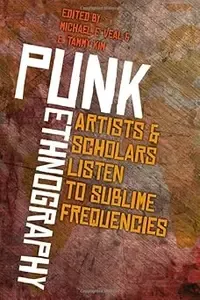 Michael E. Veal, "Punk Ethnography: Artists & Scholars Listen to Sublime Frequencies " English | ISBN: 0819576522 | 2016 | 440 pages | MOBI | 2 MB This ground-breaking case study examines record production as ethnographic work. Since its founding in 2003, Seattle-based record label Sublime Frequencies has produced world music recordings that have been received as radical, sometimes problematic critiques of the practices of sound ethnography. Founded by punk rocker brothers Alan and Richard Bishop, along with filmmaker Hisham Mayet, the label's releases encompass collagist sound travelogues; individual artist compilations; national, regional and genre surveys; and DVDs-all designed in a distinctive graphic style recalling the DIY aesthetic of punk and indie rock. Sublime Frequencies' producers position themselves as heirs to canonical ethnographic labels such as Folkways, Nonesuch, and Musique du Monde, but their aesthetic and philosophical roots in punk, indie rock, and experimental music effectively distinguish their work from more conventional ethnographic norms. Situated at the intersection of ethnomusicology, sound studies, cultural anthropology, and popular music studies, the essays in this volume explore the issues surrounding the label-including appropriation and intellectual property-while providing critical commentary and charting the impact of the label through listener interviews. |

 :
:
