
| |
|
|
Free Ebooks DownloadWelcome to DL4ALL.org – your ultimate destination for ebooks across every genre. Whether you’re into fiction, self-help, education, or niche topics, we offer an extensive library to satisfy your thirst for knowledge and entertainment. Why Choose DL4ALL.org?
Start your reading journey today on DL4ALL.org and unlock a world of imagination, knowledge, and inspiration!  Free Download Brenda Peterson, "Build Me an Ark: A Life with Animals" English | 2002 | pages: 318 | ISBN: 0393323285 | EPUB | 0,8 mb "Peterson writes of nature with an intimacy that tugs at the reader's deep memory."―Orion 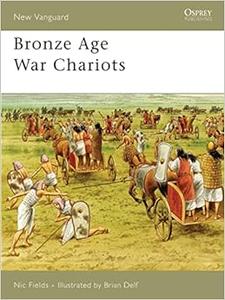 Free Download Brian Delf, "Bronze Age War Chariots" English | 2006 | pages: 51 | ISBN: 1841769444 | PDF | 14,2 mb Chariots, the first mobile fighting vehicle, seem to have originated in Mesopotamia in the third millennium BC. The highly mobile two-wheeled war chariot, carrying a driver and an archer armed with a short composite bow, revolutionized military tactics after 1700 BC. This expensive weapon spread throughout the Middle East and is thought to have reached Egypt with the conquering Hyksos. It spread into Asia Minor, Greece, and was known in Northern Europe by 1500 BC. This book covers the evolution of the war chariot throughout the Bronze Age, detailing its design, development and combat history - in particular its fundamental involvement at the battle of Qadesh. 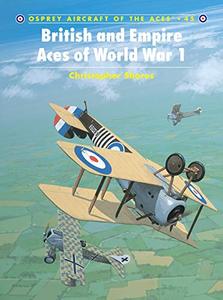 Free Download Christopher Shores, Mark Rolfe, "British and Empire Aces of World War I" English | 2001 | pages: 92 | ISBN: 1841763772 | PDF | 47,8 mb At the outset of World War I the British had some 110 assorted aircraft, used mostly for the visual reconnaissance role. With the advent of faster and more agile single-seaters, the Allies and their adversaries raced to outdo each other in the creation of genuinely effective fighters with fixed forward-firing machine gun armament. It was not until 1917 that the British developed a truly effective interrupter gear, which paved the way for excellent single seaters such as the Sopwith Triplane Camel and the RAF S.E.5., later joined by the Bristol F.2B - the war's best two-seat fighter. This volume traces the rapid development of the fighter in World War I and the amazing exploits of the British and Empire aces who flew them.  Free Download Christopher Perrins, "British Tits" English | 2009 | pages: 438 | ISBN: 000730840X | EPUB | 8,9 mb In addition to dealing with the general biology and behaviour of the birds, Dr Perrins gives full attention to such things as their social lives, their intelligence and adaptiveness, and their puzzling ability to adjust their population sizes to the future availability of food. This edition is exclusive to newnaturalists.com 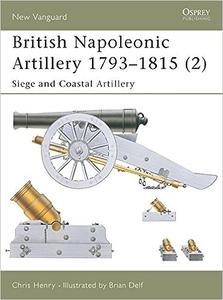 Free Download Brian Delf, "British Napoleonic Artillery 1793-1815 (2): Siege and Coastal Artillery" English | 2003 | pages: 51 | ISBN: 1841764779 | PDF | 11,3 mb Following on from the first volume covering British Napoleonic Artillery, this volume concentrates on the heavy weapons of siege and coastal defences. This book covers the main equipments used; the 24 pounder siege gun and a variety of mortars. Mortars varied from 4- or 5-inch versions up to a13 inch calibre and were considered to be extremely effective because they used an exploding shell to destroy fortifications or personnel. Also covered in detail is the specialist bomb vessel, which was used to attack fortifications in a similar fashion; siege techniques; and the tactical use of siege and coastal artillery.  Free Download Duncan Watts, "British Government and Politics, Second Edition: British Government and Politics: A Comparative Guide" English | 2012 | pages: 465 | ISBN: 0748644946 | PDF | 1,3 mb Your handy guide to the British political system 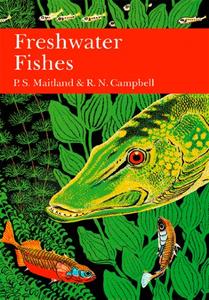 Free Download P. S. Maitland, "British Freshwater Fish" English | 2012 | pages: 766 | ISBN: 0007308507 | EPUB | 28,1 mb An in-depth look at the fish that inhabit the fresh waters of Britain and Ireland. These include famous members of the salmon family, such as the Atlantic Salmon and the Brown Trout, and the obscure whitefish, species of which are confined to just a few lakes. This edition is exclusive to newnaturalists.com 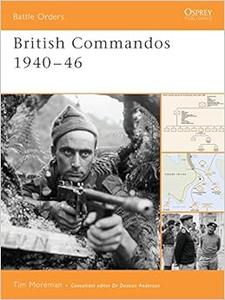 Free Download Tim Moreman, "British Commandos 1940-46" English | 2006 | pages: 97 | ISBN: 184176986X | PDF | 28,6 mb From their establishment in June 1940, the Commando units conducted a succession of daring hit-and-run raids from the sea into North-West Europe, Scandinavia, Italy and the Middle East. Among the highly publicised Commando operations were the raids on Vaagso, Dieppe, and St Nazaire. The Commandos also spawned a range of other Special Forces, including the Special Air Service, Special Boat Service and the Parachute Regiment. This Battle Orders title provides a detailed examination of the Army (and later Royal Marine) Commandos raised in the United Kingdom, from their inception in 1940 through to 1946, when the Army Commandos were disbanded and the role was assigned exclusively to the Royal Marines. 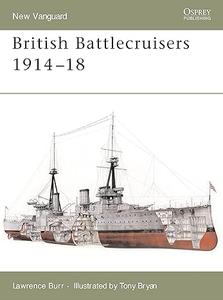 Free Download Tony Bryan, "British Battlecruisers 1914-18" English | 2006 | pages: 52 | ISBN: 1846030080 | PDF | 45,3 mb British battlecruisers were not a "failed design" as is so often claimed, but a very successful and revolutionary one that was critical to, and instrumental in, Britain winning the naval war of 1914-18. This book contains previously untapped evidence from the wrecks of the sunken battlecruisers and detailed analysis of admiralty records to show why Admiral Fisher's famous battlecruiser concept was a revolution that drew together technological breakthroughs, global communications and intelligence gathering to create the first worldwide rapid-response task force. 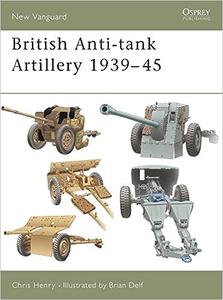 Free Download Brian Delf, "British Anti-tank Artillery 1939-45" English | 2004 | pages: 52 | ISBN: 1841766380 | PDF | 28,3 mb The rapid development of the tank as an offensive weapon following its introduction in World War I gave artillery theorists cause for concern during the 1920s and 1930s. By the beginning of World War II anti-tank guns had been developed, initially at around 37mm and 2 pounds in weight of shot. By the end of the war, monster anti-tank weapons were being developed, able to penetrate an armour thickness of up to 200mm at a range of 1,000 yards. This book explores the British efforts to keep up in a war of development, which saw heavier and more powerful guns eventually replaced by experimental ideas in an attempt to stop the German onslaught. |

 :
:
