
| |
|
|
Free Ebooks DownloadWelcome to DL4ALL.org – your ultimate destination for ebooks across every genre. Whether you’re into fiction, self-help, education, or niche topics, we offer an extensive library to satisfy your thirst for knowledge and entertainment. Why Choose DL4ALL.org?
Start your reading journey today on DL4ALL.org and unlock a world of imagination, knowledge, and inspiration!  Gifts, Talents and Education a Living Theory Approach By Barry Hymer, Jack Whitehead, Marie Huxtable Hymer(auth.) 2008 | 186 Pages | ISBN: 0470725397 | PDF | 1 MB Gifts, Talents and Education: A Living Theory Approach is a practical guide for teachers on how to help all their pupils to enhance their gifts and talents in the classroom. Examples reveal how teachers can transform the way education is understood in schools, by relating stories of how they learned about their own gifts and talents. The book explains recent key developments in multimedia representations of social and emotional aspects of learning. These permit the multi-sensory gifts and talents of individual learners to be recognised and developed within a process that enhances the emotionally literate space of enquiring classrooms. Gifts, Talents and Education assumes a capability approach to human development which rests on enabling individuals to realise their gifts and talents within a co-created sense of the common good. The book offers values, skills and understanding as concepts that retain a direct connection with practice. The stories are grounded in the lives of practitioner researchers who show the lived meanings of these ideas as they are realised in practice, asking questions such as 'how do I improve what I am doing?' and 'how do I live my values more fully in practice?'. Content: 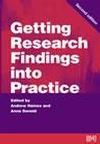 Getting Research Findings Into Practice, Second Edition By 2004 | 237 Pages | ISBN: 0727915533 | PDF | 3 MB Thoroughly updated and revised, the new edition of this accessible guide aims to outline why there is a gap between research findings and what actually happens in clinical practice. It covers a number of topics including the sources of information on clinical effectiveness and methods of information, how to close the gap between research and pratice, potential roles for lay people, the role of decision support, barriers to the use of evidence in clinical practice, the role of decision analysis, implementing research findings in developing countries and how to encourage the implementation of results from economic evaluation.Content: Chapter 1 Introduction (pages 1-10): Andrew Haines and Anna DonaldChapter 2 Criteria for the Implementation of Research Evidence in Policy and Practice (pages 11-18): Trevor A Sheldon, Gordon Guyatt and Andrew HainesChapter 3 Sources of Information on Clinical Effectiveness and Methods of Dissemination (pages 19-28): Julie Glanville, Margaret Haines and Ione AustonChapter 4 Changing Provider Behaviour: An Overview of Systematic Reviews of Interventions to Promote Implementation of Research Findings by Healthcare Professionals (pages 29-67): Jeremy Grimshaw, Liz Shirran, Ruth Thomas, Graham Mowatt, Cynthia Fraser, Lisa Bero, Roberto Grilli, Emma Harvey, Andy Oxman and Mary Ann O'BrienChapter 5 Implementing Research Findings into Practice: Beyond the Information Deficit Model (pages 68-76): Theresa M Marteau, Amanda J Sowden and David ArmstrongChapter 6 Changing Clinical Practice in the Light of the Evidence: Two Contrasting Stories from Perinatology (pages 77-85): Vivienne van SomerenChapter 7 Roles for Lay People in the Implementation of Healthcare Research (pages 86-94): Sandy Oliver, Vikki Entwistle and Ellen HodnettChapter 8 Implementing Research Findings in Clinical Practice (pages 95-106): Anna Donald and Ruairidh MilneChapter 9 Using Evidence in Clinical Practice (pages 107-114): Sharon E StrausChapter 10 Barriers and Bridges to Evidence?Based Clinical Practice (pages 115-122): Brian Haynes and Andrew HainesChapter 11 Decision Support Systems and Clinical Innovation (pages 123-137): Jeremy C Wyatt and Paul TaylorChapter 12 Decision Analysis and the Implementation of Research Findings (pages 138-153): R J Lilford, S G Pauker, David Braunholtz and Jiri ChardChapter 13 Evidence?Based Policy Making (pages 154-161): J A Muir GrayChapter 14 Implementing Research Findings in Developing Countries (pages 162-173): Paul Garner, Helen Smith, Rajendra Kale, Rumona Dickson, Tony Dans and Rodrigo SalinasChapter 15 Opportunity Costs on Trial: New Options for Encouraging Implementation of Results from Economic Evaluations (pages 174-196): Neil Craig and Matthew SuttonChapter 16 Surviving Research Implementation (pages 197-206): David Evans and Lesley WyeChapter 17 Using Evidence in Practice: Setting Priorities in Oxfordshire (pages 207-217): Sian Griffiths 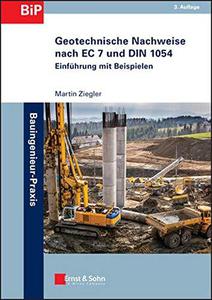 Geotechnische Nachweise nach EC 7 und DIN 1054: Einfuhrung mit Beispielen, Dritte Auflage By Univ. Prof. Dr.?Ing. Martin Ziegler(auth.) 2012 | 410 Pages | ISBN: 343302975X | PDF | 10 MB Vorwort zur 3 Auflage V Vorwort zur 2 Auflage VI Vorwort zur 1 Auflage VII Hinweise zum Gebrauch dieses Buches IX 1 Einfuhrung und Begriffe 1 2 Erddruckermittlung 49 3 Gesamtstandsicherheit 75 4 Flachengrundungen 120 5 Pfahlgrundungen 162 6 Stutzbauwerke 224 7 Baugrubenwande 269 8 Verankerungen 336 9 Hydraulisch verursachtes Versagen 355Content: Chapter 1 Einfuhrung und Begriffe (pages 1-48): Chapter 2 Erddruckermittlung (pages 49-74): Chapter 3 Gesamtstandsicherheit (pages 75-119): Chapter 4 Flachengrundungen (pages 120-161): Chapter 5 Pfahlgrundungen (pages 162-223): Chapter 6 Stutzbauwerke (pages 224-268): Chapter 7 Baugrubenwande (pages 269-335): Chapter 8 Verankerungen (pages 336-354): Chapter 9 Hydraulisch verursachtes Versagen (pages 355-390): 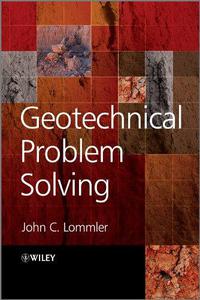 Geotechnical Problem Solving By John C. Lommler(auth.) 2012 | 350 Pages | ISBN: 1119992974 | PDF | 4 MB Devised with a focus on problem solving, Geotechnical Problem Solving bridges the gap between geotechnical and soil mechanics material covered in university Civil Engineering courses and the advanced topics required for practicing Civil, Structural and Geotechnical engineers. By giving newly qualified engineers the information needed to apply their extensive theoretical knowledge, and informing more established practitioners of the latest developments, this book enables readers to consider how to confidently approach problems having thought through the various options available. Where various competing solutions are proposed, the author systematically leads through each option, weighing up the benefits and drawbacks of each, to ensure the reader can approach and solve real-world problems in a similar manner The scope of material covered includes a range of geotechnical topics, such as soil classification, soil stresses and strength and soil self-weight settlement. Shallow and deep foundations are analyzed, including special articles on laterally loaded piles, retaining structures including MSE and Tieback walls, slope and trench stability for natural, cut and fill slopes, geotechnical uncertainty, and geotechnical LRFD (Load and Resistance Factor Design).Content: Chapter 1 General Topics (pages 1-33): Chapter 2 Geotechnical Topics (pages 35-125): Chapter 3 Foundations (pages 127-219): Chapter 4 Retaining Structures - Lateral Loads (pages 221-265): Chapter 5 Geotechnical LRFD (pages 267-320): Chapter 6 Closing (pages 321-333):  Geomorphic Analysis of River Systems: An Approach to Reading the Landscape By Kirstie A. Fryirs, Gary J. Brierley(auth.) 2012 | 360 Pages | ISBN: 1405192755 | PDF | 27 MB Filling a niche in the geomorphology teaching market, this introductory book is built around a 12 week course in fluvial geomorphology.'Reading the landscape' entails making sense of what a riverscape looks like, how it works, how it has evolved over time, and how alterations to one part of a catchment may have secondary consequences elsewhere, over different timeframes. These place-based field analyses are framed within their topographic, climatic and environmental context. Issues and principles presented in the first part of this book provide foundational understandings that underpin the approach to reading the landscape that is presented in the second half of the book. In reading the landscape, detective-style investigations and interpretations are tied to theoretical and conceptual principles to generate catchment-specific analyses of river character, behaviour and evolution, including responses to human disturbance.This book has been constructed as an introductory text on river landscapes, providing a bridge and/or companion to quantitatively-framed or modelled approaches to landscape analysis that are addressed elsewhere. Key principles outlined in the book emphasise the importance of complexity, contingency and emergence in interpreting the character, behaviour and evolution of any given system.The target audience is second and third year undergraduate students in geomorphology, hydrology, earth science and environmental science, as well as river practitioners who use geomorphic understandings to guide scientific and/or management applications.The primary focus of Kirstie and Gary's research and teaching entails the use of geomorphic principles as a tool with which to develop coherent scientific understandings of river systems, and the application of these understandings in management practice. Kirstie and Gary are co-developers of the River Styles Framework and Short Course that is widely used in river management, decision-making and training.Additional resources for this book can be found at: www.wiley.com/go/fryirs/riversystems.Content: Chapter One Geomorphic Analysis of River Systems: An Approach to Reading the Landscape (pages 1-8): Chapter Two Key Concepts in River Geomorphology (pages 9-28): Chapter Three Catchment?Scale Controls on River Geomorphology (pages 29-43): Chapter Four Catchment Hydrology (pages 44-64): Chapter Five Impelling and Resisting Forces in River Systems (pages 65-80): Chapter Six Sediment Movement and Deposition in River Systems (pages 81-115): Chapter Seven Channel Geometry (pages 116-131): Chapter Eight Instream Geomorphic Units (pages 132-154): Chapter Nine Floodplain Forms and Processes (pages 155-173): Chapter Ten River Diversity (pages 174-204): Chapter Eleven River Behaviour (pages 205-234): Chapter Twelve River Evolution (pages 235-268): Chapter Thirteen Human Impacts on River Systems (pages 269-296): Chapter Fourteen Sediment Flux at the Catchment Scale: Source?To?Sink Relationships (pages 297-319): Chapter Fifteen The Usefulness of River Geomorphology: Reading the Landscape in Practice (pages 320-323): 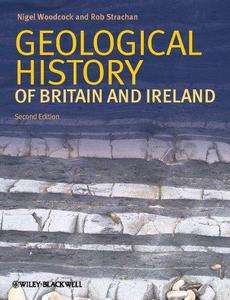 Geological history of Britain and Ireland By Nigel H. Woodcock, Rob Strachan (editors) 2012 | 454 Pages | ISBN: 1405193824 | PDF | 25 MB Britain and Ireland have a remarkably varied geology for so small a fragment of continental crust, with a fine rock record back through three billion years of geological time. This history would have been interesting enough if it had been played out on relatively stable continental crust. However, Britain and Ireland have developed at a tectonic crossroads, on crust once traversed by subduction zones and volcanic arcs, continental rifts and mountain belts. The resulting complexity is instructive, fascinating and perplexing.Geological History of Britain and Ireland tells the region's story at a level accessible to undergraduate geologists, as well as to postgraduates, professionals or informed amateurs. This second edition is fully revised and updated, reflecting our continually developing knowledge of the region's geology. Full coverage is again given to the rich Precambrian and Early Palaeozoic history, as well as to later events more relevant to hydrocarbon exploration. The book is an essential starting point for more detailed studies of the regional geology.Additional resources for this book can be found at http://www.wiley.com/go/woodcock/geologicalhistory 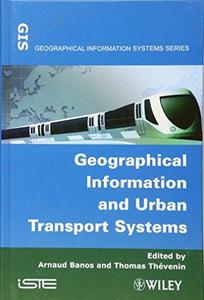 Geographical Information and Urban Transport Systems By 2011 | 275 Pages | ISBN: 1848212283 | PDF | 10 MB Urban transport systems need to be analyzed from various perspectives: the offer on one hand, the demand on the other hand, but also their negative externalities (risks of transport systems). These three dimensions are rarely apprehended in an integrated perspective. This book provides a large collection of chapters dealing with these specific dimensions, each written by recognized specialists in their domain, and articulates them in an integrated way.Content: Chapter 1 Modeling Transport Systems on an Intra?Urban Scale (pages 1-30): Thomas TheveninChapter 2 Determining Urban Public Transport Supply (pages 31-52): Robert ChapleauChapter 3 Defining Intermodal Accessibility (pages 53-81): Alexis Conesa and Alain L'hostisChapter 4 Characterizing Form and Functioning of Transportation Networks (pages 83-113): Cyrille Genre?GrandpierreChapter 5 Estimating Transport Demand (pages 115-165): Patrick BonnelChapter 6 Visualizing Daily Mobility: Towards Other Modes of Representation (pages 167-220): Olivier KleinChapter 7 Guiding a Tram?Train Installation: a Necessary Multi?Criteria Approach (pages 221-260): Olivier BouhetChapter 1 List of Authors (pages 261-262): 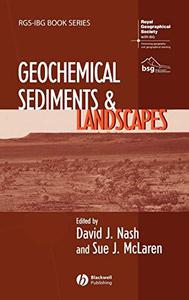 Geochemical Sediments and Landscapes By 2007 | 486 Pages | ISBN: 1405125195 | PDF | 10 MB This state-of-the-art volume reviews both past work and current research, with contributions from internationally recognized experts. The book is organized into fourteen chapters and designed to embrace the full range of terrestrial geochemical sediments. An up-to-date and comprehensive survey of research in the field of geochemical sediments and landscapes Discusses the main duricrusts, including calcrete, laterite and silcrete Considers deposits precipitated in various springs, lakes, caves and near-coastal environments Considers the range of techniques used in the analysis of geochemical sediments, representing a significant advance on previous textsContent: Chapter 1 Introduction: Geochemical Sediments in Landscapes (pages 1-9): David J. Nash and Sue J. McLarenChapter 2 Calcrete (pages 10-45): V. Paul WrightChapter 3 Laterite and Ferricrete (pages 45-94): Mike WiddowsonChapter 4 Silcrete (pages 95-148): David J. Nash and J. Stewart UllyottChapter 5 Aeolianite (pages 149-172): Sue J. McLarenChapter 6 Tufa and Travertine (pages 173-199): Heather Viles and Allan PentecostChapter 7 Speleothems (pages 200-245): Ian J. Fairchild, Silvia Frisia, Andrea Borsato and Anna F. ToothChapter 8 Rock Varnish (pages 246-297): Ronald I. DornChapter 9 Lacustrine and Palustrine Geochemical Sediments (pages 298-329): Eric P VerrecchiaChapter 10 Terrestrial Evaporites (pages 330-364): Allan R. ChivasChapter 11 Beachrock and Intertidal Precipitates (pages 365-390): Eberhard GischlerChapter 12 Sodium Nitrate Deposits and Efflorescences (pages 391-408): Andrew S. Goudie and Elaine HeslopChapter 13 Analytical Techniques for Investigating Terrestrial Geochemical Sediments (pages 409-442): John J. McAlister and Bernie J. SmithChapter 14 Geochemical Sediments and Landscapes: General Summary (pages 443-446): Sue J. McLaren and David J. Nash  Sarah Ockwell-Smith, "Gentle Discipline: Using Emotional Connection-Not Punishment-to Raise Confident, Capable Kids" English | 2017 | ISBN: 0143131893 | 272 pages | True EPUB | 0.42 MB As seen in the New York Times - a practical guide that presents an alternative to shouting, shaming, and blaming-to give kids the skills they need to grow and thrive  Genetically Engineered Food: Methods and Detection By Knut J. Heller (ed.) 2006 | 311 Pages | ISBN: 3527313931 | PDF | 3 MB Continuing the very successful first edition, this book reviews the most recent changes to the legal situation in Europe concerning genetically engineered food and labeling. Due to the extremely rapid developments in green biotechnology, all the chapters have been substantially revised and updated. Divided into three distinct parts, the text begins by covering applications and perspectives, including transgenic modification of production traits in farm animals, fermented food production and the production of food additives using filamentous fungi. The second section is devoted to legislation, while the final part examines methods of detection, such as DNA-based methods, and methods for detecting genetic engineering in composed and processed foods. From the reviews of the first edition: "This work promises to be a standard reference in the detection of genetically engineered food. I believe this work will find a valued place for any scientist, regulator or technical library that deals with biotechnology or detection of genetically engineered food organisms." James J. Heinis, Journal of Agricultural & Food InformationContent: Chapter 1 Transgenic Modification of Production Traits in Farm Animals (pages 1-26): Gottfried Brem and Mathias MullerChapter 2 Genetically Modified Plants (pages 27-63): Susanne Stirn and Horst LorzChapter 3 Fermentation of Food by Means of Genetically Modified Yeast and Filamentous Fungi (pages 64-94): Rena Leisegang, Elke Nevoigt, Anja Spielvogel, Georg Kristan, Anke Niederhaus and Ulf StahlChapter 4 Production of Food Additives Using Filamentous Fungi (pages 95-108): Carsten M. HjortChapter 5 Genetic Engineering of Bacteria Used in Food Fermentation (pages 109-132): Arnold GeisChapter 6 The Legal Situation for Genetically Engineered Food in Europe (pages 133-153): Rudolf Streinz and Jan KalbheimChapter 7 Detection of Genetic Modifications - Some Basic Considerations (pages 155-162): Knut J. HellerChapter 8 DNA?based Methods for Detection of Genetic Modifications (pages 163-185): Ralf EinspanierChapter 9 Genetic Engineering of Fish, and Methods of Detection (pages 186-200): Hartmut RehbeinChapter 10 Detection Methods for Genetically Modified Crops (pages 201-218): Rolf MeyerChapter 11 Methods for Detection of Genetically Modified Organisms in Composite and Processed Foods (pages 219-247): Karl?Heinz Engel, Francisco Moreano and Alexandra EhlertChapter 12 Mutations in Lactococcus lactis and their Detection (pages 248-268): Jan Kok and Bertus van den BurgChapter 13 Methods for Detection of Genetically Modified Microorganisms used in Food Fermentation Processes (pages 269-279): Walter P. Hammes, Christian Hertel and Torsten Bauer |

 :
:
