
| |
|
|
Free Ebooks DownloadWelcome to DL4ALL.org – your ultimate destination for ebooks across every genre. Whether you’re into fiction, self-help, education, or niche topics, we offer an extensive library to satisfy your thirst for knowledge and entertainment. Why Choose DL4ALL.org?
Start your reading journey today on DL4ALL.org and unlock a world of imagination, knowledge, and inspiration!  . Iao131, "Naturalistic Occultism: An Introduction to Scientific Illuminism" English | ISBN: 1105589064 | 2012 | 158 pages | PDF | 13 MB Naturalistic Occultism: An Introduction to Scientific Illuminism is an attempt to introduce the approach of Scientific Illuminism to occultism. It is in line with the motto of Scientific Illuminism, "The Method of Science, the Aim of Religion." Naturalistic Occultism approaches the theory and practice of occultism in a way that is scientific (using the scientific method and being up-to-date in current scientific knowledge), naturalistic (not supernatural), and pragmatic (whatever works is provisionally 'true'). This book represents an honest attempt to separate the gold of the practice of magick from the dross of superstition and dogma. 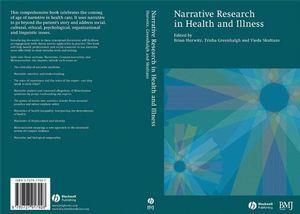 Narrative Research in Health and Illness By 2004 | 466 Pages | ISBN: 0727917927 | PDF | 4 MB This comprehensive book celebrates the coming of age of narrative in health care. It uses narrative to go beyond the patient's story and address social, cultural, ethical, psychological, organizational and linguistic issues.This book has been written to help health professionals and social scientists to use narrative more effectively in their everyday work and writing.The book is split into three, comprehensive sections; Narratives, Counter-narratives and Meta-narratives.Content: Chapter 1 The Ethicality of Narrative Medicine (pages 21-36): Rita CharonChapter 2 Soldiers Become Casualties: Doctors' Accounts of the Sars Epidemic (pages 37-51): Eugene Wu, Frances Rapport, Kip Jones and Trisha GreenhalghChapter 3 Poems from the Heart: Living with Heart Failure (pages 52-72): Marilyn Kendall and Scott MurrayChapter 4 Performance Narratives in the Clinical World (pages 73-94): Cheryl MattinglyChapter 5 "I cut because it helps": Narratives of Self?Injury in Teenage Girls (pages 95-114): Petra M Boynton and Annabelle AuerbachChapter 6 The DIPEx Project: Collecting Personal Experiences of Illness and Health Care (pages 115-131): Andrew Herxheimer and Sue ZieblandChapter 7 Narratives of Spirituality and Religion in End?of?Life Care (pages 132-145): Arthur W FrankChapter 8 The Death of the Narrator (pages 146-155): Catherine BellingChapter 9 Narrative, Emotion, and Understanding (pages 156-167): Peter GoldieChapter 10 The Voice of Experience and the Voice of the Expert ? Can they Speak to each Other? (pages 168-186): Yiannis GabrielChapter 11 Wounded or Warrior? Stories of Being or Becoming Deaf (pages 187-204): Lesley Jones and Robin BuntonChapter 12 Narrative Analysis and Contested Allegations of Munchausen Syndrome by Proxy (pages 205-222): Clive BaldwinChapter 13 Confounding the Experts: The Vindication of Parental Testimony in Shaken Baby Syndrome (pages 223-238): James Le FanuChapter 14 Narratives of Compound Loss: Parents' Stories from the Organ Retention Scandal (pages 239-256): Ruth RichardsonChapter 15 The Power of Stories Over Statistics: Lessons from Neonatal Jaundice and Infant Airplane Safety (pages 257-276): Thomas B NewmanChapter 16 Narratives of Health Inequality: Interpreting the Determinants of Health (pages 277-291): Gareth WilliamsChapter 17 Narratives of Displacement and Identity (pages 292-308): Vieda SkultansChapter 18 A Thrice?Told Tale: New Readings of an Old Story (pages 309-324): Catherine Kohler RiessmanChapter 19 The Role of Stories and Storytelling in Organisational Change Efforts: A Field Study of an Emerging "community of practice" within the UK National Health Service (pages 325-348): Paul BateChapter 20 Meta?Narrative Mapping: A New Approach to the Systematic Review of Complex Evidence (pages 349-381): Trisha GreenhalghChapter 21 How Narratives Work in Psychiatric Science: An Example from the Biological Psychiatry of PTSD (pages 382-396): Allan YoungChapter 22 Storying Policy: Constructions of Risk in Proposals to Reform UK Mental Health Legislation (pages 397-413): David J HarperChapter 23 The Temporal Construction of Medical Narratives (pages 414-427): Brian Hurwitz  William Webb, "My Art Is Where the Ohm Is" English | ISBN: 1438943970 | 2009 | 424 pages | AZW3 | 4 MB  Multiscale Geomechanics By 2011 | 405 Pages | ISBN: 1848212461 | PDF | 14 MB This book addresses the latest issues in multiscale geomechanics. Written by leading experts in the field as a tribute to Jean Biarez (1927-2006), it can be of great use and interest to researchers and engineers alike. A brief introduction describes how a major school of soil mechanics came into being through the exemplary teaching by one man. Biarez's life-long work consisted of explaining the elementary mechanisms governing soil constituents in order to enhance understanding of the underlying scientific laws which control the behavior of constructible sites and to incorporate these scientific advancements into engineering practices. He innovated a multiscale approach of passing from the discontinuous medium formed by individual grains to an equivalent continuous medium. The first part of the book examines the behavior of soils at the level of their different constituents and at the level of their interaction. Behavior is then treated at the scale of the soil sample. The second part deals with soil mechanics from the vantage point of the construction project. It highlights Biarez's insightful adoption of the Finite Element Codes and illustrates, through numerous construction examples, his methodology and approach based on the general framework he constructed for soil behavior, constantly enriched by comparing in situ measurements with calculated responses of geostructures.Content: Chapter 1 Jean Biarez (pages 1-14): Jean?Louis Bordes, Jean?Louis Favre and Daniel GrimmChapter 2 From Particle to Material Behavior (pages 15-34): Bernard Cambou and Cecile Nouguier?LehonChapter 3 Granular Materials in Civil Engineering (pages 35-82): Etienne FrossardChapter 4 Waste Rock Behavior at High Pressures (pages 83-112): Edgar Bard, Maria Eugenia Anabalon and Jose CampanaChapter 5 Models by Jean Biarez for the Behavior of Clean Sands and Remolded Clays at Large Strains (pages 113-152): Jean?Louis Favre and Mahdia HattabChapter 6 The Concept of Effective Stress in Unsaturated Soils (pages 153-182): Said Taibi, Jean?Marie Fleureau, Sigit Hadiwardoyo, Hanene Souli and Antonio Gomes CorreiaChapter 7 A Microstructural Model for Soils and Granular Materials (pages 183-220): Pierre?Yves HicherChapter 8 Modeling Landslides with a Material Instability Criterion (pages 221-242): Florent Prunier, Sylvain Lignon, Farid Laouafa and Felix DarveChapter 9 Numerical Modeling (pages 243-332): Arezou Modaressi?Farahmand?RazaviChapter 10 Evaluating Seismic Stability of Embankment Dams (pages 333-392): Jean?Jacques Fry  Multidisciplinary Design Optimization in Computational Mechanics By 2010 | 561 Pages | ISBN: 1848211384 | PDF | 31 MB This book provides a comprehensive introduction to the mathematical and algorithmic methods for the Multidisciplinary Design Optimization (MDO) of complex mechanical systems such as aircraft or car engines. We have focused on the presentation of strategies efficiently and economically managing the different levels of complexity in coupled disciplines (e.g. structure, fluid, thermal, acoustics, etc.), ranging from Reduced Order Models (ROM) to full-scale Finite Element (FE) or Finite Volume (FV) simulations. Particular focus is given to the uncertainty quantification and its impact on the robustness of the optimal designs. A large collection of examples from academia, software editing and industry should also help the reader to develop a practical insight on MDO methods.Content: Chapter 1 Multilevel Multidisciplinary Optimization in Airplane Design (pages 1-16): Michel RavacholChapter 2 Response Surface Methodology and Reduced Order Models (pages 17-64): Manuel SamuelidesChapter 3 PDE Metamodeling Using Principal Component Analysis (pages 65-117): Florian De VuystChapter 4 Reduced?Order Models for Coupled Problems (pages 119-197): Rajan Filomeno Coelho, Manyu Xiao, Piotr Breitkopf, Catherine Knopf?Lenoir, Pierre Villon and Maryan SidorkiewiczChapter 5 Multilevel Modeling (pages 199-263): Pierre?Alain Boucard, Sandrine Buytet, Bruno Soulier, Praveen Chandrashekarappa and Regis DuvigneauChapter 6 Multiparameter Shape Optimization (pages 265-285): Abderrahmane Benzaoui and Regis DuvigneauChapter 7 Two?Discipline Optimization (pages 287-319): Jean?Antoine DesideriChapter 8 Collaborative Optimization (pages 321-367): Yogesh Parte, Didier Auroux, Joel Clement, Mohamed Masmoudi and Jean HermetzChapter 9 An Empirical Study of the Use of Confidence Levels in RBDO with Monte?Carlo Simulations (pages 369-404): Daniel Salazar Aponte, Rodolphe Le Riche, Gilles Pujol and Xavier BayChapter 10 Uncertainty Quantification for Robust Design (pages 405-424): Regis Duvigneau, Massimiliano Martinelli and Praveen ChandrashekarappaChapter 11 Reliability?based Design Optimization (RBDO) (pages 425-458): Ghias Kharmanda, Abedelkhalak El Hami and Eduardo Souza De CursiChapter 12 Multidisciplinary Optimization in the Design of Future Space Launchers (pages 459-468): Guillaume Collange, Nathalie Delattre, Nikolaus Hansen, Isabelle Quinquis and Marc SchoenauerChapter 13 Industrial Applications of Design Optimization Tools in the Automotive Industry (pages 469-498): Jean?Jacques Maisonneuve, Fabian Pecot, Antoine Pages and Maryan SidorkiewiczChapter 14 Object?Oriented Programming of Optimizers - Examples in Scilab (pages 499-538): Yann Collette, Nikolaus Hansen, Gilles Pujol, Daniel Salazar Aponte and Rodolphe Le Riche 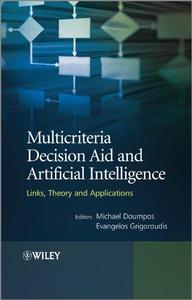 Multicriteria Decision Aid and Artificial Intelligence By 2013 | 353 Pages | ISBN: 1119976391 | PDF | 3 MB Presents recent advances in both models and systems for intelligent decision making.Organisations often face complex decisions requiring the assessment of large amounts of data. In recent years Multicriteria Decision Aid (MCDA) and Artificial Intelligence (AI) techniques have been applied with considerable success to support decision making in a wide range of complex real-world problems.The integration of MCDA and AI provides new capabilities relating to the structuring of complex decision problems in static and distributed environments. These include the handling of massive data sets, the modelling of ill-structured information, the construction of advanced decision models, and the development of efficient computational optimization algorithms for problem solving. This book covers a rich set of topics, including intelligent decision support technologies, data mining models for decision making, evidential reasoning, evolutionary multiobjective optimization, fuzzy modelling, as well as applications in management and engineering.Multicriteria Decision Aid and Artificial Intelligence:Covers all of the recent advances in intelligent decision making.Includes a presentation of hybrid models and algorithms for preference modelling and optimisation problems.Provides illustrations of new intelligent technologies and architectures for decision making in static and distributed environments.Explores the general topics on preference modelling and learning, along with the coverage of the main techniques and methodologies and applications. Is written by experts in the field. This book provides an excellent reference tool for the increasing number of researchers and practitioners interested in the integration of MCDA and AI for the development of effective hybrid decision support methodologies and systems. Academics and post-graduate students in the fields of operational research, artificial intelligence and management science or decision analysis will also find this book beneficial.Content: Chapter 1 Computational Intelligence Techniques for Multicriteria Decision Aiding: An Overview (pages 1-23): Michael Doumpos and Constantin ZopounidisChapter 2 Intelligent Decision Support Systems (pages 25-44): Gloria Phillips?WrenChapter 3 Designing Distributed Multi?Criteria Decision Support Systems for Complex and Uncertain Situations (pages 45-76): Tina Comes, Niek Wijngaards and Frank SchultmannChapter 4 Preference Representation with Ontologies (pages 77-99): Aida Valls, Antonio Moreno and Joan BorrasChapter 5 Neural Networks in Multicriteria Decision Support (pages 101-126): Thomas HanneChapter 6 Rule?Based Approach to Multicriteria Ranking (pages 127-160): Marcin Szela?g, Salvatore Greco and Roman SlowinskiChapter 7 About the Application of Evidence Theory in Multicriteria Decision Aid (pages 161-187): Mohamed Ayman Boujelben and Yves De SmetChapter 8 Interactive Approaches Applied to Multiobjective Evolutionary Algorithms (pages 189-207): Antonio Lopez Jaimes and Carlos A. Coello CoelloChapter 9 Generalized Data Envelopment Analysis and Computational Intelligence in Multiple Criteria Decision Making (pages 209-233): Yeboon Yun and Hirotaka NakayamaChapter 10 Fuzzy Multiobjective Optimization (pages 235-271): Masatoshi SakawaChapter 11 Multiple Criteria Decision Aid and Agents: Supporting Effective Resource Federation in Virtual Organizations (pages 273-284): Pavlos Delias and Nikolaos MatsatsinisChapter 12 Fuzzy Analytic Hierarchy Process Using Type?2 Fuzzy Sets: An Application to Warehouse Location Selection (pages 285-308): Irem Ucal Sary, Basar Oztaysi and Cengiz KahramanChapter 13 Applying Genetic Algorithms to Optimize Energy Efficiency in Buildings (pages 309-333): Christina Diakaki and Evangelos GrigoroudisChapter 14 Nature?Inspired Intelligence for Pareto Optimality Analysis in Portfolio Optimization (pages 335-345): Vassilios Vassiliadis and Georgios Dounias  Diane Dweller, "Mom, Mania, and Me: Surviving and Changing a Volatile Relationship" English | ISBN: 094474902X | 2017 | 234 pages | AZW3 | 410 KB FINALIST Tucson Festival of Books Competition 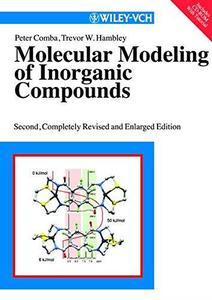 Molecular Modeling of Inorganic Compounds, Second Edition By Prof. Dr. Peter Comba, Prof. Dr. Trevor W. Hambley(auth.) 2001 | 322 Pages | ISBN: 3527299157 | PDF | 17 MB In many branches of chemistry, Molecular Modeling is a well-established and powerful tool for the investigation of complex structures. The second completely revised and enlarged edition of this highly recognized book shows how this method can be successfully applied to inorganic and coordination compounds. The first part of the book gives a general introduction to Molecular Modeling, which will be of use for chemists in all areas. The second part discusses numerous carefully selected examples, chosen to illustrate the wide range of applicability of molecular modeling to metal complexes and the approaches being taken to dealing with some of the difficulties involved. While the general outline is similar to that of the first edition, many of the examples chosen for discussion reflect the changes of the past five years. In the third part, the reader learns how to apply Molecular Modeling to a new system and how to interpret the results. The accompanying software features 20 tutorial lessons based on examples from the literature and the book itself. The authors take special care to highlight possible pitfalls and offer advice on how to avoid them. Therefore, this book will be invaluable to everyone working in or entering the field. Content: Chapter 1 Introduction (pages 3-7): Chapter 2 Molecular Modeling Methods in Brief (pages 9-16): Chapter 3 Parameterization, Approximations and Limitations of Molecular Mechanics (pages 17-57): Chapter 4 Computation (pages 59-67): Chapter 5 The Multiple Minima Problem (pages 69-73): Chapter 6 Conclusions (pages 75-76): Chapter 7 Structural Aspects (pages 79-87): Chapter 8 Stereoselectivities (pages 89-102): Chapter 9 Metal Ion Selectivity (pages 103-118): Chapter 10 Spectroscopy (pages 119-139): Chapter 11 Electron Transfer (pages 141-148): Chapter 12 Electronic Effects (pages 149-159): Chapter 13 Bioinorganic Chemistry (pages 161-170): Chapter 14 Organometallics (pages 171-182): Chapter 15 Compounds with s?, p? and f?Block Elements (pages 183-189): Chapter 16 The Model, the Rules and the Pitfalls (pages 193-201): Chapter 17 Tutorial (pages 203-295):  Molecular Catenanes, Rotaxanes and Knots: A Journey Through the World of Molecular Topology By 1999 | 379 Pages | ISBN: 3527295720 | PDF | 14 MB This journey through the fascinating world of molecular topology focuses on catenanes, rotaxanes and knots, their synthesis, properties, and applications and the theory of interlocking and interpenetrating molecules. Nearly one hundred years of progress have passed since Willstatter's speculative vision of a molecule consisting of two interlinked rings. But even today the synthesis of such structures are a challenge to the creativity of synthetic chemists. These molecules are not only of academic interest, since they occur naturally. In such molecules as DNA, knots and related topological features play a key role in biochemical processes. In addition, extensive research on the properties of polyrotaxanes and polycatenanes show potential applications as molecular magnets, wires or switches. Twelve international leading experts in the field present the broad and impressive spectrum of the topology of these molecules, from theoretical aspects and new pathways in synthesis to probing their properties. All researchers working in this interdisciplinary area, whether organic, inorganic or polymer chemists, as well as material scientists, will welcome this comprehensive and up-to-date work as an inspiring source for creative research ideas.Content: Chapter 1 Chemical Topology ? Statistical Musings (pages 1-6): E. WassennanChapter 2 A Knot Theoretic Approach to Molecular Chirality (pages 7-35): Erica FlapanChapter 3 Soft and Hard Molecule?Based Magnets with a Fully Interlocked Three?Dimensional Structure (pages 37-55): Olivier Kahn, Lahcene Ouahab, Corine Mathoniere and Humberto O. StumpfChapter 4 Transition Metal?Incorporating Catenanes (pages 57-76): Makoto FujitaChapter 5 Catenane and Rotaxane Motifs in Interpenetrating and Self?Penetrating Coordination Polymers (pages 77-106): Stuart R. Batten and Richard RobsonChapter 6 Molecular Knots ? From Early Attempts to High?Yield Template Syntheses (pages 107-142): Christiane Dietrich?Buchecker, Gwenael Rapenne and Jean?Pierre SauvageChapter 7 Organic Template?Directed Syntheses of Catenanes, Rotaxanes, and Knots (pages 143-176): Francisco M. Raymo and J. Fraser StoddartChapter 8 Amide?Based Catenanes, Rotaxanes and Pretzelanes (pages 177-222): Christiane Heim, Dirk Udelhofen and Fritz VogtleChapter 9 Polymer Chains in Constraining Environments (pages 223-246): J. E. MarkChapter 10 Polycatenanes, Poly[2]catenanes, and Polymeric Catenanes (pages 247-276): Yves GeertsChapter 11 Polyrotaxanes ? Syntheses and Properties (pages 277-321): Caiguo Gong and Hany W. GibsonChapter 12 Synthetic DNA Topology (pages 323-356): Nadrian C. Seeman 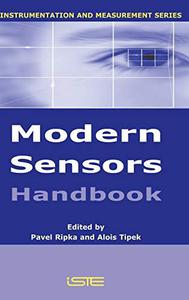 Modern Sensors Handbook By 2007 | 528 Pages | ISBN: 1905209665 | PDF | 7 MB Modern sensors working on new principles and/or using new materials and technologies are more precise, faster, smaller, use less power and are cheaper. Given these advantages, it is vitally important for system developers, system integrators and decision makers to be familiar with the principles and properties of the new sensor types in order to make a qualified decision about which sensor type to use in which system and what behavior may be expected. This type of information is very difficult to acquire from existing sources, a situation this book aims to address by providing detailed coverage on this topic. In keeping with its practical theme, the discussion concentrates on sensor types used or having potential to be used in industrial applications.Content: Chapter 1 Pressure Sensors (pages 1-47): Andre Migeon and Anne?Elisabeth LenelChapter 2 Optical Sensors (pages 49-82): Stanislav Dado and Jan FischerChapter 3 Flow Sensors (pages 83-139): R. Meylaers, F. Peeters, M. Peetermans and L. IndesteegeChapter 4 Intelligent Sensors and Sensor Networks (pages 141-192): Jiri NovakChapter 5 Accelerometers and Inclinometers (pages 193-244): Andre Migeon and Anne?Elisabeth LenelChapter 6 Chemical Sensors and Biosensors (pages 245-303): Gillian McMahonChapter 7 Level, Position and Distance (pages 305-345): Stanislav Dado and G. HartungChapter 8 Temperature Sensors (pages 347-393): F. Peeters, M. Peetermans and L. IndesteegeChapter 9 Solid State Gyroscopes and Navigation (pages 395-432): Andre Migeon and Anne?Elisabeth LenelChapter 10 Magnetic Sensors (pages 433-475): S. Ripka and Pavel RipkaChapter 11 New Technologies and Materials (pages 477-511): A. Tipek, P. Ripka, E. Hulicius, A. Hospodkova and P. Neuzil |

 :
:
