
| |
|
|
Free Ebooks DownloadWelcome to DL4ALL.org – your ultimate destination for ebooks across every genre. Whether you’re into fiction, self-help, education, or niche topics, we offer an extensive library to satisfy your thirst for knowledge and entertainment. Why Choose DL4ALL.org?
Start your reading journey today on DL4ALL.org and unlock a world of imagination, knowledge, and inspiration! 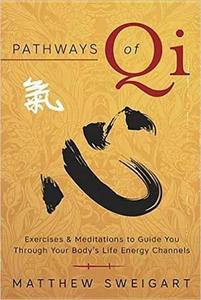 Pathways of Qi: Exercises & Meditations to Guide You Through Your Body's Life Energy Channels By Matthew Sweigart 2016 | 336 Pages | ISBN: 0738748226 | EPUB | 9 MB [center] 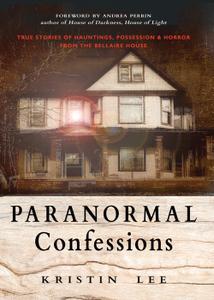 Paranormal Confessions: True Stories of Hauntings, Possession, and Horror from the Bellaire House by Kristin Lee English | August 1st, 2021 | ISBN: 1642970263 | 208 pages | True EPUB | 0.87 MB True stories of hauntings, possessions, and things that go bump in the night. 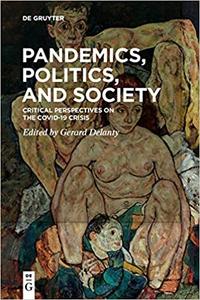 Gerard Delanty, "Pandemics, Politics, and Society: Critical Perspectives on the Covid-19 Crisis" English | ISBN: 3110713233 | 2021 | 190 pages | PDF | 1306 KB This volume is an important contribution to our understanding of global pandemics in general and Covid-19 in particular. It brings together the reflections of leading social and political scientists who are interested in the implications and significance of the current crisis for politics and society.  Pacific Payback: The Carrier Aviators Who Avenged Pearl Harbor at the Battle of Midway by Stephen L. Moore English | June 2, 2015 | ISBN: 0451465539 | EPUB | 448 pages | 17.7 MB "Deeply researched and well written....By far the most detailed account of USS Enterprise's dive-bombers and their decisive role at the Battle of Midway."* 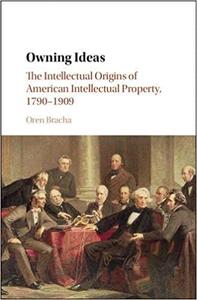 Oren Bracha, "Owning Ideas: The Intellectual Origins of American Intellectual Property, 1790-1909 " English | ISBN: 0521877660 | 2016 | 331 pages | PDF | 2 MB Owning Ideas is a comprehensive account of the emergence of the concept of intellectual property in the United States during the long nineteenth century. In the modern information era, intellectual property has become a central economic and cultural phenomenon, and an important lever for allocating wealth and power. This book uncovers the intellectual origins of this modern concept of private property in ideas through a close study of its emergence within the two most important areas of this field: patent and copyright. By placing the development of legal concepts within their social context, this study reconstructs the radical transformation of the idea. Our modern notion of owning ideas, it argues, came into being when the ideals of eighteenth-century possessive individualism at the heart of early patent and copyright were subjected to the forces and ideology of late-nineteenth-century corporate liberalism. 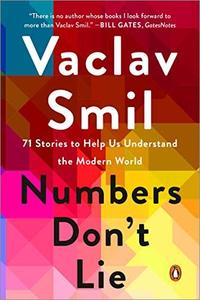 Numbers Don't Lie: 71 Stories to Help Us Understand the Modern World by Vaclav Smil English | May 4, 2021 | ASIN: B08GJVP3GK, ISBN: 0143136224 | AZW3 | 368 pages | 9 MB "Vaclav Smil is my favorite author... Numbers Don't Lie takes everything that makes his writing great and boils it down into an easy-to-read format. I unabashedly recommend this book to anyone who loves learning."-Bill Gates, GatesNotes 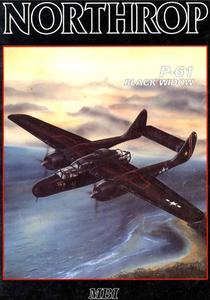 Miroslav Balous - Northrop P-61 Black Widow MBI | 1994 | ISBN: 8090126359 | English / Čeština | 57 pages | PDF | 22.12 MB Black and White Photographs. Colour and black & white illustrations and a page of P-61B cockpit interior in colour. Dual Czech/English text. Missing - page 53. 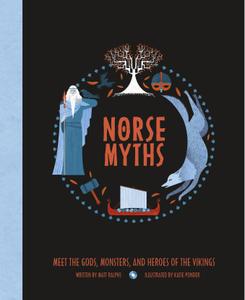 Norse Myths by Matt Ralphs English | August 17th, 2021 | ISBN: 0744033357 | 146 pages | True PDF | 51.46 MB A beautifully illustrated and compelling collection of more than 30 ancient Norse myths for children. 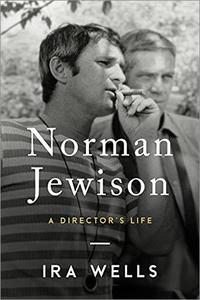 Norman Jewison: A Director's Life by Ira Wells English | May 18, 2021 | ISBN: 1989555381 | EPUB | 495 pages | 0.7 MB Norman Jewison directed some of the most iconic and beloved films of an era, from In the Heat of the Night and The Thomas Crown Affair to Jesus Christ Superstar and Moonstruck. But despite being what his friend William Goldman called "a giant of the industry," Jewison could also walk the streets of any city in the world and go unrecognized. Jewison was a man of contradictions: he cared more about telling great stories than gaining fame and fortune by showcasing movie stars, but generations of Hollywood's marquee actors―Judy Garland, Sidney Poitier, Faye Dunaway, Al Pacino, Jane Fonda, Burt Reynolds, Goldie Hawn, Bruce Willis, Denzel Washington―trusted him at crucial moments in their careers. Yet, for all his talent and the passionate support of his actors, Jewison suffered heartbreaking rejection from the executives who refused to believe in his dreams.  Nonsense and Other Senses: Regulated Absurdity in Literature By Elisabetta Tarantino (Author, Editor), Carlo Caruso (Editor) 2009 | 434 Pages | ISBN: 1443810061 | PDF | 15 MB This book deals with a topic that is gaining increasing critical attention, the literature of nonsense and absurdity. The volume gathers together twenty-one essays on various aspects of literary nonsense, according to criteria that are deliberately inclusive and eclectic. Its purpose is to offer a gallery of 'nonsense practices' in literature across periods and countries, in the conviction that important critical insights can be gained from these juxtapositions. Most of the cases presented here deal with linguistic nonsense, but in a few instances the nonsense operates at the higher level of the interpretation of reality on the part of the subject - or of the impossibility thereof. The contributors to the volume are established and younger scholars from various countries. Chronologically, the chapters range widely from Dante to Vaclav Havel, and offer a large span of national literatures (Czech, English, Finnish, French, German, Italian, Japanese) and literary genres (poetry, prose, and drama), inviting the readers to trace their own pathway and draw their own lines of connection. One point that emerges with particular force is the notion that what distinguishes literary nonsense is its somehow 'regulated' nature. Literary nonsense thus sounds like a deliberate, last-ditch attempt to snatch order from the jaws of chaos - the speech of the 'Fool' as opposed to the tale told by an idiot. It is this kind of post-Derridean retrieval of choice as the defining element in semantic transactions which is perhaps the most significant insight bequeathed by the study of nonsense to the analysis of poetry and literature in general. |

 :
:
