
| |
|
|
Dl4All - Download free For All: software and educational resource.Free software and educational resource. With a little searching, you can download what you need for free without spending any money. Our site - "Dl4All" offers free software downloads including antivirus software, office suites, graphic design software, portable , video editing software, multimedia tools, system utilities, and many other popular applications. Here you can find software reviews and ratings so you can understand which apps are worth downloading. If you're looking for free educational programs or materials in the US and Canada, we'll help you find what you need for students and learners. 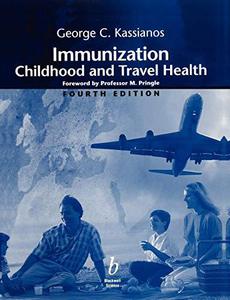 Immunization: Childhood and Travel Health, Fourth Edition By George C. Kassianos(auth.) 2001 | 432 Pages | ISBN: 0632055812 | PDF | 16 MB Immunization: Childhood and Travel Health provides an all-encompassing reference for all those working in primary care, secondary care paediatric wards, immunization centres and travel clinics, as well as medical students and candidates working for higher examinations. The Fourth Edition has been comprehensively updated and the travel section completely revised. The book gives a thorough introduction to the history of immunization, vaccine technology and immunology, and compares international schedules of routine immunizations. Each vaccine is then presented separately, including contraindications, local and general side and adverse effects, administration advice, special precautions and notes, vaccine availability, storage, and well-referenced comments on issues surrounding each vaccine, including controversies. A description of the infection caused by the relevant microorganisms follows, together with data on disease notifications and immunization coverage. A considerable number of maps illustrate endemicity of diseases.One section is dedicated to issues relevant to primary care such as immunization fees and targets, audit, electronic recall systems, patient group directions and issues surrounding the immunization work of the practice nurse. The Fourth Edition includes an extensive section on travel health, which includes the latest travel statistics, travel clinics, detailed advice to travellers and legal issues that may arise. A considerable amount of information is included on air travel, contraindications to travel, and high altitude sickness. Specific information is given on advising travellers at risk because of pre-existing conditions, and how to best deal with the returned traveller. Advice is provided for each disease, including malaria, which is covered in detail.The last section contains information on notifiable diseases, reciprocal healthcare agreements, contact numbers for Embassies and High Commissions in London, a world travel advice checklist, and an extensive list of sources of travel information with contact address.Content: Chapter 1 History of Immunization (pages 3-7): Chapter 2 Timescale of Vaccine Introduction in the UK (page 8): Chapter 3 Immunology, Immunization and Vaccine Development (pages 9-20): Chapter 4 The Cold Chain and Vaccine Storage (pages 21-22): Chapter 5 Transmission of Infection (page 23): Chapter 6 Infectivity and Exclusion Period of Infections (page 24): Chapter 7 Immunization in Practice (pages 25-29): Chapter 8 Expanded Programme on Immunization (pages 30-36): Chapter 9 Vaccine Damage Payment Scheme (page 37): Chapter 10 Information Sheet for Parents (pages 38-40): Chapter 11 Viral and Bacterial Vaccines (page 41): Chapter 12 Special Precautions for All Vaccines (pages 42-43): Chapter 13 Special Precautions for Live Vaccines (pages 44-45): Chapter 14 Treating Anaphylaxis (pages 46-47): Chapter 15 Complications of Infectious Diseases and Vaccines: An Aide?Memoire (pages 51-53): Chapter 16 Diphtheria/Tetanus/Pertussis (DTP) Combined and Diphtheria/Tetanus (DT, Td) Combined (pages 54-56): Chapter 17 Diphtheria (pages 57-60): Chapter 18 Tetanus (pages 61-64): Chapter 19 Pertussis (pages 65-75): Chapter 20 Haemophilus influenzae b (pages 76-80): Chapter 21 Poliomyelitis (pages 81-87): Chapter 22 Measles/Mumps/Rubella Combined Vaccine (pages 88-99): Chapter 23 Measles (pages 100-103): Chapter 24 Mumps (pages 104-106): Chapter 25 Rubella (pages 107-111): Chapter 26 Meningococcal Infection (pages 112-121): Chapter 27 Tuberculosis (pages 122-132): Chapter 28 Anthrax (pages 135-136): Chapter 29 Cholera (pages 137-140): Chapter 30 Hepatitis A (pages 141-150): Chapter 31 Hepatitis A and Typhoid Combined Vaccine (pages 151-152): Chapter 32 Hepatitis B (pages 153-176): Chapter 33 Hepatitis A and B Combined Vaccine (pages 177-179): Chapter 34 Influenza (pages 180-192): Chapter 35 Japanese B Encephalitis (pages 193-196): Chapter 36 Plague (pages 197-198): Chapter 37 Pneumococcal Infection (pages 199-205): Chapter 38 Rabies (pages 206-214): Chapter 39 Tick?2 Encephalitis (pages 215-219): Chapter 40 Typhoid (pages 220-225): Chapter 41 Varicella (pages 226-230): Chapter 42 Yellow Fever (pages 231-235): Chapter 43 Immunization Fees and the UK GP (pages 239-247): Chapter 44 Immunization and Audit (pages 248-251): Chapter 45 Electronic Recall Systems for Completion of Immunization (pages 252-260): Chapter 46 The Practice Nurse and Immunization (pages 261-266): Chapter 47 Practice Nurse: Pre?Vaccination Checklist (pages 267-268): Chapter 48 Introduction to Travel Health (pages 271-275): Chapter 49 Travel Clinics (pages 276-279): Chapter 50 Advice to Travellers (pages 280-290): Chapter 51 Legal Aspects of Advice for Travellers (pages 291-292): Chapter 52 Air Travel (pages 293-304): Chapter 53 Tunnel Travel (page 305): Chapter 54 Motion Sickness (pages 306-307): Chapter 55 Sea Cruises (page 308): Chapter 56 High Altitude Sickness (pages 309-310): Chapter 57 Travellers at Risk (pages 311-329): Chapter 58 The Returned Traveller (pages 330-363): Chapter 59 Malaria (pages 364-388): Chapter 60 International Society of Travel Medicine (page 391): Chapter 61 Specimen Immunization Exemption Certificate (page 392): Chapter 62 Notifiable Diseases (pages 393-394): Chapter 63 Reciprocal Healthcare Agreements Between the UK and Other Non?EEA Countries (pages 395-398): Chapter 64 Sources of Travel Information: Useful Addresses/Telephone Numbers/Websites (pages 399-411): Chapter 65 Embassies and High Commissions in London (pages 412-414): Chapter 66 World Travel Advice Checklist (pages 415-421): Chapter 67 Travel Vaccines Administration Summary (pages 422-423):  Gisela Brinker-Gabler, Imke Meyer, "Image in Outline: Reading Lou Andreas-Salomé" English | 2012 | pages: 172 | ISBN: 1441199756, 1628920173 | PDF | 2,1 mb Image in Outline introduces the reader to Lou Andreas-Salomé's significant engagement with  Illumination Engineering: Design with Nonimaging Optics By R. John Koshel (Editor) 2013 | 316 Pages | ISBN: 0470911409 | PDF | 16 MB This book brings together experts in the field who present material on a number of important and growing topics including lighting, displays, solar concentrators. The first chapter provides an overview of the field of nonimagin and illumination optics. Included in this chapter are terminology, units, definitions, and descriptions of the optical components used in illumination systems. The next two chapters provide material within the theoretical domain, including etendue, etendue squeezing, and the skew invariant. The remaining chapters focus on growing applications.  Identification of Microorganisms by Mass Spectrometry, Volume 169 By J. D. Winefordner(eds.) 2006 | 365 Pages | ISBN: 0471654426 | PDF | 6 MB A multidisciplinary approach to understanding the fundamentals of mass spectrometry for bacterial analysis From chemotaxonomy to characterization of targeted proteins, Identification of Microorganisms by Mass Spectrometry provides an overview of both well-established and cutting-edge mass spectrometry techniques for identifying microorganisms. A vital tool for microbiologists, health professionals, and analytical chemists, the text is designed to help scientists select the most effective techniques for use in biomedical, biochemical, pharmaceutical, and bioterror defense applications. Since microbiological applications of mass spectrometry require a basic understanding of both microbiology and analytical chemistry, the editors have incorporated material from both disciplines so that readers from either field will come to understand the necessary principles of the other. Featuring contributions from some of the most recognized experts in both fields, this volume provides specific examples of fundamental methods as well as approaches developed in the last decade, including: * Metastable atom bombardment pyrolysis mass spectrometry * Matrix-assisted laser desorption/ionization mass spectrometry (MALDI) * MALDI time-of-flight mass spectrometry (MALDI-TOF MS) of intact bacteria * High-resolution Fourier transform mass spectrometry (FTMS) * Electrospray ionization (ESI) mass spectrometry Identification of Microorganisms by Mass Spectrometry represents the most comprehensive and up-to-date work on the topic currently available. It is liberally illustrated with figures and tables and covers every aspect of spectrometric identification of microorganisms, including experimental procedures, various means of sample preparation, data analysis, and interpretation of complex mass spectral data.Content: Chapter 1 Cultural, Serological, and Genetic Methods for Identification of Bacteria (pages 1-21): John B. Sutherland and Fatemeh RafiiChapter 2 Mass Spectrometry: Identification and Biodetection, Lessons Learned and Future Developments (pages 23-37): Alvin FoxChapter 3 An Introduction to MALDI?TOF MS (pages 39-60): Rohana Liyanage and Jackson O. LayChapter 4 The Development of the Block II Chemical Biological Mass Spectrometer (pages 61-89): Wayne H. Griest and Stephen A. LammertChapter 5 Method Reproducibility and Spectral Library Assembly for Rapid Bacterial Characterization by Metastable Atom Bombardment Pyrolysis Mass Spectrometry (pages 91-124): Jon G. Wilkes, Gary Miertschin, Todd Eschler, Les Hosey, Fatemeh Rafii, Larry Rushing, Dan A. Buzatu and Michel J. BertrandChapter 6 MALDI?TOF Mass Spectrometry of Intact Bacteria (pages 125-152): Jackson O. Lay and Rohana LiyanageChapter 7 Development of Spectral Pattern?Matching Approaches to Matrix?Assisted Laser Desorption/Ionization Time?of?Flight Mass Spectrometry for Bacterial Identification (pages 153-160): Kristin H. Jarman and Karen L. WahlChapter 8 Studies of Malaria by Mass Spectrometry (pages 161-180): Plamen A. DemirevChapter 9 Bacterial Strain Differentiation by Mass Spectrometry (pages 181-201): Randy J. Arnold, Jonathan A. Karty and James P. ReillyChapter 10 Bacterial Protein Biomarker Discovery: A Focused Approach to Developing Molecular?Based Identification Systems (pages 203-227): Tracie L. Williams, Steven R. Monday and Steven M. MusserChapter 11 High?Throughput Microbial Characterizations Using Electrospray Ionization Mass Spectrometry and Its Role in Functional Genomics (pages 229-256): Seetharaman Vaidyanathan and Royston GoodacreChapter 12 Bioinformatics for Flexibility, Reliability, and Mixture Analysis of Intact Microorganisms (pages 257-277): Catherine Fenselau and Patrick PribilChapter 13 MALDI?FTMS of Whole?Cell Bacteria (pages 279-300): Jeffrey J. Jones, Michael J. Stump and Charles L. WilkinsChapter 14 A Review of Antibody Capture and Bacteriophage Amplification in Connection with the Direct Analysis of Whole?Cell Bacteria by MALDI?TOF MS (pages 301-318): Kent J. Voorhees and Jon C. ReesChapter 15 Discrimination and Identification of Microorganisms by Pyrolysis Mass Spectrometry: From Burning Ambitions to Cooling Embers-A Historical Perspective (pages 319-343): Eadaoin Timmins and Royston Goodacre  Ideas of Landscape By Matthew Johnson(auth.) 2006 | 263 Pages | ISBN: 1405101598 | PDF | 7 MB Ideas of Landscape discusses the current theory and practice of landscape archaeology and offers an alternative agenda for landscape archaeology that maps more closely onto the established empirical strengths of landscape study and has more contemporary relevance.The first historical assessment of a critical period in archaeology Takes as its focus the so-called English landscape tradition -- the ideological underpinnings of which come from English Romanticism, via the influence of the "father of landscape history": W. G. Hoskins Argues that the strengths and weaknesses of landscape archaeology can be traced back to the underlying theoretical discontents of Romanticism Offers an alternative agenda for landscape archaeology that maps more closely onto the established empirical strengths of landscape study and has more contemporary relevance Content: Chapter One Introduction (pages 1-17): Chapter Two Lonely as a Cloud (pages 18-33): Chapter Three A Good Pair of Boots (pages 34-69): Chapter Four The Loss of Innocence (pages 70-118): Chapter Five Landscape Archaeology Today (pages 119-161): Chapter Six The Politics of Landscape (pages 162-192): Chapter Seven Conclusion (pages 193-202):  Ice Sheets, Sea Level and the Dynamic Earth By 2002 | 308 Pages | ISBN: 0875905315 | PDF | 12 MB Published by the American Geophysical Union as part of the Geodynamics Series.In this monograph, we present recent progress in geophysical modeling and observational tools related to the process of glacial isostatic adjustment (GIA). Rather than a retrospective view, however, we have been led by one over arching mission: to gather significant contributions that present the state-of-the-art in the field and beyond, just as it is being reshaped by new space-geodetic technologies. In this light, the monograph includes discussion on new progress in a number of long-standing problems: the modeling of the Earth's viscoelastic response; the prediction and analysis of sea-level changes and anomalies in the Earth's rotation and gravity field; and the inference of mantle viscosity. Such contributions are complemented by papers that focus on results obtained by GPS and constraints expected from impending satellite missions, as well as predictions of geophysical observables (e.g., present-day 3-D deformations, gravity signals and fault instability) related to these efforts. In these many applications it is important to understand recent progress in GIA research and the limitations that currently impact that research.Content:  Hypoglycaemia in Clinical Diabetes, Second Edition By 2007 | 349 Pages | ISBN: 0470018445 | PDF | 9 MB Hypoglycaemia, leading to confusion and impaired consciousness, is one of the most feared complications of diabetes.Hypoglycaemia in Clinical Diabetes, Second Edition explains the situations in which it arises and how to manage patients to minimize its occurrence. Fully revised and updated, the Second Edition of this practical book addresses all aspects of the clinical management of hypoglycaemia. Features new chapters on hypoglycaemia in Type 2 diabetes, the elderly and nocturnal occurrence, as well as prevention and blood glucose monitoring for detection of hypoglycaemia Edited by two diabetologists with strong international reputations who have made significant contributions to our understanding of hypoglycaemia Hypoglycaemia in Clinical Diabetes, Second Edition is an invaluable reference source for professionals caring for people with diabetes. The book is relevant for all clinicians who treat type 1 diabetes or type 2 diabetes. Praise for the First Edition:"I can strongly recommend this excellent book to all clinicians managing care for diabetic persons in everyday practice...." DIABETOLOGIA "...is extremely comprehensive, well written... highly recommended for those practising clinical diabetes." BRITISH JOURNAL OF CARDIOLOGY "A fascinating book; essential reading for those who feel they need a greater understanding of the subject." DIETETICS TODAYContent: Chapter 1 Normal Glucose Metabolism and Responses to Hypoglycaemia (pages 1-24): Ian A. Macdonald and Dr. Paromita KingChapter 2 Symptoms of Hypoglycaemia and Effects on Mental Performance and Emotions (pages 25-48): Ian J. DearyChapter 3 Frequency, Causes and Risk Factors for Hypoglycaemia in Type 1 Diabetes (pages 49-81): Dr. Mark W. J. StrachanChapter 4 Nocturnal Hypoglycaemia (pages 83-99): Simon R. HellerChapter 5 Moderators, Monitoring and Management of Hypoglycaemia (pages 101-120): Dr. Tristan Richardson and Dr. David KerrChapter 6 Counterregulatory Deficiencies in Diabetes (pages 121-140): Dr. David Kerr and Dr. Tristan RichardsonChapter 7 Impaired Awareness of Hypoglycaemia (pages 141-170): Brian M. FrierChapter 8 Risks of Strict Glycaemic Control (pages 171-189): Stephanie A. AmielChapter 9 Hypoglycaemia in Children with Diabetes (pages 191-215): Dr. Krystyna A. MatykaChapter 10 Hypoglycaemia in Pregnancy (pages 217-237): Dr. Ann E. Gold and Dr. Donald W. M. PearsonChapter 11 Hypoglycaemia in Type 2 Diabetes and in Elderly People (pages 239-264): Dr. Nicola N. Zammitt and Brian M. FrierChapter 12 Mortality, Cardiovascular Morbidity and Possible Effects of Hypoglycaemia on Diabetic Complications (pages 265-283): Dr. Miles Fisher and Simon R. HellerChapter 13 Long?Term Effects of Hypoglycaemia on Cognitive Function and the Brain in Diabetes (pages 285-307): Dr. Petros Perros and Ian J. DearyChapter 14 Living with Hypoglycaemia (pages 309-332): Brian M. Frier  Hypertrophic Cardiomyopathy: For Patients, Their Families and Interested Physicians, Second Edition By 2006 | 134 Pages | ISBN: 1405147105 | PDF | 5 MB When there is a diagnosis of HCM in a family, this complete, easy-to-read guide is your essential resource for finding the answers to your many questions. In clear and straightforward language, it explains what hypertrophic cardiomyopathy is, what the symptoms are, and how it can be treated, as well as reviewing the genetic implications and offering candid lifestyle advice.Drawing on the expertise of Dr. Barry Maron, an internationally recognized authority on HCM, the book addresses major questions and concerns of both patients and families. Fully revised to reflect the latest developments, Hypertrophic Cardiomyopathy: For patients, their families and interested physicians, Second Edition, is a valuable source of straightforward advice and dependable information for everyone who is affected by HCM.Content: Chapter 1 What is Hypertrophic Cardiomyopathy (HCM)? (pages 1-2): Chapter 2 Historical Perspective and Names (pages 3-4): Chapter 3 How Common is HCM? (pages 5-7): Chapter 4 What is the Cause of HCM? (pages 7-10): Chapter 5 Heart Structure in HCM (pages 10-18): Chapter 6 When Does HCM Develop?: HCM in Infants and Children (pages 18-19): Chapter 7 Gender and Race (page 20): Chapter 8 What are the Symptoms of HCM? (pages 20-21): Chapter 9 How is HCM Diagnosed and What Tests are Used? (pages 22-26): Chapter 10 Other Investigations That May be Useful (pages 26-28): Chapter 11 General Outlook For Patients with HCM (pages 28-30): Chapter 12 Complications of HCM (pages 30-36): Chapter 13 Special Considerations: Athletes and Sports Activities (pages 37-40): Chapter 14 Treatments for HCM (pages 40-54): Chapter 15 Is a Cure Available? (pages 55-56): Chapter 16 Family Screening (pages 56-60): Chapter 17 What About Having Children?: Pregnancy and Delivery (pages 60-61): Chapter 18 Routine Medical Care (pages 61-62): Chapter 19 General Lifestyle Advice (pages 62-77): Chapter 20 Support and Advocacy Groups (pages 77-80): Chapter 21 What Research is Being Conducted? (page 81): Chapter 22 The 34 Most Frequently Asked Questions by Patients About HCM, as Addressed to the HCMA (pages 82-91):  Hydrologie und Regionalisierung: Ergebnisse eines Schwerpunktprogramms (1992-1998) By 1999 | 488 Pages | ISBN: 3527271457 | PDF | 8 MB Content: Chapter 1 Zum Problem der Regionalisierung in der Hydrologie (pages 1-12): Professor Dr.?Ing. Hans?B. KleebergChapter 2 Skalenwechsel uber Modelle (pages 13-24): Professor Dr. Gerd PeschkeChapter 3 Skalenwechsel uber Parameter (pages 25-98): Professor Dr.?Ing. Hans?B. Kleeberg, Dr. Alfred Becker, Professor Dr. Wolfram Mauser, Professor Dr. Bernd Diekkruger, Dr. Andreas Schumann and Dr. Robert SchwarzeChapter 4 Daten und Werkzeuge (pages 99-112): Professor Dr. Ulrich StreitChapter 1 GIS?basierte gro?skalige hydrologische Modellierung (pages 113-129): Dr. Alfred Becker and Werner LahmerChapter 2 Regionalisierung der Verdunstung (pages 130-149): Dr. Harald Braden, Thomas Blanke and Susanne BottcherChapter 3 Heraufskalieren von landwirtschaftlich genutzten Okotopen (pages 150-174): Professor Dr. Bernd Diekkruger, Professor Dr. Otto Richter, Helge Bormann and Christian RenschlerChapter 4 Untersuchungen zur computergestutzten Regionalisierung von geomorphometrischen Reliefmerkmalen und ihre Parametrisierung in Niederschlag?Abflu??Modellen in Einzugsgebieten unterschiedlicher Gro?enordnung (pages 175-190): Professor Dr. Richard Dikau, Kirsten Hennrich and Jochen SchmidtChapter 5 Regionalisierung der Abflu?bildung uber die Aggregierung homogener Flachen unter Verwendung des Geographischen Informationssystems ARC/INFO und der Digitalen Reliefanalyse (Programm SARA) (pages 191-204): Professor Dr. Gerhard Gerold, Professor Dr. Bernd Cyffka, Johannes Sutmoller, Jens?Peter Kruger and Gerald BuschChapter 6 Regionalisierung von Abflu?komponenten, Verweilzeiten und Speichervolumen im Wesereinzugsgebiet (pages 205-217): Professor Dr. Andreas Herrmann, Matthias Schoniger and Martin SommerhauserChapter 7 Parametermodelle und effektive Parameter zur Simulation von Wasserflussen im Schwerpunktprogramm "Regionalisierung in der Hydrologie" (pages 218-234): Professor Dr.?Ing. Hans?B. Kleeberg, Tibor Molnar and Georg KasperChapter 8 Ableitung und Regionalisierung von Laufzeit und Speicherfunktion fur direkte Abflu?komponenten aus direkt beobachtbaren geographischen Informationen (pages 235-248): Gerhard Riedel and Professor Dr.?Ing. Ulrich ManiakChapter 9 Regionalisierung von aktueller Verdunstung und Bodenfeuchte mit Flachenparametern aus Fernerkundungsdaten (pages 249-266): Professor Dr. Wolfram Mauser, Stephan Schadlich, Ulrich Strasser, Stefan Taschner and Christoph WegeChapter 10 Die Abflu?bildung in ihrer Abhangigkeit von der wirksamen Kombination flachenvariabler Einflu?faktoren und vom Gebietszustand (pages 267-281): Professor Dr. Gerd Peschke, Christiane Etzenberg, Sven Zimmermann, Jorg Topfer and Gabriele MullerChapter 11 Berucksichtigung der stochastischen Unsicherheit bei der Aggregation von Niederschlag?Abflu??Modellen fur homogene Teilflachen in Einzugsgebietsmodelle (pages 282-303): Professor Dr.?Ing. E. h., em. Erich Plate, Professor Dr. Andras Bardossy, Bruno Merz and Jose ForlaniChapter 12 System? und Modellanalyse fur ein integriertes Konzept der regionalen Wasserhaushaltsmodellierung unter besonderer Berucksichtigung regionaler Ahnlichkeitsmerkmale (pages 304-318): Professor Dr.?Ing. Fritz Rohde, Christoph Gitschel and Oliver BuchholzChapter 13 Ein Verfahren zur Regionalisierung raumlich?zeitlicher Strukturen frontalen Niederschlags aus Klimamodellen (pages 319-323): Grietje Muller?Popkes and Professor Dr. Rainer RothChapter 14 Regionale Parametrisierung eines hydrologischen Niederschlag?Abflu??Modells fur Mittelgebirgsverhaltnisse (pages 324-344): Roland Funke, Dr. Andreas H. Schumann and Professor Dr.?Ing. Gert A. SchultzChapter 15 Regionalisierung von Abflu?komponenten, Umsatzraumen und Verweilzeiten fur kleine Mittelgebirgseinzugsgebiete (pages 345-370): Dr. Robert Schwarze, Werner Droge and Knut OpherdenChapter 16 Entwicklung von GIS?Werkzeugen fur die Regionalisierung (pages 371-389): Sven Fuhrmann, Karl?Heinz Kosubek, Peter Mittring and Professor Dr. Ulrich StreitChapter 17 Vergleichende Untersuchungen zur Regionalisierung des Bodenwasserhaushalts bei unterschiedlichen Nutzungen, Reliefbedingungen und Ma?staben (pages 390-404): Dr. Gerd Wessolek, Jochen Gross and Professor Dr. Manfred RengerChapter 18 Modellierung von Ruckgangslinien des Abflusses durch nichtlineare Speicher und Regionalanalyse der Parameter (pages 405-416): Professor Dr.?Ing. Hartmut WittenbergChapter 19 Datenverwaltung fur das Zielgebiet im Schwerpunktprogramm "Regionalisierung in der Hydrologie" (pages 417-429): Professor Dr.?Ing. Hans?B. Kleeberg and Winfried Willems  Hydrogen Bonding and Transfer in the Excited State, Volume I & II By 2010 | 948 Pages | ISBN: 0470666773 | PDF | 60 MB This book gives an extensive description of the state-of-the-art in research on excited-state hydrogen bonding and hydrogen transfer in recent years. Initial chapters present both the experimental and theoretical investigations on the excited-state hydrogen bonding structures and dynamics of many organic and biological chromophores. Following this, several chapters describe the influences of the excited-state hydrogen bonding on various photophysical processes and photochemical reactions, for example: hydrogen bonding effects on fluorescence emission behaviors and photoisomerization; the role of hydrogen bonding in photosynthetic water splitting; photoinduced electron transfer and solvation dynamics in room temperature ionic liquids; and hydrogen bonding barrier crossing dynamics at bio-mimicking surfaces. Finally, the book examines experimental and theoretical studies on the nature and control of excited-state hydrogen transfer in various systems. Hydrogen Bonding and Transfer in the Excited State is an essential overview of this increasingly important field of study, surveying the entire field over 2 volumes, 40 chapters and 1200 pages. It will find a place on the bookshelves of researchers in photochemistry, photobiology, photophysics, physical chemistry and chemical physics.Content: Chapter 1 Vibrational Dynamics of the Double Hydrogen Bonds in Nucleic Acid Base Pairs (pages 1-27): Yun?an Yan and Oliver KuhnChapter 2 Vibrational Energy Relaxation Dynamics of XH Stretching Vibrations of Aromatic Molecules in the Electronic Excited State (pages 29-38): Takayuki EbataChapter 3 Hydrogen Bond Basicity in the Excited State: Concept and Applications (pages 39-78): Attila DemeterChapter 4 Solute-Solvent Hydrogen Bond Formation in the Excited State. Experimental and Theoretical Evidence (pages 79-123): Iulia Matei, Sorana Ionescu and Mihaela HillebrandChapter 5 Electronic?Excited?State Structures and Properties of Hydrated DNA Bases and Base Pairs (pages 125-147): Manoj K. Shukla and Jerzy LeszczynskiChapter 6 Insight from Singlet into Triplet Excited?State Hydrogen Bonding Dynamics in Solution (pages 149-158): Guang?Jiu Zhao and Ke?Li HanChapter 7 Probing Dynamic Heterogeneity in Nanoconfined Systems: The Femtosecond Excitation Wavelength Dependence and Fluorescence Correlation Spectroscopy (pages 159-174): Shantanu Dey, Ujjwal Mandal, Aniruddha Adhikari, Subhadip Ghosh and Kankan BhattacharyyaChapter 8 Fluorescence Studies of the Hydrogen Bonding of Excited?State Molecules within Supramolecular Host-Guest Inclusion Complexes (pages 175-191): Brian D. WagnerChapter 9 Hydrogen Bonding on Photoexcitation (pages 193-204): Debarati Dey, Manas Kumar Sarangi and Samita BasuChapter 10 Effect of Intramolecular H?Bond?Type Interactions on the Photochemistry of Aza?Stilbene?Like Molecules (pages 205-215): Giampiero Bartocci, Ugo Mazzucato and Anna SpallettiChapter 11 Hydrogen Bonding Barrier?Crossing Dynamics at Biomimicking Surfaces (pages 217-267): Rajib Kumar Mitra, Pramod Kumar Verma, Debapriya Banerjee and Samir Kumar PalChapter 12 Intermolecular Hydrogen Bonding in the Fluorescence Excited State of Organic Luminophores Containing Both Carbonyl and Amino Groups (pages 269-285): Ilijana Timcheva and Peter NikolovChapter 13 Hydrogen?Bonding Effects on Excited States of Para?Hydroxyphenacyl Compounds (pages 287-311): David Lee PhillipsChapter 14 Hydrogen?Bonding Effects on Intramolecular Charge Transfer (pages 313-329): Govindarajan KrishnamoorthyChapter 15 Chemical Dynamics in Room?Temperature Ionic Liquids: The Role of Hydrogen Bonding (pages 331-340): Souravi Sarkar, Rajib Pramanik and Nilmoni SarkarChapter 16 Vibrational Spectroscopy for Studying Hydrogen Bonding in Imidazolium Ionic Liquids and their Mixtures with Cosolvents (pages 341-352): Johannes KieferChapter 17 Intramolecular H?Bond Formation Mediated De?Excitation of Curcuminoids: A Time?Resolved Fluorescence Study (pages 353-375): Luca Nardo, Alessandra Andreoni and Hanne Hjorth TonnesenChapter 18 Hydrogen Bonds of Protein?Bound Water Molecules in Rhodopsins (pages 377-391): Hideki KandoriChapter 19 Ground? and Excited?State Hydrogen Bonding in the Diazaromatic Betacarboline Derivatives (pages 393-417): Carmen Carmona, Manuel Balon, Maria Asuncion Munoz, Antonio Sanchez?Coronilla, Jose Hidalgo and Emilio Garcia?FernandezChapter 20 Effect of H?Bonding on the Photophysical Behaviour of Coumarin Dyes (pages 419-431): Sukhendu Nath, Manoj Kumbhakar and Haridas PalChapter 21 Role of Hydrogen Bonds in Photosynthetic Water Splitting (pages 433-461): Gernot RengerChapter 22 Proton Transfer Reactions in the Excited Electronic State (pages 463-523): Vladimir I. TominChapter 23 Controlling Excited?State H?Atom Transfer along Hydrogen?Bonded Wires (pages 525-554): Carine Tanner Manca, Christian Tanner and Samuel LeutwylerChapter 24 Excited?State Proton Transfer via Hydrogen?Bonded Dimers and Complexes in Condensed Phase (pages 555-578): Cheng?Chih Hsieh, Chang?Ming Jiang and Pi?Tai ChouChapter 25 QM/MM Study of Excited?State Solvation Dynamics of Biomolecules (pages 579-588): Tetsuya Taketsugu, Daisuke Kina, Akira Nakayama, Takeshi Noro and Mark S. GordonChapter 26 Excited?State Intramolecular Proton Transfer Processes on Some Isomeric Naphthalene Derivatives: A Density Functional Theory Based Computational Study (pages 589-608): Sankar Prasad De and Ajay MisraChapter 27 Conformational Switching Between Acids and their Anions by Hydrogen Bonding (pages 609-626): Taka?Aki Okamura, Hitoshi Yamamoto and Norikazu UeyamaChapter 28 Charge Transfer in Excited States: ab initio Molecular Dynamics Simulations (pages 627-639): Maciej Kolaski, Anupriya Kumar, Han Myoung Lee and Kwang S. KimChapter 29 Competitive ESIPT in o?Hydroxy Carbonyl Compounds: Perturbation through Solvent Modulation and Internal Torsion (pages 641-660): Sivaprasad MitraChapter 30 Excited?State Double Hydrogen Bonding Induced by Charge Transfer in Isomeric Bifunctional Azaaromatic Compounds (pages 661-709): Dolores Reyman and Cristina Diaz?OlivaChapter 31 Hydrogen?Bonded Large Molecular Aggregates of Charged Amphiphiles and Unusual Rheology: Photochemistry and Photophysics of Hydroxyaromatic Dopants (pages 711-745): Moazzam Ali and Swapan K. SahaChapter 32 Excited?State Intramolecular Proton Transfer in 2?(2??Hydroxyphenyl)benzoxazole Derivatives (pages 747-760): Yi Pang and Weihua ChenChapter 33 Ultrafast Dynamics of the Excited States of Hydrogen?Bonded Complexes and Solvation (pages 761-795): Dipak K. PalitChapter 34 Volume Changes Associated with Solute-Solvent Reorganization Following Photoinduced Proton Transfer in Aqueous Solutions of 6?Methoxyquinoline (pages 797-803): Stefania Abbruzzetti and Cristiano ViappianiChapter 35 Molecular Recognition and Chemical Sensing of Anions Utilizing Excited?State Hydrogen?Bonding Interaction (pages 805-814): Ashutosh S. Singh and Shih?Sheng SunChapter 36 Theoretical Studies of Green and Red Fluorescent Proteins (pages 815-837): Hong Zhang, Qiao Sun, Sufan Wang, Seth Olsen and Sean C. SmithChapter 37 Changes in Active Site Hydrogen Bonding upon Formation of the Electronically Excited State of Photoactive Yellow Protein (pages 839-855): Wouter D. Hoff, Zhouyang Kang, Masato Kumauchi and Aihua XieChapter 38 Excited State Dynamics in the Light?Driven Enzyme Protochlorophyllide Oxidoreductase (POR) (pages 857-864): Marie Louise Groot and Derren James HeyesChapter 39 Photodissociation of Molecules in Pure and Doped Water and in Nitrogen Heterocyclic Clusters in the Excited State (pages 865-891): Michal Farnik, Petr Slavicek and Udo Buck If you are looking for educational materials, our website offers free downloadable online courses. From computer science to business and humanities. The courses are taught by professors from leading universities around the world, and you can earn a certificate of completion from many of them. There is also a wide range of courses available, from engineering to languages and social sciences. The video courses are taught by professors from the best universities, and you can get a certificate of completion from many of them. You can also search for free software and educational resources on Google or other search engines. Just remember to read reviews and check the website's reputation before downloading anything. Dl4All is download free for all software and educational resource. With a little searching, you can download what you need for free without spending any money. |

 :
:
