
| |
|
|
Dl4All - Download free For All: software and educational resource.Free software and educational resource. With a little searching, you can download what you need for free without spending any money. Our site - "Dl4All" offers free software downloads including antivirus software, office suites, graphic design software, portable , video editing software, multimedia tools, system utilities, and many other popular applications. Here you can find software reviews and ratings so you can understand which apps are worth downloading. If you're looking for free educational programs or materials in the US and Canada, we'll help you find what you need for students and learners. 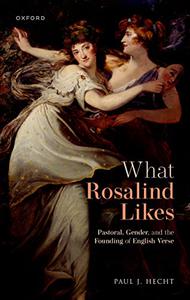 What Rosalind Likes: Pastoral, Gender, and the Founding of English Verse by Paul J. Hecht English | June 23, 2022 | ISBN: 0192857207 | True EPUB | 224 pages | 5.4 MB What Rosalind Likes begins with the strange ferocity of Elizabethan responses to poetry: a woman named Rosalind expresses scorn for a shepherd's poems, and a character in a play loses his temper and storms off stage at the sound of a blank verse line. What are these people so angry about? Thus begins a journey into a world where the details of poetic form and vagaries of Latin translation are caught up in the dynamics of gender, sexuality, class, and race, and power, where too much alliteration, for example, could destabilize your gender or pose a threat to national security. Situated in the crucial final two decades of the sixteenth century, What Rosalind Likes takes three figures named "Rosalind" in works by Spenser (The Shepheardes Calender), Lodge (Rosalynde), and Shakespeare (As You Like It) to create a new approach to literary history and feminist criticism.  Peter Aceto, Justin Kingsley, "Weology: How Everybody Wins When We Comes Before Me" English | 2015 | ISBN: 1443429503, 1443429511 | EPUB | pages: 320 | 0.5 mb Canada's most engaging banker shares his strategies for operating in a radically different way in our ever-changing business world. 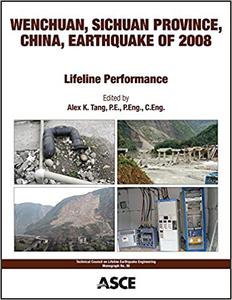 Alex K. Tang, P.E., P.Eng., "Wenchuan, Sichuan Province, China, Earthquake of 2008: Lifeline Performance (TCLEE 39)" English | 2014 | pages: 317 | ISBN: 0784413339 | PDF | 105,1 mb On May 12, 2008, an earthquake with an epicenter in Yingxiu struck a mountainous region 90 km northwest of Chengdu, Sichuan Province, China, and affected an estimated 4.6 million people. Extensive and massive landslides and rockslides occurred following the 7.9 magnitude event, rendering many towns and villages across Sichuan, Shaanxi, and Gansu provinces inaccessible. Emergency services, rescue, and relief were extremely difficult. This TCLEE Monograph discusses the following lifelines with recommendations for improving performance: transportation infrastructure; electric power systems; potable water systems and dams; telecommunications systems; and residential and public buildings, including schools. General seismology of the event, geotechnical features of the area, and a discussion of the emergency response efforts and lessons learned are also included. TCLEE 39 will be of interest to civil engineers, emergency managers and planners, and government officials charged with improving resilience of lifeline infrastructure systems during earthquakes, landslides, and rockslides.  Weaving Narrative Nets to Capture Classrooms: Multimethod Qualitative Approaches for Educational Research By David Geelan (auth.) 2004 | 190 Pages | ISBN: 1402038569 | PDF | 2 MB If you're the kind of reader who usually skips the Preface (I am), you can certainly do that. It's probably valuable, though, for me to spend a little time describing the structure of this book to orient you to the way the argument unfolds. My intention was to try to find the best possible blend of theory and practice. I believe there are plenty of excellent books describing the theoretical underpinnings of qualitative research in education (Denzin & Lincoln, 1994, 2000; Eisner, 1998; Guba & Lincoln, 1989; Lincoln & Guba, 1985). A number of those books are cited here, and their arguments summarized. There are also books that report qualitative studies using narrative methods (Melko, 1998; Harold, 2000; Wolcott, 1973). There are fewer books that focus on describing in detail how to conduct these studies (Anderson, Kerr & Nihlen, 1994; Van Manen, 1990; Wolcott, 1990) for an audience that is not already familiar with both the methods and the philosophical commitments that underpin qualitative research. This book is intended to do all of these things to some extent, or to refer you to other authors who I think do them well, but its original contribution is in using as a concrete example a particular research study that I completed. This allows me to reflect on the processes and practices, and particularly the choices, involved in qualitative classroom research, and to illustrate those reflections in a very practical way. 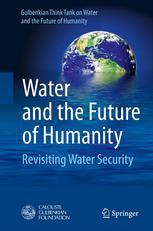 Water and the Future of Humanity: Revisiting Water Security By (auth.) 2014 | 241 Pages | ISBN: 3319014560 | PDF | 5 MB This unique, engaging, and highly authoritative volume enlightens readers on changes needed in the way society accesses, provides, and uses water. It further shines a light on changes needed in the way we use food, energy, and other goods and services in relation to water, and offers projections and recommendations, up to 2050, that apply to water access challenges facing the poor and the common misuse of water in industry, agriculture, and municipalities. Written by an unparalleled slate of experts convened by the Calouste Gulbenkian Foundation, the book takes on one of the most critical issues on the planet today. In a frank yet optimistic assessment of major developmental challenges, but also opportunities, facing future generations, the author elucidates linkages between water and a range of other drivers from various disciplinary and stakeholder perspectives. Ultimately portraying the belief that Humanity can harness its visionary abilities, technologies, and economic resources for increased wellbeing and sound stewardship of resources, the book presents an optimistic statement stressing actions scientists, policy makers, and consumers can and must take to meet the water management challenges of a warming planet anticipating nine billion inhabitants by 2050.Gulbenkian Think Tank on Water and the Future of Humanity: Benedito Braga, Pres. World Water Council & Prof. of Civil Engineering, Univ. of São Paulo, Brazil; Colin Chatres, Director General of the International Water Management Institute, Sri Lanka; William J. Cosgrove, Pres. of Ecoconsult Inc. & Senior Adviser for the UN World Water Development Report, Canada; Luis Veiga da Cunha, Prof. Environmental Science and Engineering, Universidade Nova de Lisboa, Portugal; Peter Gleick, Pres. of the Pacific Institute, USA; Pavel Kabat, Director, International Institute for Applied Systems Analysis, Austria; and Prof. & Chair, Earth Systems Science, Wageningen University, The Netherlands; Mohamed Ait Kadi, President of the General Council of Agricultural Development, Morocco; Daniel P. Loucks, Prof. of Civil Engineering, Cornell Univ. USA; Jan Lundqvist, Senior Scientific Advisor, Stockholm International Water Institute, Sweden; Sunita Narain, Director, Center for Science & Environment, New Delhi, India; Jun Xia, Pres., International Water Resources Association, Chair Prof. & Dean, The Research Institute for Water Security (RIWS), Wuhan University, China.  James G. Murphy, "War's Ends: Human Rights, International Order, and the Ethics of Peace" English | ISBN: 1626160279 | 2014 | 240 pages | EPUB | 1279 KB Before military action, and even before mobilization, the decision on whether to go to war is debated by politicians, pundits, and the public. As they address the right or wrong of such action, it is also a time when, in the language of the just war tradition, the wise would deeply investigate their true claim to jus ad bellum ("the right of war"). Wars have negative consequences, not the least impinging on human life, and offer infrequent and uncertain benefits, yet war is part of the human condition.  Vascular Disease: Molecular Biology and Gene Therapy Protocols By Shu Ye, Adriano M. Henney (auth.), Andrew H. Baker (eds.) 1999 | 441 Pages | ISBN: 0896037312 | PDF | 3 MB In Vascular Disease: Molecular Biology and Gene Therapy Protocols, Andrew Baker and a noted panel of expert investigators describe today's most powerful molecular methods for investigating the pathogenesis of vascular disease. These detailed, easy-to-follow techniques range from methods that have been used successfully to identify specific mutations involved in cardiovascular disorders, to those for transferring genes associated with cardiovascular disease into various vascular cell types by in vitro and in vivo routes. There are methods to identify novel genes and generate full-length cDNAs, to study gene transcription and promoter activity easily and effectively, and to ascertain precisely gene expression levels within the individual cell types in different pathophysiological conditions. Accurate methods to quantify apoptosis in both cultured cells and pathological specimens are also given. Vascular Disease: Molecular Biology and Gene Therapy Protocols offers today's vascular biologist and gene therapist an unprecedented ability to study the pathogenesis of vascular disease and readily to probe the potential for gene-based therapies. Powerful and productive, the techniques presented here operate across a wide range of exciting research areas, and promise spectacular therapeutic breakthroughs in the ongoing battle against vascular disease.  Vaccine Protocols By Gordon Ada (auth.), Andrew Robinson, Michael J. Hudson, Martin P. Cranage (eds.) 2003 | 416 Pages | ISBN: 1588291405 | PDF | 3 MB This extensively revised, updated, and expanded second edition of a classic laboratory manual applies new understanding of molecular mechanisms to the rational design and development of vaccines. Here the working researcher will find readily reproducible techniques for the development and production of live attenuated vaccines through the genetic manipulation of viruses and bacteria, vaccine vectors or inactivated toxins, and the production of synthetic peptides and conjugate vaccines. In addition, there are chapters describing more general techniques for vaccine formulation, delivery, and assessment of immune responses, and review discussions of scale-up to manufacture, vaccine quality assurance, and clinical trials. New to this second edition are cutting-edge chapters on two different viral vectors (Vaccinia and Semliki Forest), lactic acid bacteria for delivery of foreign antigens, incorporation of immunomodulators into plasmid DNA vaccines, construction of tetramer complexes to detect CMI responses, assessment of functional antibody responses, and the use of complete genome sequences for vaccine design. Each fully tested protocol is described in step-by-step detail by an established expert in the field and includes a background introduction outlining the principle behind the technique, equipment and reagent lists, tips on trouble shooting and avoiding known pitfalls, and, where needed, a discussion of the interpretation and use of results. State-of-the-art and highly practical, Vaccine Protocols, Second Edition, provides essential information for those seeking to produce improved or novel vaccines in the rapidly evolving field of vaccine research and development.  Vaccine Adjuvants: Preparation Methods and Research Protocols By Robert Edelman (auth.), Derek T. O'Hagan (eds.) 2000 | 342 Pages | ISBN: 0896037355 | PDF | 3 MB Adjuvants play a key role in controlling the efficacy of vaccines, through enhancing the immune response to vaccine antigens, including recombinant proteins, protein polysaccharide conjugates, synthetic peptides, or DNA. In Vaccine Adjuvants: Preparation Methods and Research Protocols, Derek T. O'Hagan and a team of expert vaccinologists and pharmacologists thoroughly describe the preparation, characterization, and evaluation of a wide range of alternative vaccine adjuvants for use in preclinical studies. Each chapter carefully reviews a single adjuvant, including suggestions why a specific adjuvant might be preferred for a given antigen, depending on what type of immune response is desired. Alternate adjuvant choices are also presented so that researchers can choose those most efficacious for their specific purpose. The methods, described in full detail, range from the simple mixing of an antigen with a preformed adjuvant, to a complex preparation process requiring the antigens to be physically associated, or entrapped within, an adjuvant formulation. Comprehensive and highly practical, Vaccine Adjuvants: Preparation Methods and Research Protocols provides an effective guide to making and using vaccine adjuvants. By closely following directions from the book, today's researchers will be able optimally to induce specific immune responses against different types of antigens and to selectively manipulate the immune response in a favorable way. The use of the information in this book will promote the development of powerful new vaccines against infectious diseases and cancers, and may promote the development of products to ameliorate autoimmune disorders.  Unity Certified Programmer Exam Guide: Pass the Unity certification exam with the help of expert tips and techniques, 2nd Edition English | 2022 | ISBN: 1803246219 | 766 Pages | PDF EPUB (True) | 42 MB If you are looking for educational materials, our website offers free downloadable online courses. From computer science to business and humanities. The courses are taught by professors from leading universities around the world, and you can earn a certificate of completion from many of them. There is also a wide range of courses available, from engineering to languages and social sciences. The video courses are taught by professors from the best universities, and you can get a certificate of completion from many of them. You can also search for free software and educational resources on Google or other search engines. Just remember to read reviews and check the website's reputation before downloading anything. Dl4All is download free for all software and educational resource. With a little searching, you can download what you need for free without spending any money. |

 :
:
