
| |
|
|
TutorialsExplore Comprehensive Tutorials for Various SkillsAccess a wide range of tutorials on various topics, including technology, design, business, and more. Whether you're a beginner or an expert, find the perfect tutorial to help you improve your skills and achieve your goals. 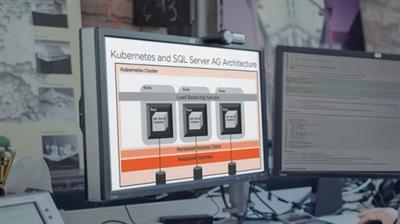 Michael Otey | Duration: 2h 46m | Video: H264 1024x768 | Audio: AAC 48 kHz 2ch | 319 MB | Language: English Kubernetes is the leading container orchestration platform. This course will teach you how to use Kubernetes to provide high availability for a two-node SQL Server cluster and how-to implement a three-node SQL Server AlwaysOn Availability Group. Running SQL Server on Kubernetes is unfamiliar territory for most SQL Server and Kubernetes administrators and developers. In this course, Supporting SQL Server High Availability with Kubernetes, you'll learn how you can deploy SQL Server containers on Kubernetes for high availability. First, you'll get some important background on running SQL Server in a container and how SQL Server containers can be managed using Kubernetes. Here, you'll see how running SQL Server in a container is different from a standalone or virtualized instance as well as getting an understanding of the overall architecture of a SQL Server on Kubernetes solution. Next, you'll dig into the nitty-gritty details showing how Kubernetes can provide high availability for a two-node SQL Server cluster. You'll see the actual YAML and kubectl commands that were used to build the cluster and the persistent storage that SQL Server databases require. Then, we'll dig deeper and you'll see how you can build and run a three-node SQL Server AlwaysOn Availability Group on Kubernetes. Here again, you'll see the YAML and kubectl commands required as well as the T-SQL commands that you can use to build a clusterless Availability Group. Finally, you'll come away with some valuable tips and troubleshooting tools. When you're finished with this course, you'll have a fundamental understanding of how to run SQL Server on Kubernetes and how Kubernetes can provide high availability for SQL Server containers. At the end of this course, you'll come away with 40+ scripts that you can use as a basis for building your own SQL Server and Kubernetes deployments.  Vlad Catrinescu | Duration: 1h 44m | Video: H264 1280x720 | Audio: AAC 48 kHz 2ch | 244 MB | Language: English + .srt SharePoint Online is at the core of every company's collaboration toolset, making it one of the most popular services in Microsoft 365. In this course, you will learn how to perform different SharePoint Online Administration tasks. Microsoft 365 is the most popular productivity cloud in the world and one of the core products is SharePoint Online. SharePoint Online administrators are in charge of managing files and communication portals and are involved in the multiple services that use SharePoint Online such as Microsoft Teams. In this course, SharePoint Online Administration Playbook, you'll learn to manage SharePoint Online by looking at multiple real-life examples of common administration tasks. First, you'll explore how to manage sites. Next, you'll discover how to create an asset library. Finally, you'll learn how to create home and organization news sites. When you're finished with this course, you'll have the skills and knowledge of SharePoint Online needed to manage it effectively.  Nate Taylor | Duration: 2h 08m | Video: H264 1280x720 | Audio: AAC 44,1 kHz 2ch | 244 MB | Language: English What does it mean to be a professional software developer? Can acting in a professional manner improve your job? We'll look at what professionalism is and how to apply it in the software industry. For many of us, software development started as a hobby, but now that we're doing it full time, we need to look at what it means to be a professional software developer. To do this, we'll examine some key areas that have parallels in other professions. We'll look to improve our industry with lessons learned in other industries. In the end, the goal of the course is to show how development can be done in a professional manner, and why it's important to do so.  Glenn Weadock | Duration: 2h 08m | Video: H264 1280x720 | Audio: AAC 48 kHz 2ch | 281 MB | Language: English + .srt Configuration management is undergoing a paradigm shift from LAN-centric to cloud-centric, and today's Windows 10 administrator must master both old and new tools: Configuration Manager, Group Policy, Azure AD, and Intune profiles and policies. Managing modern desktops includes integrating existing tools with cloud tools in order to restrict access to corporate data, control device settings, and maintain user profiles. In this course, Managing Microsoft Desktops: Policies and Profiles, you will gain the ability to manage Windows 10 configurations with both LAN-based and cloud-based utilities. First, you will learn methods for migrating from Configuration Manager and Group Policy to co-management and Mobile Device Management. Next, you will discover how to evaluate configurations with compliance policies, restrict access to applications based on compliance, and deploy desired configuration settings with device profiles. Finally, you will explore ways to manage user state, including mandatory and roaming profiles and Enterprise State Roaming in Azure AD. When you are finished with this course, you will have the skills and knowledge to manage user and device configurations in organizations with both on-premises and cloud-based architectures. This course aligns with the learning objectives for the new MD-101 exam to obtain certification as a Modern Desktop Administrator Associate.  Glenn Weadock | Duration: 3h 21m | Video: H264 1280x720 | Audio: AAC 48 kHz 2ch | 460 MB | Language: English + .srt Organizations deploy Windows 10 to a variety of devices: on-premises, cloud-based, and hybrid. After deployment, devices must authenticate and receive periodic updates. This course dives into clean installs, upgrade installs, and update management. There are many ways to deploy Windows 10 in modern organizations! In this course, Managing Microsoft Desktops: Deploying and Updating Operating Systems, you will gain the ability to install Windows 10 consistently, securely, and conveniently. First, you will learn to plan your deployment, choosing among traditional imaging tools and newer, "modern" methods. Next, you will discover how to decide between upgrade and migration options, how to use Windows Analytics to perform readiness assessment, and see how to use provisioning packages and Windows Autopilot to configure devices that have Windows 10 pre-installed. Finally, you will explore Windows Update for Business to keep devices up-to-date, and evaluate the various ways that Windows 10 devices can authenticate to your networks. When you are finished with this course, you will have the skills and knowledge to deploy and update Windows 10 devices in organizations with both on-premises and cloud-based architectures. This course aligns with the learning objectives for the new MD-101 exam to obtain certification as a Modern Desktop Administrator Associate.  Glenn Weadock | Duration: 1h 24m | Video: H264 1280x720 | Audio: AAC 48 kHz 2ch | 195 MB | Language: English + .srt Mobile Device Management (MDM) in Microsoft Intune is great for deploying apps to Windows 10 systems, and Intune Mobile Application Management lets us customize those apps and secure corporate data with configuration and protection policies. After an organization has deployed Windows 10, enrolled it into management, configured it, and secured it, the time has come to deploy and manage the apps that run above it, and secure the data that those apps can access. In this course, Managing Microsoft Desktops: Apps and Data, you will gain the ability to distribute and customize Windows 10 apps and keep their related data stores inside the corporate perimeter. First, you will learn about deploying apps with Microsoft's cloud-based tools, Intune and the Store for Business. Next, you will discover details about deploying Office 365, creating single-app systems, and sideloading apps. Finally, you will explore ways to protect corporate data by using app protection policies for iOS and Android, and Windows Information Protection for Windows 10. When you are finished with this course, you will have the skills and knowledge to deploy and configure apps on Windows 10 devices and restrict the actions that users of those apps can take in order to keep business information safe. This course aligns with the learning objectives for the new MD-101 exam to obtain certification as a Modern Desktop Administrator Associate.  Glenn Weadock | Duration: 2h 44m | Video: H264 1280x720 | Audio: AAC 48 kHz 2ch | 363 MB | Language: English + .srt Keeping Windows 10 working properly is no simple task: it requires managing updates and servicing channels; monitoring for problems, performance, and reliability; and recovering systems that go awry. This course explains how to do all of that. Windows 10 doesn't maintain itself: we have to do it! In this course, Maintaining Windows 10, you will gain the ability to keep your Microsoft network purring like a well-oiled machine. First, you will learn to recover damaged systems, using different approaches tailored to restoring files, drivers, apps, the operating system itself, and encrypted volumes. Next, you will see how to configure servicing channels and updates using the new Windows-as-a-Service model; manage updates through Group Policy and Intune; and view, remove, update, and troubleshoot updates. Finally, you will explore how to leverage the Windows event logs, how to troubleshoot performance problems with both real-time and extended monitoring, and techniques to optimize services and scheduled tasks to make maintenance as automatic as possible. When you are finished with this course, you will have the skills and knowledge to maintain Windows 10 systems on an ongoing basis in organizations large and small. This course aligns with the learning objectives for the new MD-100 exam to obtain certification as a Modern Desktop Administrator Associate. 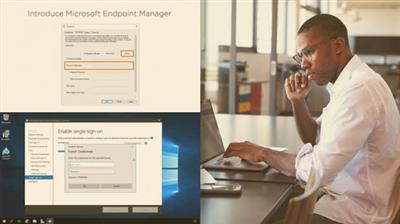 Greg Shields | Duration: 1h 02m | Video: H264 1280x720 | Audio: AAC 48 kHz 2ch | 125 MB | Language: English + .srt Prepare your lab environment as you discover the architecture of Microsoft Intune and its relationship with Microsoft Endpoint Manager in this course. Microsoft's Intune platform is a full-featured and enterprise-ready solution for managing internal and external, as well as corporate- and personally-owned devices. For the broad range of possible device ownership and corresponding risk situations every modern company needs to be concerned about, Microsoft Intune delivers a flexible platform for protecting data and managing risk when you don't necessarily always have full control.  Robert McMillen | Duration: 2h 31m | Video: H264 1024x768 | Audio: AAC 48 kHz 2ch | 249 MB | Language: English This course will teach you how to create a desired state configuration for JEA and JIT to keep your Active Directory network safe from internal and external administrative threats. The modern Windows network has issues with locking down security. In this course, Implement JIT and JEA Administration in Windows Server 2019, you'll learn how to create an environment to protect administrative access to only authorized users and only when they need it and will learn about two different ways to accomplish this secure goal. First, you'll learn about Just Enough Administration. This includes creating configuration and capability files to configure the JEA environment. Next, you'll explore Just In Time administration. This type of security involves separating administrative access using bastion forests and domains. Finally, you'll configure a bastion forest and create the necessary links and trusts to work between this forest and your production forest. You'll learn this by utilizing shadow principles using Microsoft Identity Manager. By the end of this course, you'll be able to secure your on-premise or cloud environment more completely with JEA and JIT.  Duration: 2h 37m | Jan 26, 2021 | Video: 1280x720, 44kHz | 292 MB Genre: eLearning | Language: English | Level: Beginner Regulations, privacy, compliance, and ensuring your customer's data is secure are becoming increasingly important while at the same time becoming increasingly complex. As new regulations are introduced, a company's responsibilities continue to increase. In this course, Governance, Risk, and Compliance for CompTIA Security+, you'll learn to properly assess your company's risk across all facets of the organization. First, you'll explore the various types of controls that can be put in place to limit exposure. Next, you'll discover several methodologies, frameworks, and best practices needed to develop policy and ensure compliance. Finally, you'll learn how to create a business impact analysis and properly classify data, along with the technologies required to safeguard that data. When you're finished with this course, you'll have the skills and knowledge of risk management and compliance needed to ensure your organization is properly governing employee and customer data, complying with local, state, and federal regulations, and properly assessing risk. |

 :
:
