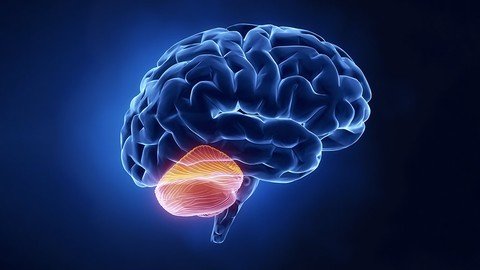
Last updated 3/2022 MP4 | Video: h264, 1280x720 | Audio: AAC, 44.1 KHz Language: English | Size: 2.50 GB | Duration: 2h 51m Discover our Neural Systems, Hormonal Systems & Bain Structures - Mind & Body
What you'll learn This is an introduction to a college level informational content course, intended to educate students about the basics of the biology of the mind. Identify the various components of the brain; Explain biology, behavior and the mind, and the power of plasticity; Identify the structure and functions of the cerebral cortex. Requirements There are no requirements or prerequisites for taking this course. Description Course Description: This course reviews the basic psychological concepts of the biology of the mind, to include: Neural and Hormonal Systems; Tools of Discovery; Older Bain Structures; the Limbic System; the Cerebral Cortex; and gives exam questions and answers to assist the learner.Our understanding of the brain gives birth to the mind has come a long way. the ancient Greek physician, Hippocrates, correctly located the mind in the brain. His contemporary, the philosopher, Aristotle, believed the mind was in the heart which pumps warmth and vitality to the body. Researchers seeking to understand the biology of the mind have discovered that: our adaptive brain is wired by our experiences; among the body's cells are nerve cells that conduct electricity and talk to one another by sending chemical messages across a tiny gap that separates them; specific brain systems serve specific functions; and we integrate information processed in these different brain systems to construct our experience of sights and sounds, meanings and memories, pain and passion. Course Objectives:· Identify the various components of the brain;· Explain biology, behavior and the mind, and the power of plasticity;· Identify parts of the nervous system and the endocrine system;· Recognize the different tools used to examine the brain;· Identify the structure and functions of the cerebral cortex.Information Literacy: Assess what information is needed to answer questions as well as evaluate the quality of information.· Demonstrate the skill of identifying information needed to answer questions pertaining to psychological terms and concepts· Recognize and evaluate information sources for a specified purposeSystematic Inquiry: Understand social science research methods used in psychological research· Demonstrate the ability to describe the science of psychology Overview Section 1: Introduction Lecture 1 A Warm Welcome Lecture 2 Biology of the Mind - Biological Psychology Section 2: Psychology's Perspectives Lecture 3 Perspectives in Psychology Lecture 4 Influences on Human Behavior Section 3: Neural and Hormonal Systems Lecture 5 Neural Communication Lecture 6 The Nervous System Lecture 7 The Endocrine System Section 4: Tools of Discovery Lecture 8 Tools for Looking at the Brain Section 5: Older Brain Structures & the Limbic System Lecture 9 Older Brain Structures - The Cerebellum Lecture 10 The Limbic System Section 6: The Cerebral Cortex Lecture 11 The Cerebral Cortex Lecture 12 The Divided Brain Section 7: Other Areas of Interest Lecture 13 The Mind vs Brain - Freud's Iceberg Theory Lecture 14 The Power of Belief Lecture 15 The ABC Model of Behaviorism - Get What You Want - Mind Controls Behavior Section 8: Exam Questions & Answers Lecture 16 Exam Questions & Answers for Biology of the Mind Section 9: Final Course Personal Reflection & Certificate Lecture 17 End of Course Thank You! College prep students or anyone wanting to learn more about psychology and the biology of the mind.