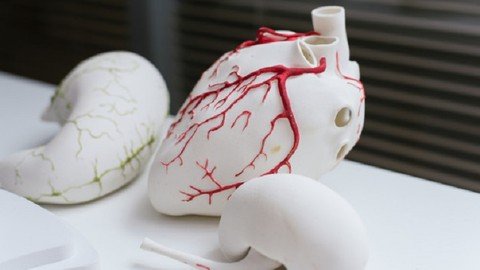
What you'll learn Introduction to tissue engineering Cells in tissue engineering Scaffolds in tissue engineering Growth Factors in tissue engineering Interaction with biomaterial surface Body tissue engineering Requirements System requirements: PC, laptop or mobile device (with Udemy app) and broadband connectivity. Course requirements: There are no pre-requisite or other course requirements. Description Loss or defect in the tissue is a common phenomenon with high medical costs that millions of people suffer annually. Some body tissues effectively undergo a self-healing process and initiate processes during tissue damage that lead to rapid and usually complete repair of damaged tissue. In some cases where the tissue is extensively damaged, for example in grade 3 burns, the body's self-healing methods are not sufficient and searching for methods to control natural processes is essential.In tissue engineering we seek to engineer living tissues and the desired tissue must be well known to be engineered on the basis of its various properties. Tissue engineering is to take care of nature and imitate the conditions inside the body. The human body is made up of cells and cells make up tissues and they make organs. Understanding the context in which cells grow is called the extracellular matrix as well as the molecules present in the environment are essential for the design of living tissues.Tissue engineering is nowadays considered as a possible alternative to tissue or organ transplantation. With this technology, organ failure can be treated through biologically engineered alternative implantation. In this way, the cells are removed from a patient and their numbers are increased and placed on a scaffold. Scaffolds can be either natural or synthetic or a combination of both.There are three basic factors that affect tissue engineering: cells, scaffolds, growth factorsIf only the cell is used, the cells must be able to secrete extracellular matrix material. If we use only biomaterials, migration of host tissue cells to the damaged area is essential for tissue regeneration.This course provides an overview of:· Introduction to tissue engineering· Cells in tissue engineering· Scaffolds in tissue engineering· Growth Factors in tissue engineering· Interaction with biomaterial surface· Body tissue engineeringThis course can be useful for students of tissue engineering, polymer and medical engineering and interested in this field. Overview Section 1: Introduction to tissue engineering Lecture 1 Introduction to tissue engineering Section 2: Cells in tissue engineering Lecture 2 Cell structure Lecture 3 Types of cells Lecture 4 Stem Cells Lecture 5 Cell culture Lecture 6 Cell growth pattern Lecture 7 Extracellular matrix Lecture 8 Cell adhesion Section 3: Scaffolds in tissue engineering Lecture 9 Scaffolds in tissue engineering Lecture 10 Common methods of scaffold construction Lecture 11 Polymers in tissue engineering Lecture 12 Natural polymers Lecture 13 Synthetic polymers Lecture 14 The effect of surface stiffness on cells Lecture 15 Modification of biomaterial level Section 4: Growth Factors Lecture 16 Growth Factors Lecture 17 Influence of Surface Mechanical Properties Section 5: Interaction with biomaterial surface Lecture 18 Cell-Biomaterial Interaction Lecture 19 Protein-biomaterial interaction Lecture 20 Protein adsorption Lecture 21 Protein Properties and Biomaterial Surface Properties Lecture 22 Tissue-Biomaterial Reaction Section 6: Body tissue engineering Lecture 23 Bone structure Lecture 24 Bone Tissue Engineering Lecture 25 Cartilage structure Lecture 26 Cartilage tissue engineering Lecture 27 Skin structure Lecture 28 Skin Tissue Engineering Lecture 29 Nerve structure Lecture 30 Nerve tissue engineering Lecture 31 The structure of blood vessels Lecture 32 Tissue engineering of blood vessels Lecture 33 Liver structure Lecture 34 Liver Tissue Engineering Lecture 35 Kidney structure Lecture 36 Kidney tissue engineering Section 7: lesson's text Lecture 37 lesson's text tissue engineering, polymer and medical engineering and interested in this field.,polymer engineering,medical engineering,Anyone interested in this field