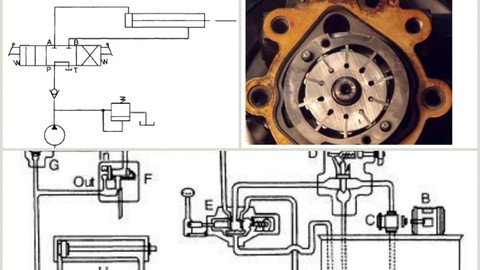
Published 1/2023 MP4 | Video: h264, 1280x720 | Audio: AAC, 44.1 KHz Language: English | Size: 2.46 GB | Duration: 7h 26m Introduction to hydraulics, Types of pumps, Hydraulic circuit diagram, Pump calculations.
What you'll learn What is Hydraulic System Components of a hydraulic system Hydraulic Circuit Design Maintenance of Hydraulic Systems Closed Loop Electro-hydraulic Control Hydraulic Pumps and Calculations Requirements No previous knowledge needed. You can learn from the beginning. Description Mainly you can get following learning outcomes after completing this course.Introduction to fluid powerApplications of fluid power systemsAdvantages and Disadvantages of hydraulic systems.Properties of hydraulic fluidsPumpsValves (Directional control valves , Pressure control valves , Flow control valves)Actuators(single acting, double acting.)Identify all the symbols used in hydraulic schematicsUnderstand various hydraulic circuitsUnderstand and explain hydraulic schematics effectivelyDesign a hydraulic circuit for performing a desired functionAnalyze the function of each hydraulic circuit in an application.Understand and explain the various causes of failure in a hydraulic systemUnderstand best maintenance practices of hydraulic systemsClosed Loop VS Open Loop hydraulic controlElectro- Hydraulic Flow ControlControl valves (pressure, Flow and etc)Electrohydraulic servo valveSolenoid valveTypes of Solenoid valve What is a pumpClassification of PumpsPositive displacement pumps and CharacteristicsNon-positive displacement pumpsGear pumps ( External and Internal)Lobe PumpVane Pump ( Balanced and Unbalanced)Screw PumpsReciprocating PumpsPlunger PumpsDiaphragm PumpsPiston Pump Classification and Working principleConversion of Kinetic Energy to Pressure Energy Main Parts of a Centrifugal PumpPump head (Static suction head (hs), Static discharge head (hd), Friction head (hf))Pump Performance CurveOperating point of pumpPump Affinity Law'sPump cavitationNet positive suction headClassification of Hydraulic TurbinesPelton WheelFrancis TurbineKaplan TurbineTutorials.Hydraulics is a technology and applied science using engineering, chemistry, and other sciences involving the mechanical properties and use of liquids. At a very basic level, hydraulics is the liquid counterpart of pneumatics, which concerns gases. Fluid mechanics provides the theoretical foundation for hydraulics, which focuses on the applied engineering using the properties of fluids. In its fluid power applications, hydraulics is used for the generation, control, and transmission of power by the use of pressurized liquids. Hydraulic topics range through some parts of science and most of engineering modules, and cover concepts such as pipe flow, dam design, fluidics and fluid control circuitry. The principles of hydraulics are in use naturally in the human body within the vascular system and erectile tissue.[2][3] Free surface hydraulics is the branch of hydraulics dealing with free surface flow, such as occurring in rivers, canals, lakes, estuaries and seas. Its sub-field open-channel flow studies the flow in open channels. Overview Section 1: Introduction to Hydraulic Systems Lecture 1 Hydraulic Systems Section 2: Lesson 02 Lecture 2 Components of a hydraulic system Lecture 3 Conti. Components of a hydraulic system Section 3: Lesson 03 Lecture 4 Hydraulic Circuit Design Section 4: Lesson 04 Lecture 5 Maintenance of Hydraulic Systems Section 5: Lesson 05 Lecture 6 Closed Loop Electro-hydraulic Control Section 6: Lesson 06 Lecture 7 Pumps Lecture 8 cont. Pumps Lecture 9 Centrifugal Pumps Section 7: Lesson 07 Lecture 10 Hydraulic Turbines Section 8: Tutorial Lecture 11 Centrifugal Pumps Lecture 12 Positive Displacement Pumps Engineering Students who are willing to learn about Hydraulic Systems. If you don't to where to begin it. This is the place for that.,University Students,Undergraduates