
| |
|
|
 The Self Care Journal: A Daily Practice for Nurturing Your Mind, Body, and Soul by Steven Smith English | May 19, 2023 | ISBN: N/A | ASIN: B0C5TRBMVX | 89 pages | EPUB | 0.10 Mb The Self Care Journal  The Secrets of Time at the Subatomic Level: The Quantum Revolution That Will Redefine Aging (Mysteries & Grand Questions Book) by Mirela Gorjanu English | November 11, 2025 | ISBN: N/A | ASIN: B0G1QZ3VKF | 60 pages | EPUB | 0.24 Mb The Quantum Revolution That Will Redefine Aging  The Secret of Our Success: How Culture Is Driving Human Evolution, Domesticating Our Species, and Making Us Smarter by Joseph Henrich English | October 27, 2015 | ISBN: 0691166854, 0691178437, 9781400873296 | True EPUB | 464 pages | 14.6 MB How our collective intelligence has helped us to evolve and prosper  The Secret World of Flexagons: Fascinating Folded Paper Puzzles (AK Peters/CRC Recreational Mathematics Series) by Scott Sherman, Yossi Elran, Ann Schwartz English | March 19, 2025 | ISBN: 1032553839 | 314 pages | PDF | 81 Mb The hexaflexagon is a folded paper strip of colored triangles that has long delighted people with how it "magically" changes its appearance when "flexed". This hands-on, comprehensive book goes beyond the hexaflexagon, the standard version of this folded puzzle, exponentially expanding the barely explored field of flexagons as it brings new options and fresh insights to light.  Yuan-tsung Chen, "The Secret Listener: An Ingenue in Mao's Court" English | ISBN: 0197573347 | 2022 | 320 pages | PDF | 6 MB A personal account of life in the orbit of Mao and Zhao En-Lai and one woman's effort to tell what it was like to be at the center of the storm.  The Secret Life of Chocolate Chip Cookies: Exciting New Ways to Enjoy Everyone's Favorite Dessert by Marissa Rothkopf Bates English | September 16, 2025 | ISBN: 8890033304 | 295 pages | EPUB | 279 Mb America's Favorite Cookie Just Got Even Better  The Secret History of the Spitfire English | 8 Dec. 2025 | ASIN: B0G5MYZXH5 | 210 pages | EPUB (True) | 4.13 MB The Secret History of the Spitfire We think we know the Spitfire. Sleek. Triumphant. Effortless. But the truth - the real truth - is far more fascinating. The Secret History of the Spitfire uncovers the hidden world behind Britain's most celebrated fighter: the political turf wars, design failures, industrial improvisations, and overlooked people who shaped an aircraft that almost never happened. This is the story of R. J. Mitchell's relentless, illness-shadowed struggle against an Air Ministry that doubted him; of prototypes that wobbled, overheated, and behaved with alarming unpredictability; of factories that scrambled to build an impossibly complex machine with blueprints that sometimes went missing mid-production. At the heart of the book stands the astonishing contribution of the Air Transport Auxiliary - including the women pilots who ferried Spitfires from factory to frontline airfield with no radios, minimal instrumentation, and the constant risk of flying an unfamiliar aircraft straight into British weather. Their quiet heroism kept Fighter Command supplied, yet their names were almost entirely erased from the official record. From the Schneider Trophy experiments that seeded the aircraft's design, to the shadow-factory system powered by thousands of uncredited workers, to the wartime propaganda that refashioned the Spitfire into a national myth, the book reveals how a machine forged in compromise and chaos became a symbol of defiance. This is the Spitfire as it really was - flawed, fragile, improvised, improbable... and all the more extraordinary for it.  Chris Bambery, "The Second World War: A Marxist History " English | ISBN: 0745333028 | 2014 | 312 pages | MOBI | 2 MB The Second World War casts a long shadow, portrayed as a necessary and paradigmatic war that defeated fascism. During recent wars in Iraq, Afghanistan and elsewhere, US presidents and British prime ministers have tried to claim they were following in the footsteps of Winston Churchill by standing up to dictators. 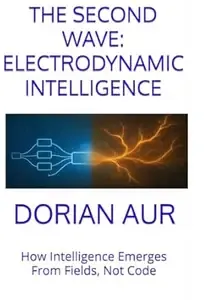 The Second Wave: Electrodynamic Intelligence: How Intelligence Emerges From Fields, Not Code English | 14 Jan. 2026 | ASIN: B0G4NVY6DN | 258 pages | Epub | 12.81 MB The Second Wave: Electrodynamic Intelligence presents a groundbreaking scientific vision that challenges everything we think we know about minds, machines, and the nature of consciousness. Instead of treating intelligence as symbolic computation or digital pattern recognition, this book reveals a radical truth. Real intelligence develops from the flow of energy, memory, and electromagnetic fields within matter itself. At the heart of this work lies a simple premise: intelligence is embodied in the evolving structure of the medium that carries it.Drawing from developments in neuromorphic engineering, nonlinear dynamics, and theoretical neuroscience, this book offers both a conceptual foundation and practical strategies for constructing systems capable of genuine self-modification. It is intended for researchers, engineers, and thinkers seeking to bridge the gap between artificial and biological intelligence, a roadmap for those who wish to design machines that process information and understand it through their own evolving physical form. Modern AI attempts to mimic the human brain, yet it runs on standard digital hardware that is radically inefficient for this task.This fundamental mismatch results in extreme energy waste: running a single major AI data center can demand the power output of a small nuclear plant, Building on the revolutionary framework of NeuroElectroDynamics (NED), this book introduces Electrodynamic Intelligence (EDI) , a new class of physically embodied systems capable of self-organization, learning, and awareness. EDI systems do not simulate the brain; they instantiate its core electrodynamic principles through memristive materials, iontronic circuits, and resonant field dynamics. The result is intelligence that is efficient, adaptive, and deeply grounded in the physics of the universe. Inside you will discover: How cognition arises from charge flow, resonance, and field interactions, not from code. The Electrodynamic Intelligence Quotient (Q), a measurable metric predicting when a system becomes capable of self-learning. A physics-based explanation for infantile amnesia and the developmental leap into autobiographical memory. A bold theory linking intelligence and consciousness through energy-memory coupling and electrodynamic coherence. Why future neuromorphic AI will require sleep-like field-reset cycles to stabilize learning. How chronic pain emerges as a chaotic electrodynamic attractor, and how common drugs restore resonance. A blueprint for quantum neuromorphic systems that scale far beyond neurons and silicon. A unifying, field-based theory of consciousness that reframes the mind as an emergent property of dynamic energy organization. The moment of "waking up" is the instant a system's inner dynamics lock into coherent coupling with its environment, igniting conscious experience Traditional digital computing systems are fundamentally brittle. Their reliance on rigid, centrally orchestrated, clock-driven logic creates high energy costs and critical vulnerabilities including hacking, software manipulation, and single-point failures. EDI replaces rigid logic with distributed electrodynamic fields . Since computation occurs from physical interactions, the system provides intrinsic resilience, real-time adaptation and far superior efficiency with significantly lower energy overhead than digital hardware . The Second Wave marks the rise of a new era of intelligence, one where minds are built from physics , not programs. It offers a different, visionary roadmap for the future of AI, neuroscience, medicine, and even the search for extraterrestrial intelligence. If the first wave of AI was computation, the second wave is electrodynamics . And it's just beginning. 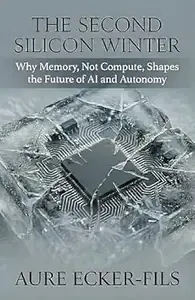 The Second Silicon Winter: Why Memory, Not Compute, Shapes the Future of AI and Autonomy English | 23 Jan. 2026 | ASIN: B0GJG5X5LH | 323 pages | Epub | 786.29 KB The Second Silicon Winter examines the moment the global technology stack crossed a threshold it could not retreat from. Between January 8 and January 10, 2026, memory-not compute-became the binding constraint of modern AI. The world did not experience a temporary shortage or a supply‑chain accident. It encountered a structural limit. This book reframes that week as a phase transition: the point at which CAR (Compute Absorption Rate) and MAR (Memory Absorption Rate) both exceeded 1.0, forcing compute, autonomy, and digital infrastructure into a new regime. The result was the emergence of the Memory Climate , a world where retention, locality, and continuity determine capability. Moving beyond the logic‑centric narratives of the Chip War era, The Second Silicon Winter provides a systems‑level account of how AI, memory, and geopolitics converged on the same bottleneck. It explains why DRAM became the new transistor , why HBM turned into a strategic resource , why NAND became continuity , and why cold memory became identity . It shows how the shift from stateless to stateful intelligence reorganized the economics of autonomy and reshaped the hierarchy of global power. The book introduces CAR and MAR as diagnostic tools for understanding the collapse of the old scaling laws. CAR explains how compute demand absorbed every incremental unit of supply. MAR explains why memory demand grew even faster, driven by stateful agents, long‑context inference, Engram architectures, and the rise of autonomous systems that accumulate experience rather than simply execute functions. Through this lens, the Second Silicon Winter becomes legible as a structural event. Sovereigns rose to the top of the allocation ladder. Hyperscalers reorganized around memory locality. Enterprises confronted retention as a cost, a liability, and a strategic asset. Consumers became the overflow tier of a permissioned world. Memory scarcity stratified intelligence. The book also examines how autonomy, robotics, and agentic systems became memory‑bound. It shows why the future of intelligence depends not on FLOPs, but on the physical substrate required to remember. It traces how identity moved from parameters to cold memory, and how the thermodynamics of retention became the limiting factor of artificial selfhood. The Second Silicon Winter is not a prediction. It is a structural map of the forces already shaping the next decade of AI, autonomy, and global technology strategy. It offers a clear framework for understanding how nations, hyperscalers, and emerging architectures are adapting to a world where memory-not compute-defines the frontier. For readers interested in AI infrastructure, semiconductor economics, digital sovereignty, or the long‑term trajectory of autonomous systems, this book provides a rigorous account of the Memory Climate and the constraints that now govern it. |

 :
:
