

 :
:
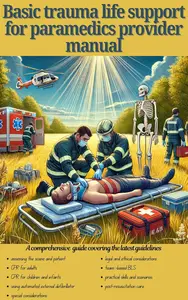
Free Download Basic trauma life support for paramedics provider manual: A comprehensive guide covering the latest guidelines by Evelin Limakatso Kholeli
English | July 26, 2024 | ISBN: N/A | ASIN: B0DBF6WVGK | 102 pages | EPUB | 0.83 Mb
Basic Life Support (BLS) is a level of medical care used for victims of life-threatening illnesses or injuries until they can be given full medical care at a hospital. It is generally used by first responders, including paramedics, emergency medical technicians (EMTs), police officers, and firefighters. Here are the key components:Key Components of Basic Life Support (BLS):Recognition and Assessment:Quickly assess the situation and check for responsiveness.Ensure the scene is safe before approaching the victim.Call for additional help or advanced medical support if needed.CPR (Cardiopulmonary Resuscitation):Chest Compressions: Perform chest compressions to maintain blood circulation. This is typically done at a rate of 100-120 compressions per minute.Airway: Ensure the airway is open by using head-tilt and chin-lift techniques.Breathing: Provide rescue breaths to supply oxygen to the lungs, usually in a ratio of 30 compressions to 2 breaths.Automated External Defibrillator (AED):Use an AED if available. This device can analyze the heart rhythm and deliver an electric shock to restore normal heart rhythm in cases of sudden cardiac arrest.Relief of Choking:Perform the Heimlich maneuver or abdominal thrusts for a conscious person who is choking.For an unconscious person, perform chest compressions and check the airway for obstructions.Recovery Position:Place the person in a recovery position if they are breathing and have a pulse but are unconscious. This helps maintain an open airway and prevents aspiration.Roles and Responsibilities of BLS Providers:Rapid Response: Quickly respond to emergencies, assess the situation, and provide immediate care.Team Coordination: Work effectively with other first responders and medical personnel.Continuous Training: Maintain skills and certifications through regular training and practice.Patient Advocacy: Ensure the patient's needs are met and provide reassurance and support.Documentation: Accurately document the care provided and the patient's condition for handover to advanced medical personnel.Importance of BLS:Saves Lives: Immediate and effective BLS can significantly increase the chances of survival and recovery for victims of cardiac arrest and other life-threatening conditions.Prevents Complications: Early intervention can prevent further deterioration of the patient's condition.Provides Time: BLS provides essential care that sustains life until advanced medical treatment can be administered.Overall, BLS is a critical component of emergency medical care, and proficiency in these skills is essential for anyone involved in providing immediate care in emergency situations.
Links are Interchangeable - Single Extraction