

 :
:
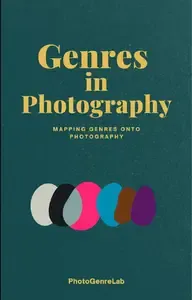
Genres in Photography: Mapping Genres onto Photography
by PhotoGenre Lab
English | 2026 | ASIN: B0FQ419C72 | 180 Pages | PDF | 80 MB
Genres power culture-rock and jazz proved it.
This book opens a culture of looking so we can enjoy photographs more deeply.
We often ask, "Seen any great films lately?" or "What music are you into?"
But how often do we hear, "Which photo books do you love?" or "What exhibitions have you seen?"
Why is photography the art we rarely talk about?
That question drives this book. Music and cinema have genres , criticism , and communities that share and debate. Photography, by contrast, has spread as a culture of making but not of looking . On social media, images stream past without authorship or context-no conversation, no memory. That's where the inarticulacy begins.
The author identifies two structural causes:
No shared genre map. Where music has rock, jazz, classical-and cinema has action, horror, romance-photography has long been framed by functions ("documentary," "fashion," "advertising") rather than by expressive styles .An ambiguous place for contemplative work. Photography drifts between private snapshots and commercial imagery, leaving the status of works made to be looked at unclear. The result: photography is harder to talk about as culture.
The response: EPT (Expressive Photography Taxonomy).
The book organizes photography into seven genres, each with a clear ethos and lineage:
Neo-Form (structure and form): geometric rigor and formal clarity-from New Topographics (Lewis Baltz, Bernd & Hilla Becher) to today's minimalist currents.Gritography (urban immediacy): the rough grain and impulse of the street-William Klein, Daido Moriyama, Anders Petersen.Luminism (poetics of light): quiet atmospheres and the private lyricism of light-Rinko Kawauchi, Masao Yamamoto; a current engaging New Color and post-New Color sensibilities.Chromavision (chromatic drive): color as protagonist-from the spirit of New Color (William Eggleston) to high-saturation, staged worlds (Miles Aldridge, Mika Ninagawa).Synthesia (technology & future vision): AI, 3DCG, and post-digital practices-where institutional critique (Thomas Ruff, Trevor Paglen) meets data visualization (Refik Anadol).Mythography (staged narrative & symbol): the photograph as stage -Cindy Sherman's transformations, Gregory Crewdson's cinematic tableaux.Distortivism (deconstruction & estrangement): breaking and remaking-from John Heartfield's photomontage to Daisuke Yokota and Wolfgang Tillmans's material experiments, and contemporary glitch art.
Another hallmark of the book is its reconnection to history . New Color Photography , inscribed in the 1970s by William Eggleston, is reframed here across two currents- Chromavision and Luminism . From Pictorialism to Straight Photography, the Bauhaus, New Topographics, and Conceptualism, twentieth-century vertical threads are interwoven with the seven horizontal genres.
A comprehensive appendix maps representative photographers to each genre-covering international figures such as Cindy Sherman , Gregory Crewdson , and Hiroshi Sugimoto , and extending to a new generation-so readers can grasp the landscape at a glance.
If you've ever wondered, "How should I look at photographs?"
If you've wanted to enjoy photography more deeply -this book is both a new tool for conversation and a cultural atlas for "listening to/reading" photographs.
Buy Premium From My Links To Get Resumable Support,Max Speed & Support Me
Links are Interchangeable - Single Extraction