

 :
:
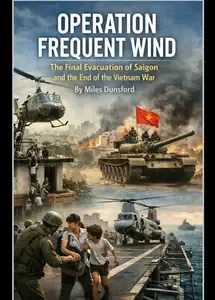
Operation Frequent Wind: The Final Evacuation of Saigon and the End of the Vietnam War (Zentara Cold War Operations Revealed)
by Miles Dunsford
English | 2026 | ASIN: B0GHHPM7SB | 56 pages | pdf | 38 MB
Operation Frequent Wind is the story of a war's final hours and the human consequences that followed long after the helicopters lifted away. In April 1975, as North Vietnamese forces closed in and South Vietnam's state structure began to disintegrate, the United States launched a last-resort evacuation from Saigon by helicopter. The images became iconic: rooftops turned into landing pads, embassy gates became pressure points, marines held lines against rising panic, and offshore carriers received wave after wave of exhausted evacuees. But behind the famous photographs was something more complex than chaos. It was an operation executed under collapsing conditions, shaped by years of political strain, shrinking options, and the harsh arithmetic of time and capacity.
Miles Dunsford's account begins where endings truly begin: not at the final flight, but in the slow tightening of inevitability that preceded it. He traces the war's closing phase through the mounting weakness of South Vietnam, the exhaustion of American political will, and the widening gap between promises made and support sustained. As the final North Vietnamese offensive gathers momentum, cities fall faster than plans can be updated. Refugees flood the roads. Rumours outrun facts. The illusion that Saigon can be held fades into a grim understanding that the end is no longer approaching. It is already here.
At the heart of this book is the reality that evacuations are never neutral. They are moral events disguised as logistical ones. Someone decides who is eligible. Someone decides whose paperwork is processed. Someone decides when the gates close and when the last helicopter leaves. Frequent Wind forced those decisions into the open. Inside the embassy, lists and priorities collided with faces and names. Outside the walls, thousands pressed forward, many of them allies who had worked with Americans for years and who understood exactly what defeat might mean for them. Dunsford explores how fear becomes a force in itself, changing behaviour, breaking systems, and turning bureaucratic procedures into life-or-death barriers.
Operation Frequent Wind was triggered when conventional evacuation routes began to fail. As security at Tan Son Nhut airport deteriorated, fixed-wing options narrowed, and helicopters became the only practical means of extracting people from within the city. The book follows the operation in close detail, from landing zones and embassy corridors to flight decks offshore. It captures the strain of repeated sorties, the discipline required to keep order in a building under pressure, and the brutal reality that not everyone who deserved saving could be saved. It also places the evacuation in its broader context: a United States changed by the war, divided at home, and politically unwilling to re-enter the conflict in any meaningful way, even as events in Saigon demanded urgent action.
Yet this is not only an American story. It is a Vietnamese story in every chapter. Dunsford follows those who escaped into an uncertain future, carrying relief, guilt, and loss in equal measure. He also follows those who stayed: soldiers, officials, and ordinary families who either could not leave or chose not to, and who faced the consequences of reunification, re-education, and a new political order. Frequent Wind did not end suffering. It shifted it. It turned battlefield outcomes into private reckonings, splitting families across oceans and leaving communities to rebuild their lives around absence.
Buy Premium From My Links To Get Resumable Support,Max Speed & Support Me
Links are Interchangeable - Single Extraction