

 :
:
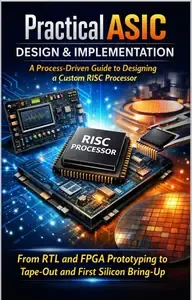
Practical ASIC Design & Implementation A Process-Driven Guide to Designing a Custom RISC Processor : From RTL and FPGA Prototyping to Tape-Out and First Silicon Bring-Up
by Practicing Engineers Network
English | 2026 | ASIN: B0GKHS6BRG | 162 Pages | PDF | 51 MB
Building an ASIC is not just a design challenge-it is a process challenge.
Many hardware projects fail not because the RTL is incorrect, but because teams misunderstand what each stage of the ASIC lifecycle is meant to prove. FPGA prototypes work, demos succeed, and yet first silicon fails. The gap between "working logic" and "manufacturable silicon" is where most first-time and even experienced teams struggle.
Practical ASIC Design & Implementation addresses that gap.
This book provides a clear, end-to-end, process-driven guide to taking a real integrated circuit from RTL to manufactured silicon , using a custom RISC processor as a concrete, consistent use case. Rather than focusing on theory or isolated tools, the book explains how real hardware teams execute ASIC programs-what decisions matter, when confidence is earned, and where risk is often misunderstood.
The book deliberately includes FPGA prototyping as part of the ASIC story. FPGA is not required to build an ASIC, but it plays a critical role in reducing functional and system-level risk. This book explains where FPGA adds value, where it becomes misleading, and why FPGA success must never be confused with ASIC readiness.
Topics covered include:
Defining system requirements that survive to siliconWriting RTL as a manufacturing contract, not just codeUsing FPGA prototypes correctly-and understanding their limitsEvaluating true ASIC readiness before committing to tape-outASIC synthesis, physical design, and signoff explained in practical termsGDSII generation, tape-out discipline, and manufacturing handoffFirst silicon bring-up, debug strategy, and post-silicon learningChecklists, templates, and timelines used by real hardware teams
Diagrams are used sparingly and intentionally to orient the reader in the RTL-to-GDSII flow. Appendices provide actionable checklists and review templates that turn the material into a practical execution guide.
This book is written for:
Hardware engineers transitioning from FPGA to ASICStartup hardware teams building their first custom siliconSystem architects and technical leads responsible for tape-out decisionsSoftware engineers working closely with silicon teamsAnyone who wants to understand how chips are actually delivered-not just designed
This is not an HDL tutorial or a microarchitecture textbook. It assumes basic familiarity with digital design concepts and focuses instead on process, decision-making, and execution discipline .
If you are responsible for delivering real silicon, this book provides the framework to do it deliberately-rather than learning the hard way.
Buy Premium From My Links To Get Resumable Support,Max Speed & Support Me
Links are Interchangeable - Single Extraction