

 :
:
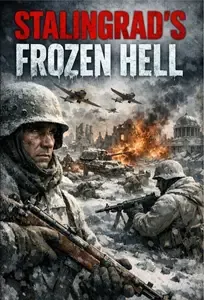
Stalingrad's Frozen Hell
by Aayush Agarawal
English | 2026 | ASIN: B0GF1QS672 | 96 pages | pdf | 62 MB
Stalingrad's Frozen Hell is a gripping narrative history of the Battle of Stalingrad-told not only as a clash of armies, but as a descent into a city where winter, hunger, and rubble became weapons. Moving from the German drive toward the Volga to the final collapse of the trapped 6th Army, the book traces how a campaign built on speed and prestige hardened into a slow, merciless struggle measured in meters, bread rations, and body heat.
The story opens with the strategic road that led both sides to Stalingrad: Hitler's 1942 southern gamble, the lure of the Volga artery and Caucasus oil, and the Soviet decision that the city could not fall without a fight that would drain the attacker. As the Luftwaffe's bombing turns neighborhoods into ash and factories into shattered fortresses, Stalingrad becomes the perfect battleground for close-quarters war-where tanks lose their advantage, front lines run through stairwells, and survival depends on basements, trenches, and small assault groups.
At the heart of the book is the human experience of urban warfare. Readers enter the world of Rattenkrieg -the "rat war"-where snipers shape movement, buildings are taken and retaken overnight, and a single strongpoint like Pavlov's House becomes both a tactical anchor and a propaganda symbol. The great northern factories-Red October, Barrikady, and the Tractor Plant-emerge as industrial cathedrals turned killing grounds, absorbing shellfire while forcing soldiers into brutal, intimate combat among machines and twisted steel.
Beyond the ruins, the narrative reveals the hidden engine of the battle: logistics and leadership. The Volga crossings function as a lifeline that keeps the Soviet defense breathing under constant fire, while German supply lines stretch thin and depend dangerously on vulnerable allied flanks. Winter arrives not as scenery but as an enemy army, freezing weapons, crippling movement, and turning wounds into death sentences. The book then follows the decisive Soviet counterstroke-Operation Uranus-as the ring closes around Stalingrad, trapping an army that had come to conquer and forcing it into starvation and collapse.
As hope narrows to the promise of an airlift and the possibility of relief, the story exposes the fatal power of illusion in war: the belief that will can replace tonnage, that orders can override physics, and that prestige is worth any cost. The final chapters carry readers through the pocket's disintegration, surrender in the snow, and the lasting aftermath-how Stalingrad reshaped the Eastern Front, scarred millions of lives, and became a battlefield of memory and myth.
Buy Premium From My Links To Get Resumable Support,Max Speed & Support Me
Links are Interchangeable - Single Extraction