
| |
|
|
Free Ebooks DownloadWelcome to DL4ALL.org – your ultimate destination for ebooks across every genre. Whether you’re into fiction, self-help, education, or niche topics, we offer an extensive library to satisfy your thirst for knowledge and entertainment. Why Choose DL4ALL.org?
Start your reading journey today on DL4ALL.org and unlock a world of imagination, knowledge, and inspiration! 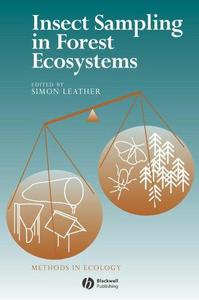 Insect Sampling in Forest Ecosystems By 2004 | 315 Pages | ISBN: 0632053887 | PDF | 3 MB Insect Sampling in Forest Ecosystems highlights the problems faced by entomologists working in forest ecosystems.Insects play a major part in all aspects of ecology Brings together the methodology needed to investigate insects through the various strata of the forest canopy Covers techniques associated with various specialised groups of forest insects Each chapter is backed up by a sound approach to experimental design and data analysis Essential reading for advanced students and researchers as well as teachersContent: Chapter 1 Sampling Theory and Practice (pages 1-15): Simon R. Leather and Allan D. WattChapter 2 Sampling Insects from Roots (pages 16-36): Alan C. GangeChapter 3 Pitfall Trapping in Ecological Studies (pages 37-57): B. A. WoodcockChapter 4 Sampling Methods for Forest Understory Vegetation (pages 58-76): Claire M. P. OzanneChapter 5 Sampling Insects from Trees: Shoots, Stems, and Trunks (pages 77-115): Martin R. SpeightChapter 6 Insects in Flight (pages 116-145): Mark YoungChapter 7 Techniques and Methods for Sampling Canopy Insects (pages 146-167): Claire M. P. OzanneChapter 8 Sampling Methods for Water?Filled Tree Holes and Their Artificial Analogues (pages 168-185): S. P. Yanoviak and O. M. FinckeChapter 9 Sampling Devices and Sampling Design for Aquatic Insects (pages 186-220): Leon Blaustein and Matthew SpencerChapter 10 Methods for Sampling Termites (pages 221-253): David T. Jones, Robert H. J. Verkerk and Paul EggletonChapter 11 Parasitoids and Predators (pages 254-278): Nick Mills  Inorganic Nanostructures: Properties and Characterization By Prof. Petra Reinke(auth.) 2012 | 199 Pages | ISBN: 3527409254 | PDF | 3 MB This monograph for young researchers and professionals looking for a comprehensive reference offers an advanced treatment of the topic that extends beyond an introductory work. As such, it systematically covers the inorganic nanostructures in the breadth needed, while presenting them together with the surface science tools used to characterize them, such as electron spectroscopy and scanning probe techniques. The unique challenges in the fabrication of nanostructures are illustrated, and set into context of controlling structure, dimensionality and electronic properties.  Innovation Engine: Driving Execution for Breakthrough Results By Jatin Desai(auth.) 2013 | 235 Pages | ISBN: 1118355032 | PDF | 2 MB How to implement an innovation engine in any organizationInnovation is often sought and is in high demand today. At the same time it is often misunderstood and lacks committed sponsorship. Today, most teams at the top need an innovation capability in a manner that works in tandem with their performance/operations management. Packed with actionable ideas, references, links, and resources, Innovation Engine meets that need. Reveals how to develop strategy, road maps, and processes for innovation execution Provides high level implementation guidance on executing innovation, something companies are struggling with globally Explores how today's companies can create a long-term sustainable corporate culture by also using an innovation engine Explains how to use innovation to keep employees engaged and motivated Written for executives, business leaders, CFOs, and CIOs Showing readers how to create a business case for innovation and a supporting innovation linked to business vision and goals, Innovation Engine clearly reveals how to reduce time-to-market, while expanding the "idea landscape" and building a pipeline of corporate innovators. Content: Chapter 1 Develop a Clear Innovation Intent (pages 9-35): Chapter 2 Assess Innovation Readiness (pages 37-55): Chapter 3 Creating an Innovation Strategy (pages 57-72): Chapter 4 Creating a Roadmap (pages 73-91): Chapter 5 Building Momentum (pages 93-109): Chapter 6 Structuring for Innovation (pages 111-131): Chapter 7 Innovation Management Process (pages 133-159): Chapter 8 Building Intrapreneurs (pages 161-189): Chapter 9 Sourcing Radical Ideas (pages 191-211): Chapter 10 The One Secret about Innovation (pages 213-228):  Inflation-indexed Securities: Bonds, Swaps and Other Derivatives, Second Edition By Mark Deacon, Andrew Derry, Dariush Mirfendereski(auth.) 2004 | 353 Pages | ISBN: 0470868120 | PDF | 5 MB The global market for inflation-indexed securities has ballooned in recent years, and this trend is set to continue. This book examines the rationale behind issuance and investment decisions, and details the issues facing anyone who designs indexed securities, illustrating them wherever possible with actual examples from the international capital markets. In particular, an extensive review of indexed debt markets throughout the world is provided - including for the first time, a comprehensive and consistent set of cash flow and price-yield equations for the instruments already in existence in the major bond markets - forming an important reference for those already experienced in the field, as well as practitioners and academics approaching the subject for the first time. The book also provides unique insight into the development of inflation-indexed derivative products, and the analytical tools required to value such instruments.Content: Chapter 1 What are Inflation?indexed Securities and Derivatives? (pages 1-8): Chapter 2 Security Design (pages 9-42): Chapter 3 Why Invest in Indexed Debt? (pages 43-58): Chapter 4 Why Issue Indexed Bonds? (pages 59-71): Chapter 5 Inflation and Real Interest Rate Analysis (pages 73-92): Chapter 6 Major International Indexed Bond Markets (pages 93-178): Chapter 7 Other Indexed Bond Markets (pages 179-233): Chapter 8 Inflation?linked Derivatives: Market Description (pages 235-267): Chapter 9 Inflation?linked Derivatives: Pricing, Hedging and Other Technical Aspects (pages 269-296): Chapter 10 Conclusion (pages 297-300):  Inflammation and Allergy Drug Design By 2011 | 326 Pages | ISBN: 1444330144 | PDF | 10 MB Our knowledge and understanding of allergic diseases of the respiratory tract has improved to a point where new therapies are being developed for patient benefit.Inflammation and Allergy Drug Design explains the biologic science that underpins the pathophysiology of asthma and related disorders, as well as their mechanisms. This authoritative guide consists of 25 chapters, each detailing the cutting-edge developments in a particular field. It is divided into three parts, covering cytokines, chemokines, grow factors and mediators. This book allows immunologists, allergologists and researchers in the pharmaceutical industry to learn and appreciate the target biology in drug development. It also provides medical and pharmaceutical postgraduatestudents and clinicians with a basic understanding of allergic diseases in the respiratory tract.Content: Chapter 1 Novel Anti?Inflammatory Drugs Based on Targeting Lung Dendritic Cells and Airway Epithelial Cells (pages 1-14): Bart N. Lambrecht, Maud Plantinga, Monique Willart and Hamida HammadChapter 2 Role of Th2 Cells in the Allergic Diathesis (pages 15-25): Marsha Wills?karpChapter 3 Importance of Th17? and Th1?Associated Responses for the Development of Asthma (pages 27-38): Tomohiro Yoshimoto, Hiroko Tsutsui and Kenji NakanishiChapter 4 Regulatory T Cells (pages 39-57): Chris Corrigan and Kimuli RyannaChapter 5 A Role for Natural Killer T?Cell Subsets in the Pathogenesis of Various Allergic Disorders (pages 59-66): Hiroshi Watarai, Michishige Harada, Mayumi Tamari and Masaru TaniguchiChapter 6 Regulatory Roles of B Cells in Allergy and Inflammation (pages 67-77): Kiyoshi Takatsu, Masashi Ikutani and Yoshinori NagaiChapter 7 Mast Cells (pages 79-105): Mindy Tsai and Stephen J. GalliChapter 8 Eosinophils (pages 107-121): Nancy A. Lee, Mark V. Dahl, Elizabeth A. Jacobsen and Sergei I. OchkurChapter 9 Basophils in Inflammation and Allergy Drug Design (pages 123-137): Donald MacGlashanChapter 10 Epithelial Cells (pages 139-148): Tillie?Louise Hackett, Stephanie Warner, Dorota Stefanowicz and Darryl KnightChapter 11 Fibroblasts (pages 149-162): Alastair G. Stewart, Lilian Soon and Michael SchuligaChapter 12 Airway Smooth Muscle Cells (pages 163-171): Andrew J. Halayko and Pawan SharmaChapter 13 Interleukin 4, Interleukin 13, and Interleukin 9 (pages 173-185): Kenji Izuhara, Shoichiro Ohta, Hiroshi Shiraishi and Shoichi SuzukiChapter 14 Interleukin 3, Interleukin 5, and Granulocyte-Macrophage Colony?Stimulating Factor (pages 187-196): Alba Llop?Guevara, Josip Marcinko, Ramzi Fattouh and Manel JordanaChapter 15 Interleukin 15, Interleukin 17, and Interleukin 25 (pages 197-204): Hiroshi Nakajima and Itsuo IwamotoChapter 16 Thymic Stromal Lymphopoietin (pages 205-214): Kazuhiko Arima and Yong?Jun LiuChapter 17 Interleukin 10 (pages 215-224): Whitney W. Stevens, Larry Borish and John W. SteinkeChapter 18 Tumor Necrosis Factor Alpha (pages 225-235): Christopher Brightling, Latifa Chachi, Dhan Desai and Yassine AmraniChapter 19 Profibrotic and Angiogenic Factors in Asthma (pages 237-252): Neville Berkman and Francesca Levi?SchafferChapter 20 Chemokines (pages 253-261): Luis M. Teran and Juan R. VelazquezChapter 21 Epithelial Growth Factors (pages 263-270): Yasuhiro Gon and Shu HashimotoChapter 22 Prostanoids (pages 271-283): Sarah A. Maher, Deborah L. Clarke and Maria G. BelvisiChapter 23 Leukotrienes (pages 285-295): Katsuhide Okunishi and Marc Peters?GoldenChapter 24 Proteases in Allergy (pages 297-305): Keisuke Oboki and Hirohisa SaitoChapter 25 Toll?Like Receptors (pages 307-316): Jessica L. Allen, Aurelien Trompette and Christopher L. Karp 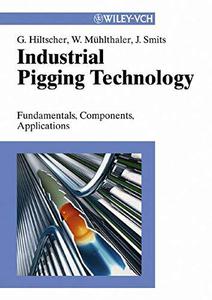 Industrial Pigging Technology: Fundamentals, Components, Applications By Prof. Dr.?Ing. Gerhard Hiltscher, Dipl.?Ing. Wolfgang Muhlthaler, Dipl.?Ing. Jorg Smits(auth.) 2003 | 333 Pages | ISBN: 3527306358 | PDF | 5 MB Pigs are snug-fitting plugs which are able to perform various maintenance tasks such as cleaning or removing deposits or blockages in pipe and pipeline systems from the inside. A gaseous or liquid propellant is used to push the pig through the system. This strategy avoids rinsing loss of valuable product, provides reduction of adverse environmental impacts, and gains high efficiency for less investment. The book describes clearly and methodically the important basic equipment required for the planning and design of pigging units. Many practical examples are shown for the operation of industrial pigging units, drawn from the authors' longtime experience in this technology. In this form and scope the book is an unrivaled presentation of this technology. Engineers and chemists who plan, construct, operate and maintain production plants in the chemical, food, cosmetics, pharmaceutical and petrochemical industry will find an invaluable source of advice and reference for pigging units. Content: Chapter 1 Introduction to Pigging Technology (pages 1-7): Chapter 2 Pigging Units and Pigging Systems (pages 9-20): Chapter 3 Pigs (pages 21-47): Chapter 4 Valves (pages 49-74): Chapter 5 Pipework (pages 75-97): Chapter 6 Additional Equipment (pages 99-103): Chapter 7 Propellants (pages 105-112): Chapter 8 Control System (pages 113-137): Chapter 9 Decision Criteria for Pigging (pages 139-152): Chapter 10 Cleaning Degree after Pigging (pages 153-172): Chapter 11 Pig Wear (pages 173-180): Chapter 12 Medium?Specific Characteristics (pages 181-187): Chapter 13 Checks before Start?up (pages 189-195): Chapter 14 Experiences with Pigging Units (pages 197-204): Chapter 15 Applications in the Chemical Industry (pages 205-223): Chapter 16 Pigging Units for Sterile Technology (pages 225-236): Chapter 17 Pipeline Pigging (pages 237-257): Chapter 18 Pigging of Pneumatic Conveying Lines for Bulk Materials (pages 259-271): Chapter 19 Legal Requirements (pages 273-278): Chapter 20 Safety and Occupation Health (pages 279-294): 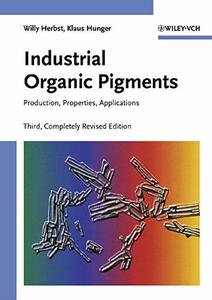 Industrial Organic Pigments: Production, Properties, Applications, Third Edition By Dr. Willy Herbst, Dr. Klaus Hunger, Gerhard Wilker, Heinfred Ohleier, Rainer Winter(auth.) 2004 | 672 Pages | ISBN: 3527305769 | PDF | 7 MB "Everything there is to know about organic pigments"Revised and updated, this highly acclaimed work, now in its third edition, remains the most comprehensive source of information available on synthetic organic pigments. The book provides up-to-date information on synthesis, reaction mechanisms, physical and chemical properties, test methods, and applications of all industrially produced organic pigments on the world market. Standardized methods have been used to obtain the data, thus facilitating comparison between pigments, making this an invaluable book for chemists, engineers, colorists, and technicians. "Presentation throughout is of the highest quality and the volume must now become the standard reference text in this important area of colouring matters." -Dyes and Pigments"This is a very wide-ranging reference work ... it would be difficult to find a topic in this field not covered by this book." -EcochemContent: Chapter 1 General (pages 1-181): Chapter 2 Azo Pigments (pages 183-419): Chapter 3 Polycyclic Pigments (pages 421-566): Chapter 4 Miscellaneous Pigments (pages 567-583): Chapter 5 Legislation, Ecology, Toxicology (pages 585-599):  Industrial Organic Chemistry, Third Completely Revised Edition By Prof. Dr. Klaus Weissermel, Prof. Dr. Hans?Jurgen Arpe(auth.) 1997 | 476 Pages | ISBN: 3527288384 | PDF | 10 MB 'Ideal for getting an overview of applied organic chemistry' This bestselling standard, now in its 3rd completely revised English edition, is an excellent source of technological and economic information on the most important precursors and intermediates used in the chemical industry. Right and left columns containing synopsis of the main text and statistical data, and numerous fold-out flow diagrams ensure optimal didactic presentation of complex chemical processes. The translation into eight languages, the four German and three English editions clearly evidence the popularity of this book. '... it is where I look first to get a quick overview of the manufacturing process of a product... Weissermel/Arpe has been serving me for years as an indispensable reference work.' (Berichte der Bunsengesellschaft fur Physikalische Chemie) 'Whether student or scientist, theorist or practician - everyboby interested in industrial organic chemistry will appreciate this work.' (farbe + lack) '...it should be ready to hand to every chemist or process engineer envolved directly or indirectly with industrial organic chemistry . It should be in the hand of every higher-graduate student, especially if chemical technology is not part of the study, like in many college universities...' (Tenside-Surfactants-Detergents) Content: Chapter 1 Various Aspects of the Energy and Row Material Supply (pages 1-12): Chapter 2 Basic Products of Industrial Syntheses (pages 13-58): Chapter 3 Olefins (pages 59-89): Chapter 4 Acetylene (pages 90-104): Chapter 5 1,3?Diolefins (pages 105-124): Chapter 6 Syntheses involving Carbon Monoxide (pages 125-142): Chapter 7 Oxidation Products of Ethylene (pages 143-190): Chapter 8 Alcohols (pages 191-213): Chapter 9 Vinyl?Halogen and Vinyl?Oxygen Compounds (pages 215-236): Chapter 10 Components for Polyamides (pages 237-264): Chapter 11 Propene Conversion Products (pages 265-310): Chapter 12 Aromatics - Production and Conversion (pages 311-334): Chapter 13 Benzene Derivatives (pages 335-383): Chapter 14 Oxidation Products of Xylene and Naphthalene (pages 385-423):  Industrial Organic Chemistry, Fourth Edition By Prof. Dr. Klaus Weissermel, Prof. Dr. Hans?Jurgen Arpe(auth.) 2003 | 499 Pages | ISBN: 3527305785 | PDF | 18 MB This bestselling standard, now in its fourth, completely revised English edition, is an excellent source of technological and economic information on the most important precursors and intermediates used in the chemical industry. The translation into eight languages and the five German and four English editions clearly evidence the popularity of this book. '... it is where I look first to get a quick overview of the manufacturing process of a product... Weissermel/Arpe has been serving me for years as an indispensable reference work.' (Berichte der Bunsengesellschaft fur Physikalische Chemie) 'It would be unkind and misleading to call this book a poor man's Kirk Othmer, but it could almost be described as an encyclopedia... it is easy to read and one has to admire the authors' dedication and endeavor in getting so much into a single volume. They have provided a book that is interesting reading as well as being an excellent reference. It is a highly recommended book, which I hope the authors will find the energy to continue updating on a regular basis.' (Chemistry in Britain) '...it should be ready to hand to every chemist or process engineer involved directly or indirectly with industrial organic chemistry. It should be in the hand of every higher-graduate student, especially if chemical technology is not part of the study, like in many college universities...' (Tenside-Surfactants-Detergents)Content: Chapter 1 Various Aspects of the Energy and Raw Material Supply (pages 1-13): Chapter 2 Basic Products of Industrial Syntheses (pages 15-57): Chapter 3 Olefins (pages 59-89): Chapter 4 Acetylene (pages 91-105): Chapter 5 1,3?Diolefins (pages 107-126): Chapter 6 Syntheses involving Carbon Monoxide (pages 127-144): Chapter 7 Oxidation Products Ethylene (pages 145-192): Chapter 8 Alcohols (pages 193-215): Chapter 9 Vinyl?Halogen and Vinyl?Oxygen Compounds (pages 217-238): Chapter 10 Components for Polyamides (pages 239-266): Chapter 11 Propene Conversion Products (pages 267-312): Chapter 12 Aromatics - Production and Conversion (pages 313-336): Chapter 13 Benzene Derivatives (pages 337-385): Chapter 14 Oxidation Products of Xylene and Naphthalene (pages 388-405):  OECD, "Individual Learning Accounts Panacea or Pandora's Box?" English | 2019 | pages: 70 | ISBN: 9264939504 | PDF | 1,9 mb A rise in non-standard work in many countries and an increased fragmentation of worker careers have created new challenges for training policies at a time when structural transformation is creating a need for both re- and up-skilling. Individual learning accounts have received renewed attention from policy makers, due to their ability to make training rights "portable" from one job or employment status to another. |

 :
:
