
| |
|
|
Free Ebooks DownloadWelcome to DL4ALL.org – your ultimate destination for ebooks across every genre. Whether you’re into fiction, self-help, education, or niche topics, we offer an extensive library to satisfy your thirst for knowledge and entertainment. Why Choose DL4ALL.org?
Start your reading journey today on DL4ALL.org and unlock a world of imagination, knowledge, and inspiration!  Hybrid Systems with Constraints By 2013 | 269 Pages | ISBN: 1848215274 | PDF | 4 MB Control theory is the main subject of this title, in particular analysis and control design for hybrid dynamic systems.The notion of hybrid systems offers a strong theoretical and unified framework to cope with the modeling, analysis and control design of systems where both continuous and discrete dynamics interact. The theory of hybrid systems has been the subject of intensive research over the last decade and a large number of diverse and challenging problems have been investigated. Nevertheless, many important mathematical problems remain open.This book is dedicated mainly to hybrid systems with constraints; taking constraints into account in a dynamic system description has always been a critical issue in control. New tools are provided here for stability analysis and control design for hybrid systems with operating constraints and performance specifications.Contents:1. Positive Systems: Discretization with Positivity and Constraints, Patrizio Colaneri, Marcello Farina, Stephen Kirkland, Riccardo Scattolini and Robert Shorten.2. Advanced Lyapunov Functions for Lur'e Systems, Carlos A. Gonzaga, Marc Jungers and Jamal Daafouz.3. Stability of Switched DAEs, Stephan Trenn.4. Stabilization of Persistently Excited Linear Systems, Yacine Chitour, Guilherme Mazanti and Mario Sigalotti.5. Hybrid Coordination of Flow Networks, Claudio De Persis, Paolo Frasca.6. Control of Hybrid Systems: An Overview of Recent Advances, Ricardo G. Sanfelice.7. Exponential Stability for Hybrid Systems with Saturations, Mirko Fiacchini, Sophie Tarbouriech, Christophe Prieur.8. Reference Mirroring for Control with Impacts, Fulvio Forni, Andrew R. Teel, Luca Zaccarian.Content: Chapter 1 Positive Systems: Discretization with Positivity and Constraints (pages 1-20): Patrizio Colaneri, Marcello Farina, Stephen Kirkland, Riccardo Scattolini and Robert ShortenChapter 2 Advanced Lyapunov Functions for Lur'e Systems (pages 21-55): Carlos A. Gonzaga, Marc Jungers and Jamal DaafouzChapter 3 Stability of Switched DAEs (pages 57-83): Stephan TrennChapter 4 Stabilization of Persistently Excited Linear Systems (pages 85-120): Yacine Chitour, Guilherme Mazanti and Mario SigalottiChapter 5 Hybrid Coordination of Flow Networks (pages 121-143): Claudio De Persis and Paolo FrascaChapter 6 Control of Hybrid Systems: An Overview of Recent Advances (pages 145-178): Ricardo G. SanfeliceChapter 7 Exponential Stability for Hybrid Systems with Saturations (pages 179-212): Mirko Fiacchini, Sophie Tarbouriech and Christophe PrieurChapter 8 Reference Mirroring for Control with Impacts (pages 213-255): Fulvio Forni, Andrew R. Teel and Luca Zaccarian 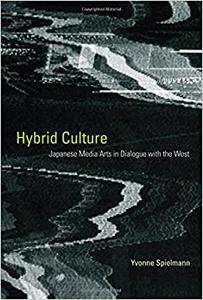 Yvonne Spielmann, Anja Welle, Stan Jones, "Hybrid Culture: Japanese Media Arts in Dialogue with the West" English | 2012 | pages: 277 | ISBN: 0262018373 | PDF | 43,0 mb An exploration of the tensions between East and West and digital and analog in Japanese new-media art.  Hurricane! Coping with Disaster: Progress and Challenges Since Galveston, 1900 By 2003 | 360 Pages | ISBN: 0875902979 | PDF | 9 MB Published by the American Geophysical Union as part of the Special Publications Series.Hurricane research implicates something more than science. It is the key to saving lives and mitigating economic damage. From the Galveston catastrophe of 1900, where more than 8,000 people died, to the economic devastation wrought by Hurricane Andrew in 1992 in the United States, scientists have striven to understand and track hurricanes while charting their societal effects. Hurricane! Coping with Disaster tells the dramatic history of that effort by leading meteorologists?the men and women who brought hurricane science into the 21st century, and those who sustain it today. for readers everywhere interested in climatology, hurricane research, the historical background, and more.Content: Chapter 1 Twentieth Century Challenges and Milestones (pages 3-37): William M. GrayChapter 2 Impact of Technologies from Two World Wars (pages 39-61): Edward N. Rappaport and Robert H. SimpsonChapter 3 Hurricane Surveillance by Specially Instrumented Aircraft (pages 63-101): Robert C. SheetsChapter 4 Evolution of Prediction Models (pages 103-126): Mark DeMaria and James M. GrossChapter 5 The Great Galveston Hurricane of 1900 (pages 128-140): Neil L. FrankChapter 6 Social Choice in Dealing with Hurricanes (pages 141-153): Mary Frances Myers and Gilbert F. WhiteChapter 7 Communicating Damage Potentials and Minimizing Hurricane Damage (pages 155-164): Herbert S. SaffirChapter 8 Reducing Vulnerability (pages 165-173): Roger A. PielkeChapter 9 A Century of Scientific Progress: An Evaluation (pages 177-204): Kerry EmanuelChapter 10 A Century of Progress in Tracking and Warning: Improvements in Observations, Models, and Forecasts (pages 205-216): H.E. WilloughbyChapter 11 The Burgeoning Role of Weather Satellites (pages 217-247): C. Velden, J. Simpson, W. Timothy Liu, J. Hawkins, K. Brueske and R. AthensChapter 12 Present Day Satellite Technology for Hurricane Research: A Closer Look at Formation and Intensification (pages 249-289): E.A. Ritchie, J. Simpson, W.T. Liu, J. Halverson, C.S. Velden, K.F. Brueske and H. PierceChapter 13 Continuous Monitoring of the Hurricane Core: Availability of New Long?Endurance Small Drone Aircraft (pages 291-304): Greg Tyrrell and Greg HollandChapter 14 Hurricane Upper Level Wind Measurements: Applications of Doppler Lidar (pages 305-315): G. David EmmittChapter 15 A Century After Galveston, 1900: A Personal Perspective and Outlook (pages 317-334): Greg Holland 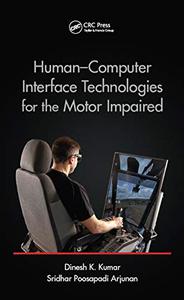 Dinesh K. Kumar, Sridhar Poosapadi Arjunan, "Human-Computer Interface Technologies for the Motor Impaired" English | 2015 | pages: 212 | ISBN: 1482262665 | PDF | 13,1 mb Human Computer Interface Technologies for the Motor Impaired examines both the technical and social aspects of human computer interface (HCI). Written by world-class academic experts committed to improving HCI technologies for people with disabilities, this all-inclusive book explores the latest research, and offers insight into the current limitations of this field. It introduces the concept of HCI, identifies and describes the fundamentals associated with a specific technology of HCI, and provides examples for each. It also lists and highlights the different modalities (video, speech, mechanical, myoelectric, electro-oculogram, and brain-waves) that are available, and discusses their relevant applications.  Human-Computer Interactions in Transport By 2011 | 386 Pages | ISBN: 1848212798 | PDF | 20 MB The human-computer interactions are more and more present in our everyday life, and lead to many conceptual and methodological problems for the designers and evaluators of interactive systems. This book is about Human-Computer Interaction in Transport domain, in which the traveler becomes a user of information systems, particularly before and during the travel(s). This book will focus on traveler information and personalized systems, using a human-centered design approach.Content: Chapter 1 Principles, Issues and Viewpoints of Traveler Information in a Multimodal Context (pages 1-20): Chapter 2 User Needs Analysis Methodology for the Design of Traveler Information Systems (pages 21-49): Chapter 3 A Generic Method for Personalizing Interactive Systems (pages 51-91): Chapter 4 A Formal Framework for Design and Validation of Multimodal Interactive Systems in Transport Domain (pages 93-128): Chapter 5 From Human?Machine Interaction to Cooperation (pages 129-155): Chapter 6 ICT and New Human?machine Interactions for Trucks and Buses of the Future (pages 157-201): Chapter 7 User?centered Approach to Design an Adaptive Truck Driving Assistance (pages 203-231): Chapter 8 Menu Sonification in an Automotive Media Center (pages 233-281): Chapter 9 Consideration of the Travel Time Experience in The Conceptual Models Of Personalized Interactive Applications (pages 283-310): Chapter 10 Towards New Interactive Displays in Stations and Airports (pages 311-342): Chapter 11 Transport (pages 343-368): 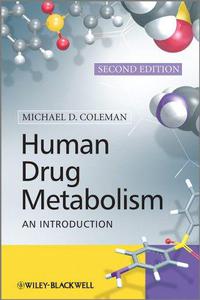 Human Drug Metabolism: An Introduction, Second Edition By Michael D. Coleman(auth.) 2010 | 350 Pages | ISBN: 0470742178 | PDF | 4 MB Human Drug Metabolism, An Introduction, Second Edition provides an accessible introduction to the subject and will be particularly invaluable to those who already have some understanding of the life sciences. Completely revised and updated throughout, the new edition focuses only on essential chemical detail and includes patient case histories to illustrate the clinical consequences of changes in drug metabolism and its impact on patient welfare. After underlining the relationship between efficacy, toxicity and drug concentration, the book then considers how metabolizing systems operate and how they impact upon drug concentration, both under drug pressure and during inhibition. Factors affecting drug metabolism, such as genetic polymorphisms, age and diet are discussed and how metabolism can lead to toxicity is explained. The book concludes with the role of drug metabolism in the commercial development of therapeutic agents as well as the pharmacology of some illicit drugs.Content: Chapter 1 Introduction (pages 1-11): Chapter 2 Drug Biotransformational Systems - Origins and Aims (pages 13-22): Chapter 3 How Oxidative Systems Metabolize Substrates (pages 23-64): Chapter 4 Induction of Cytochrome P450 Systems (pages 65-92): Chapter 5 Cytochrome P450 Inhibition (pages 93-123): Chapter 6 Conjugation and Transport Processes (pages 125-157): Chapter 7 Factors Affecting Drug Metabolism (pages 159-212): Chapter 8 Role of Metabolism in Drug Toxicity (pages 213-267):  John Updike, "Hugging the Shore: Essays and Criticism" English | 2013 | pages: 896 | ISBN: 0812983785 | EPUB | 2,6 mb "Writing criticism is to writing fiction and poetry as hugging the shore is to sailing in the open sea," writes John Updike in his Foreword to this collection of literary considerations. But the sailor doth protest too much: This collection begins somewhere near deep water, with a flotilla of short fiction, humor pieces, and personal essays, and even the least of the reviews here-those that "come about and draw even closer to the land with another nine-point quotation"-are distinguished by a novelist's style, insight, and accuracy, not just surface sparkle. Indeed, as James Atlas commented, the most substantial critical articles, on Melville, Hawthorne, and Whitman, go out as far as Updike's fiction: They are "the sort of ambitious scholarly reappraisal not seen in this country since the death of Edmund Wilson." With Hugging the Shore, Michiko Kakutani wrote, Updike established himself "as a major and enduring critical voice; indeed, as the pre-eminent critic of his generation." 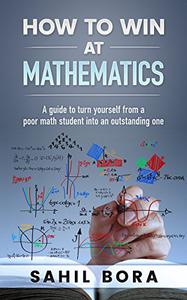 Sahil Bora, "How to win at Mathematics: A guide to turn yourself from a poor math student into an outstanding one" English | 2014 | ISBN: 1542447011 | ASIN: B00JC0Y8KW | EPUB | pages: 40 | 0.5 mb INTRODUCING: The How To Win At Mathematics BookA Guide To Turn Yourself From A Poor Math Student Into An Outstanding OneWhat is The 'How To Win At Mathematics eBook'?Breaking Down How To Learn Math Effectively Using Real Life Examples You Can Use Right Now To Smash Your Next Math AssessmentMath can be difficult and intimidating, especially when you have been going to every class, doing the homework problems and studying your ass off with still nothing to show for it...Learn the exact process which top math students use to ace their assessments, without the stress, frustration, and painful long hours we're all accustomed to. Unlock Your Math Intuition Which Has Been Hiding Away For Years With Creative Tools Including Visualisation, Diagramming, Analogies And SimplificationMathematical insight can be worth a thousand words. But an insight made so simple that it can easily tattooed in your brain is worth a million words...Why? Because that way you don't have to rack your brains resorting to rote memorising before an assessment knowing that what you've learnt is actually going to stick. These tools in learning math will make you learn mathematical concepts quickly without having to spend hours re-reading and drilling problems. Includes My "Assessment Domination Guide" That Will Get You The Grades You DeserveMath is all about problem solving. But not all problems are simple to solve especially when taught by university professors who can't break it down to a 6th grader's level. With very little study, you'll be able to quickly prepare and walk into any assessment calm and confident instead of anxious and confused thanks to my "Assessment Domination Guide". What's Inside How To Win At Mathematics eBook?Maximising Your Attendance in ClassesWhat if I could tell you the secret advantages of why regularly attending class gives you several major advantages even if your tired, don't feel like it or completely hungover from the night before. Do you hate having to spend unnecessary hours rewriting your notes again clearly and remember what was taught in class for an assessment?Most students don't know what to focus on in math classes. But in my 'Note taking' chapter, I will show you the important things to note down and what you can skip. Optimise Your Brain For Learning MathThey say mathematical insight is worth a thousand words. But once you truly understand these insights, they become worth a million words, because I've provided you the learning tools, these insights you learn can easily be tattooed in your brain for years. These tools for obtaining and understanding true mathematical insight will help you quickly learn and understand some of the most complex mathematical concepts...so that you don't have to spend hours pulling all nighters, resorting to rote memorisation to try and learn difficult math concepts before an assessment. If you're like me who's likes learning creatively and visually, then using these learning tools will offer you a solid foundation for learning even the most complex and abstract mathematical concepts. Get Your GradeMath is all about problem solving. But not all problems are simple to solve especially when taught by university professors who can't break it down to a 6th grader's level. With very little study, you'll be able to quickly prepare and walk into any assessment calm and confident instead of anxious and confused thanks to my "Assessment Domination Guide".  Peter Martin Jones, "How to understand Probability Theory 1" English | 2012 | ASIN: B009130DS6 | EPUB | pages: 28 | 2.5 mb This booklet is designed to give a thorough grounding in Probability Theory. A good understanding in this topic is essential for all those people who wish to go on and study Mathematics and other science subjects like, Physics, Chemistry and Engineering. 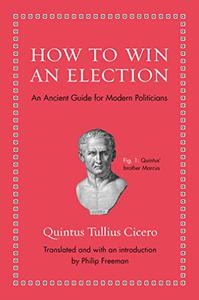 Quintus Tullius Cicero, Philip Freeman, "How to Win an Election: An Ancient Guide for Modern Politicians" English | 2012 | pages: 128 | ISBN: 0691154082 | EPUB | 0,8 mb A primer on campaigning in ancient Rome that reads like a strategy memo from a modern political consultant |

 :
:
