
| |
|
|
Dl4All - Download free For All: software and educational resource.Free software and educational resource. With a little searching, you can download what you need for free without spending any money. Our site - "Dl4All" offers free software downloads including antivirus software, office suites, graphic design software, portable , video editing software, multimedia tools, system utilities, and many other popular applications. Here you can find software reviews and ratings so you can understand which apps are worth downloading. If you're looking for free educational programs or materials in the US and Canada, we'll help you find what you need for students and learners.  Free Download Biotechnology: Environmental Processes I, Volume 11a, Second Edition By 1999 | 592 Pages | ISBN: 3527283218 | PDF | 25 MB The first volume on environmental processes gives a profound overview on the biotechnology of wastewater. Part I deals with general aspects such as microbial metabolism, biofilms, analytical techniques, threshold values, methods of monitoring and regulations. Processes of wastewater treatment are presented in Part II: providing a lot of practical information origins and composition of wastewater from municipal, industrial and agricultural sources as well as aerobic and anaerobic processes in different types of reactors are described.Content: Chapter 1 Historical Development of Wastewater Treatment Processes (pages 4-16): Ludwig HartmannChapter 2 Bacterial Metabolism in Wastewater Treatment Systems (pages 17-53): Claudia Gallert and Josef WinterChapter 3 Nitrification and Denitrification?Microbial Fundamentals and Consequences for Application (pages 55-64): Dirk Zart, Ralf Stuven and Eberhard BockChapter 4 Autoaggregation of Microorganisms: Floes and Biofilms (pages 65-83): Jost Wingender and Hans?Curt FlemmingChapter 5 Nucleic Acid?Based Techniques for Analyzing the Diversity, Structure, and Dynamics of Microbial Communities in Wastewater Treatment (pages 85-108): Andreas Schramm and Rudolf AmannChapter 6 Analytical Parameters for Monitoring of Wastewater Treatment Plants (pages 109-123): Helmut Kroiss and Karl SvardalChapter 7 Monitoring of Environmental Processes with Biosensors (pages 125-139): Monika Reiss and Winfried HartmeierChapter 8 Laws, Statutory Orders and Directives on Waste and Wastewater Treatment (pages 141-158): Peter NisipeanuChapter 9 Municipal Wastewater and Sewage Sludge (pages 159-189): Paul Koppe, Alfred Stozek and Volkmar NeitzelChapter 10 Industrial Wastewater Sources and Treatment Strategies (pages 191-215): Karl?Heinz Rosenwinkel, Ute Austermann?Haun and Hartmut MeyerChapter 11 Agricultural Waste and Wastewater Sources and Management (pages 217-238): Peter WeilandChapter 12 Biological Processes in Wetland Systems for Wastewater Treatment (pages 240-251): Peter Kuschk, Arndt Wie?ner and Ulrich StottmeisterChapter 13 Activated Sludge Process (pages 253-283): Rolf KayserChapter 14 Biological and Chemical Phosphorus Elimination (pages 285-319): Georg Schon and Norbert JardinChapter 15 Continuous Flow and Sequential Processes in Municipal Wastewater Treatment (pages 321-334): Eberhard Morgenroth and Peter A. WildererChapter 16 Design of Nitrification/Denitrification in Fixed Growth Reactors (pages 335-348): Bernd Dorias, Gunter Hauber and Peter BaumannChapter 17 Submerged Fixed?Bed Reactors (pages 349-363): Judith M. Schulz and Genannt MenningmannChapter 18 Experience with Biofilters in Wastewater Treatment (pages 365-372): Carin Sieker and Matthias BarjenbruchChapter 19 Special Aerobic Wastewater and Sludge Treatment Processes (pages 373-415): Udo Wiesmann and Judy LibraChapter 20 Modeling of Aerobic Wastewater Treatment Processes (pages 417-427): Mogens HenzeChapter 21 Metal Removal by Biomass: Physico?Chemical Elimination Methods (pages 430-452): Gerald Bunke, Peter Gotz and Rainer BuchholzChapter 22 Anaerobic Metabolism and its Regulation (pages 454-478): Michael J. McInerneyChapter 23 CSTR Reactors and Contact Processes in Industrial Wastewater Treatment (pages 479-491): Helmut Kroiss and Karl SvardalChapter 24 Fixed Film Stationary Bed and Fluidized Bed Reactors (pages 493-515): Hans?Joachim Jordening and Klaus BuchholzChapter 25 Possibilities and Potential of Anaerobic Wastewater Treatment Using Anaerobic Sludge Bed (ASB) Reactors (pages 517-526): Gatze Lettinga, Look W. Hulshoff Pol, Jules B. Van Lier and Grietje ZeemanChapter 26 Modeling of Biogas Reactors (pages 527-560): Herbert MarklChapter 27 Future Aspects?Cleaner Production (pages 561-577): Norbert Rabiger  Free Download Biotechnology: Biotransformations II, Volume 8b, Second Edition, Second Edition By 2000 | 537 Pages | ISBN: 3527283242 | PDF | 17 MB Biotransformations have developed into an important tool of organic synthesis and most synthetic sequences will benefit from the use of a biotransformation step. This volume completes the collection of biotransformations presented in the Biotechnology series. Volumes 8 a and b provide a comprehensive guide to the established and emerging uses of enzymes, each chapter is devoted to a single class of transformation. The description of several bond forming reactions is followed by four chapters on structue and catalytic activity. Case studies of important industrial and synthetic applications round off the practical orientation of the book. Content: Chapter 1 Carbon?Carbon Bond Formation, Addition, Elimination and Substitution Reactions: 1 Carbon?Carbon Bond Formation Using Enzymes (pages 4-40): Anthony D. M. CurtisChapter 2 Lyases (pages 41-171): Jassem G. Mahdi and David R. KellyChapter 3 Halocompounds (pages 173-220): Gary K. Robinson, Simon A. Jackman and Jane StratfordChapter 4 Phosphorylation (pages 221-241): Simon JonesChapter 5 Enzymes in Carbohydrate Chemistry: Formation of Glycosidic Linkages (pages 243-274): Sabine L. Flitsch and Gregory M. WattChapter 6 Industrial Biotransformations (pages 276-294): Uwe T. BornscheuerChapter 7 Regioselective Oxidation of Aminosorbitol with Gluconobacter oxydans, Key Reaction in the Industrial 1?Deoxynojirimycin Synthesis (pages 295-311): Michael SchedelChapter 8 Engineering Microbial Pathways for Amino Acid Production (pages 313-332): Ian G. FotheringhamChapter 9 Biotechnological Production of Natural Aroma Chemicals by Fermentation Processes (pages 333-350): Jurgen RabenhorstChapter 10 Synthetic Applications of Enzyme?Catalyzed Reactions (pages 351-400): Jane McGregor?JonesChapter 11 Catalytic Antibodies (pages 402-490): George Michael Blackburn and Arnaud GarconChapter 12 Synthetic Enzymes-Artificial Peptides in Stereoselective Synthesis (pages 491-517): Paul A. Bentley  Free Download Biotechnology: Biotransformations I, Volume 8a, Second Edition By 1998 | 606 Pages | ISBN: 3527283188 | PDF | 17 MB Biotransformations have developed into an important tool of organic synthesis. Most synthetic sequences will benefit from the use of a biotransformation step, and the use of multiple enzyme single pot reactions enables several steps to be telescoped together. Volumes 8a and b provide a comprehensive guide to the established and emerging uses of enzymes. Each chapter is devoted to a single class of transformation so that the competing possibilities can be readily compared, and there is a strong emphasis on practical and reliable reactions. Topics included in Volume 8a are: Perspectives/ Practical Aspects/ Lipases/ Esterases/ Cleavage of Amide Bonds/ Nitriles/ Alkaloids/ Yeast/ Alcohol Dehydrogenases/ Hydroxylation and Dihydroxylation/ Flavin Monooxygenases Major topics of Volume 8b: Phosphorylation/ C-C Bond Formation/ Formation of Glycoside Bonds/ Synthetic ApplicationsContent: Chapter 1 Perspectives in Biotransformations (pages 5-23): Michael K. TurnerChapter 2 Biotransformations?Practical Aspects (pages 25-34): David R. KellyChapter 3 Biotransformations with Lipases (pages 36-191): Romas J. Kazlauskas and Uwe T. BornscheuerChapter 4 Esterases (pages 193-241): Sara J. PhythianChapter 5 Cleavage and Formation of Amide Bonds (pages 243-275): David W. T. HoopleChapter 6 Nitriles (pages 277-324): Alan William BunchChapter 7 Alkaloids (pages 326-361): Neil C. BruceChapter 8 Yeast (pages 363-389): Stefano ServiChapter 9 Dehydrogenases?Characteristics, Design of Reaction Conditions, and Applications (pages 391-473): Jorg PetersChapter 10 Hydroxylation and Dihydroxylation (pages 475-533): Herbert L. HollandChapter 11 Flavin Monooxygenases-Uses as Catalysts for Baeyer?Villiger Ring Expansion and Heteroatom Oxidation (pages 535-587): David R. Kelly, Peter W. H. Wan and Jenny Tang  Free Download Biotechnology: A: Recombinant Proteins, Monoclonal Antibodies, and Therapeutic Genes, Volume 5a, Second Edition By 1999 | 564 Pages | ISBN: 3527283153 | PDF | 25 MB In the field of medicinal biotechnology three major developments have caused a revolution in research that has a lot of innovative effects on clinical medicine and future applications on humans. With the availability of tailored recombinant proteins and the opportunity to produce high amounts of monoclonal antibodies new diagnostic applications have emerged and many therapeutic perspectives, e.g. in the treatment of multiple sclerosis and of cancer, are being discussed today. The aim of somatic gene therapy is to re-establish normal cell function by supplying the cells with the respective intact gene. This is a very difficult task and different diseases, e.g. AIDS and several metabolic disorders, are under investigation now. So far first promising approaches exist in cancer therapy. Moreover the book informs about regulatory and economic aspects of these new methods and their applications. Content: Chapter 1 Types and Function of Proteins (pages 1-41): Sabine Wolf and Hans Gunter GassenChapter 2 Sequence and Structure of Proteins (pages 43-86): Frank Eisenhaber and Peer BorkChapter 3 Protein Interactions (pages 87-108): Michael Meyer and Dietmar SchomburgChapter 4 In vitro Folding of Inclusion Body Proteins on an Industrial Scale (pages 110-123): Rainer Rudolph, Hauke Lilie and Elisabeth SchwarzChapter 5 Medical Applications of Recombinant Proteins in Humans and Animals (pages 125-188): Gayle Delmonte WetzelChapter 6 Enzymes for Industrial Applications (pages 189-216): Wolfgang Aehle and Onno MissetChapter 7 Antibody Engineering and Expression (pages 218-244): John R. AdairChapter 8 Manufacture of Therapeutic Antibodies (pages 245-274): Andrew J. Racher, Jerry M. Tong and Julian BonnerjeaChapter 9 Use of Antibodies for Immunopurification (pages 275-288): David J. KingChapter 10 Preclinical Testing of Antibodies: Pharmacology, Kinetics and Immunogenicity (pages 289-302): Roly Foulkes and Sue StephensChapter 11 Preclinical Testing of Antibodies: Safety Aspects (pages 303-310): Ronald W. JamesChapter 12 Therapeutic Applications of Monoclonal Antibodies: A Clinical Overview (pages 311-326): Mark SopwithChapter 13 Antibodies for Sepsis: Some Lessons Learnt (pages 328-341): Steven M. OpalChapter 14 An Engineered Human Antibody for Chronic Therapy: CDP571 (pages 343-353): Mark Sopwith and Sue StephensChapter 15 Antibody Targeted Chemotherapy (pages 355-364): Mark S. Berger, Philip R. Hamann and Mark SopwithChapter 16 ReoPro Clinical Development: A Case Study (pages 365-380): Harlan F. WeismanChapter 17 Overview of Gene Therapy (pages 382-393): Andrew MountainChapter 18 Viral Vectors for Gene Therapy (pages 395-425): Barrie J. CarterChapter 19 Non?Viral Vectors for Gene Therapy (pages 427-441): Neil WeirChapter 20 Issues of Large?Scale Plasmid DNA Manufacturing (pages 443-469): Martin SchleefChapter 21 Gene Therapy for HIV Infection (pages 471-492): Mark C. Poznansky, Myra McClure and Gregor B. AdamsChapter 22 Regulation of Antibodies and Recombinant Proteins (pages 494-516): Julie Foulkes and Gillian TraynorChapter 23 Regulation of Human Gene Therapy (pages 517-530): James ParkerChapter 24 Economic Considerations (pages 531-542): Ian J. Nicholson 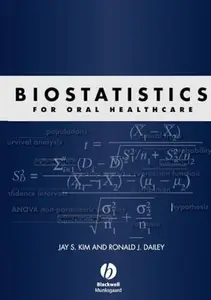 Free Download Biostatistics for Oral Healthcare By Jay S. Kim, Ronald J. Dailey(auth.) 2007 | 330 Pages | ISBN: 081382818X | PDF | 5 MB Biostatistics for Oral Healthcare offers students, practitioners and instructors alike a comprehensive guide to mastering biostatistics and their application to oral healthcare. Drawing on situations and methods from dentistry and oral healthcare, this book provides a thorough treatment of statistical concepts in order to promote in-depth and correct comprehension, supported throughout by technical discussion and a multitude of practical examples.Content: Chapter 1 Introduction (pages 1-3): Chapter 2 Summarizing Data and Clinical Trials (pages 5-25): Chapter 3 Measures of Central Tendency, Dispersion, and Skewness (pages 27-53): Chapter 4 Probability (pages 55-79): Chapter 5 Probability Distributions (pages 81-102): Chapter 6 Sampling Distributions (pages 103-111): Chapter 7 Confidence Intervals and Sample Size (pages 113-126): Chapter 8 Hypothesis Testing: One?Sample Case (pages 127-157): Chapter 9 Hypothesis Testing: Two?Sample Case (pages 159-179): Chapter 10 Categorical Data Analysis (pages 181-201): Chapter 11 Regression Analysis and Correlation (pages 203-225): Chapter 12 One?Way Analysis of Variance (pages 227-243): Chapter 13 Two?Way Analysis of Variance (pages 245-256): Chapter 14 Non?Parametric Statistics (pages 257-277): Chapter 15 Survival Analysis (pages 279-298):  Free Download Biomaterials Science: Processing, Properties and Applications II: Ceramic Transactions, Volume 237 By 2012 | 268 Pages | ISBN: 111827332X | PDF | 8 MB With contributed papers from the 2011 Materials Science and Technology symposia, this is a useful one-stop resource for understanding the most important issues involved in the processing, properties, and applications of biomaterials science. Logically organized and carefully selected, the articles cover the themes of the symposia: Next Generation Biomaterials: and Surface Properties of Biomaterials. An essential reference for government labs as well as academics in mechanical and chemical engineering, materials and or ceramics, and chemistry.Content:  Free Download Biomaterials Science - Processing, Properties, and Applications, Volume 228 By 2011 | 190 Pages | ISBN: 1118060016 | PDF | 6 MB This book contains 18 papers from the Next Generation Biomaterials and Surface Properties of Biomaterials symposia held during the 2010 Materials Science and Technology (MS&T'10) meeting, October 17-21, 2010, Houston, Texas. Topics include: Biocompatible Coatings; Drug Delivery and Anti-Microbial Coatings; Ceramic and Metallic Biomaterials; Biomaterials for Tissue Engineering; and Surface Modification.Content: 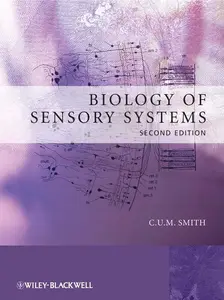 Free Download Biology of Sensory Systems, Second Edition By C. U. M. Smith(auth.) 2009 | 514 Pages | ISBN: 0470518626 | PDF | 37 MB Since publication of the first edition, huge developments have taken place in sensory biology research and new insights have been provided in particular by molecular biology. These show the similarities in the molecular architecture and in the physiology of sensory cells across species and across sensory modality and often indicate a common ancestry dating back over half a billion years. Biology of Sensory Systemshas thus been completely revised and takes a molecular, evolutionary and comparative approach, providing an overview of sensory systems in vertebrates, invertebrates and prokaryotes, with a strong focus on human senses. Written by a renowned author with extensive teaching experience, the book covers, in six parts, the general features of sensory systems, the mechanosenses, the chemosenses, the senses which detect electromagnetic radiation, other sensory systems including pain, thermosensitivity and some of the minority senses and, finally, provides an outline and discussion of philosophical implications. New in this edition:Greater emphasis on molecular biology and intracellular mechanisms New chapter on genomics and sensory systems Sections on TRP channels, synaptic transmission, evolution of nervous systems, arachnid mechanosensitive sensilla and photoreceptors, electroreception in the Monotremata, language and the FOXP2 gene, mirror neurons and the molecular biology of pain Updated passages on human olfaction and gustation. Over four hundred illustrations, boxes containing supplementary material and self-assessment questions and a full bibliography at the end of each part make Biology of Sensory Systems essential reading for undergraduate students of biology, zoology, animal physiology, neuroscience, anatomy and physiological psychology. The book is also suitable for postgraduate students in more specialised courses such as vision sciences, optometry, neurophysiology, neuropathology, developmental biology. Praise from the reviews of the first edition:"An excellent advanced undergraduate/postgraduate textbook." ASLIB BOOK GUIDE"The emphasis on comparative biology and evolution is one of the distinguishing features of this self-contained book. .... this is an informative and thought-provoking text..." TIMES HIGHER EDUCATIONAL SUPPLEMENTContent: Chapter 1 Elements (pages 1-18): Chapter 2 Membranes, Action Potentials, Synapses (pages 19-30): Chapter 3 General Features of Sensory Systems (pages 31-39): Chapter 4 Classification and Phylogeny (pages 41-56): Chapter 5 Genes, Genomics and Neurosensory Systems (pages 57-72): Chapter 6 Mechanosensitivity of Cell Membranes (pages 75-83): Chapter 7 Kinaesthesia (pages 85-97): Chapter 8 Touch (pages 99-121): Chapter 9 Equilibrium and Hearing: The Uses of Hair Cells (pages 123-146): Chapter 10 Cerebral Analysis (pages 147-185): Chapter 11 Chemosensitivity in Prokaryocytes (pages 189-194): Chapter 12 Mammalian Chemo?Enteroreceptors (pages 195-201): Chapter 13 Gustation (pages 203-217): Chapter 14 Olfaction (pages 219-243): Chapter 15 Invertebrate Vision (pages 253-279): Chapter 16 The Human Eye (pages 281-314): Chapter 17 The Retina (pages 315-351): Chapter 18 Visual Pathways and Cortices (pages 353-378): Chapter 19 Other Vertebrate Visual Systems (pages 379-412): Chapter 20 Thermosensitivity (pages 415-421): Chapter 21 Minority Senses (pages 423-436): Chapter 22 Pain (pages 437-461): Chapter 23 Summing Up (pages 465-478): Chapter 24 Philosophical Postscript (pages 479-495): 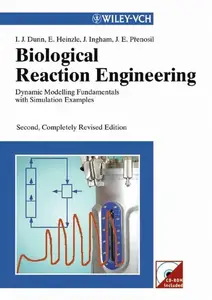 Free Download Biological Reaction Engineering: Dynamic Modelling Fundamentals with Simulation Examples, Second Edition By Dr. Irving J. Dunn, Professor Dr. Elmar Heinzle, Dr. John Ingham, Dr. Jiri E. Prenosil(auth.) 2003 | 521 Pages | ISBN: 3527307591 | PDF | 28 MB In this book, the modelling of dynamic biological engineering processes is presented in a highly understandable way using the unique combination of simplified fundamental theory and direct hands-on computer simulation. The mathematics is kept to a minimum, and yet the 60 examples supplied on a CD-ROM illustrate almost every aspect of biological engineering science. Each example is described in detail, including the model equations. The programms are written in the modern user-friendly simulation language Berkeley Madonna, which can be run on both Windows PC and Power-Macintosh computers. Madonna solves models comprising many ordinary differential equations using very simple programming, including arrays. It is so powerful that the model parameters may be defined as "sliders", which allow the effect of their change on the model behavior to be seen almost immediately. Data may be included for curve fitting, and sensitivity or multiple runs may be performed. The results can be seen simultaneously on multiple-graph windows or by using overlays. The examples can be varied to fit any real situation, and the suggested exercises provide practical guidance. The extensive experience of the authors, both in university teaching and international courses, is reflected in this well-balanced presentation, which is suitable for the teacher, the student, the biochemist or the engineer. Content: Chapter 1 Modelling Principles (pages 9-53): Chapter 2 Basic Bioreactor Concepts (pages 55-66): Chapter 3 Biological Kinetics (pages 67-100): Chapter 4 Bioreactor Modelling (pages 101-116): Chapter 5 Mass Transfer (pages 117-143): Chapter 6 Diffusion and Biological Reaction In Immobilized Biocatalyst Systems (pages 145-160): Chapter 7 Automatic Bioprocess Control Fundamentals (pages 161-179): Chapter 8 Simulation Examples of Biological Reaction Processes Using Berkeley Madonna: Sections 8.1 ? 8.2 (pages 192-224): Chapter 8 Simulation Examples of Biological Reaction Processes Using Berkeley Madonna: Section 8.3 (pages 224-257): Chapter 8 Simulation Examples of Biological Reaction Processes Using Berkeley Madonna: Sections 8.4.1 ? 8.4.7 (pages 257-289): Chapter 8 Simulation Examples of Biological Reaction Processes Using Berkeley Madonna: Sections 8.4.8 ? 8.4.13 (pages 290-317): Chapter 8 Simulation Examples of Biological Reaction Processes Using Berkeley Madonna: Section 8.5 (pages 318-353): Chapter 8 Simulation Examples of Biological Reaction Processes Using Berkeley Madonna: Section 8.6 (pages 354-371): Chapter 8 Simulation Examples of Biological Reaction Processes Using Berkeley Madonna: Section 8.7 (pages 371-399): Chapter 8 Simulation Examples of Biological Reaction Processes Using Berkeley Madonna: Sections 8.8.1 ? 8.8.5 (pages 400-425): Chapter 8 Simulation Examples of Biological Reaction Processes Using Berkeley Madonna: Sections 8.8.6 ? 8.8.9 (pages 425-450): Chapter 8 Simulation Examples of Biological Reaction Processes Using Berkeley Madonna: Section 8.9 (pages 451-482):  Free Download Bioethics for beginners: 60 Cases and Cautions from the Moral Frontier of Healthcare By Glenn McGee(auth.) 2012 | 181 Pages | ISBN: 0470659114 | PDF | 1 MB How far is too far? 60 cases illustrating modern bioethical dilemmasBioethics for Beginners maps the giant dilemmas posed by new technologies and medical choices, using 60 cases taken from our headlines, and from the worlds of medicine and science. This eminently readable book takes it one case at a time, shedding light on the social, economic and legal side of 21st century medicine while giving the reader an informed basis on which to answer personal, practical questions. Unlocking the debate behind the headlines, this book combines clear thinking with the very latest in science and medicine, enabling readers to decide for themselves exactly what the scientific future should hold. Content: Chapter One Tip?Toe when Walking on the Bleeding Edge (pages 1-16): Chapter Two Everybody Lies (pages 17-33): Chapter Three The Genome Isn't What It Used to Be (pages 34-39): Chapter Four Reproduce at Your Own Peril (pages 40-56): Chapter Five Don't Sweat the Nano?Sized Stuff (pages 57-68): Chapter Six The State Will Protect Your Health Right Up Until It Doesn't (pages 69-85): Chapter Seven "Do No Harm" Has Become "Care for Yourself" (pages 86-97): Chapter Eight You Aren't Dead Until Someone Tells You So (pages 98-109): Chapter Nine Eat Only Food for Thought (pages 110-116): Chapter Ten Beware of Ideologues and Demagogues (pages 117-145): If you are looking for educational materials, our website offers free downloadable online courses. From computer science to business and humanities. The courses are taught by professors from leading universities around the world, and you can earn a certificate of completion from many of them. There is also a wide range of courses available, from engineering to languages and social sciences. The video courses are taught by professors from the best universities, and you can get a certificate of completion from many of them. You can also search for free software and educational resources on Google or other search engines. Just remember to read reviews and check the website's reputation before downloading anything. Dl4All is download free for all software and educational resource. With a little searching, you can download what you need for free without spending any money. |

 :
:
