

 :
:
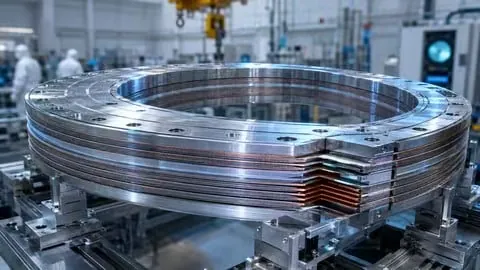
Nuclear Fusion Engineering
MP4 | Video: h264, 1920x1080 | Audio: AAC, 44.1 KHz
Language: English | Size: 11.48 GB | Duration: 8h 9m
Plasma Confinement, HTS Magnets, Tritium Engineering & Commercial Fusion — For Engineers
What you'll learn
Explain fusion physics, D-T reactions, the Lawson criterion, and why 100 million°C plasma confinement is an achievable engineering challenge.
Compare magnetic confinement systems including tokamaks, stellarators, and spherical tokamaks, and understand key design trade-offs.
Understand fusion magnet engineering, including Nb3Sn and REBCO superconductors, quench protection, and high-field magnets.
Assess fusion materials challenges including neutron damage, plasma-facing materials, and reduced-activation structural alloys.
Understand the tritium fuel cycle, breeding blankets, supply constraints, isotope separation, and fuel-cycle closure.
Evaluate fusion regulation, licensing, safety standards, and regulatory frameworks in the UK, US, and internationally.
Compare major fusion programmes including ITER, SPARC, W7-X, Helion, TAE, General Fusion, and Zap Energy.
Understand divertor engineering, plasma exhaust management, detachment, and advanced heat-load control concepts.
Assess fusion economics, project finance, electricity costs, and the key engineering risks facing commercial deployment.
Apply fusion knowledge to evaluate projects, interpret technical documentation, assess vendor claims, and support clients.
Requirements
Familiarity with energy systems or thermodynamics is useful but not required — the course builds the fusion context from first principles before moving into advanced engineering
No prior plasma physics or nuclear experience is needed — the foundations section covers everything required before the magnet, materials, and tritium sections
No software tools required — this is a conceptual, applied, and programme-informed engineering course, not a plasma simulation tutorial
Engineers at any career stage will benefit: early-career professionals building their fusion engineering foundation, mid-career engineers from nuclear, aerospace, or materials backgrounds transitioning toward fusion, and senior engineers who need a structured technical briefing on the commercial fusion landscape
Description
Fusion is no longer a research programme. It is an engineering problem.More than six billion dollars has been invested in commercial fusion ventures since 2021. ITER — the world's largest fusion experiment — is under construction in southern France. Commonwealth Fusion Systems is building SPARC, a compact tokamak targeting net energy by the end of this decade. Helion Energy has signed a power purchase agreement with Microsoft. The UK has passed dedicated fusion legislation. The question is no longer whether fusion will happen. The question is whether you will have the engineering knowledge to work on it when it does.This course gives you that knowledge.Nuclear Fusion Engineering is a structured, engineering-grade course covering the full technical landscape of fusion energy — from the plasma physics that makes fusion work, through the magnet systems, materials science, and tritium fuel cycle that make it buildable, to the regulatory frameworks and commercial programmes that will make it operational.You will start with the physics. The Lawson criterion. The deuterium-tritium reaction. Why a hundred million degrees is required and how magnetic confinement makes it possible. Not as an academic exercise — as the engineering foundation you need before you can assess a confinement device, evaluate a magnet specification, or read a tritium breeding analysis.The magnet engineering section is the technical core of the commercial fusion revolution. You will understand why high-temperature superconducting magnets — specifically REBCO tape technology — have transformed the economics of compact fusion devices, what Commonwealth Fusion Systems demonstrated with their twenty-tesla coil test in 2021, and what the manufacturing and qualification challenges are for scaling HTS magnet production to a commercial fleet.The materials science section addresses what is often called the hardest unsolved engineering problem in fusion: designing structural components that survive fourteen-megaelectronvolt neutron bombardment for decades. You will understand displacements per atom as the primary damage metric, the role of reduced-activation ferritic martensitic steels and oxide dispersion strengthened alloys, and why the IFMIF-DONES facility in Spain is the essential missing data source before DEMO can be fully designed.The tritium fuel cycle section covers what no popular fusion course addresses honestly: the global tritium supply is less than four kilograms per year from existing fission reactors, a commercial deuterium-tritium power plant needs a tritium breeding ratio above one-point-zero-five to be self-sufficient, and no reactor has yet demonstrated this at scale. You will understand lithium breeding blanket concepts, isotope separation, tritium accountancy, and the engineering path from plasma exhaust to fuel reinjection.The final section covers the commercial and regulatory landscape as it stands in 2025: ITER's revised programme, the private fusion sector, the UK Fusion Energy Governance Act, the US Nuclear Regulatory Commission's framework for fusion facilities, and an honest assessment of the timelines, costs, and technical risks that remain.Five expansion modules add engineering depth: blanket and thermal systems design, an ITER engineering deep dive, divertor engineering and plasma exhaust, fusion project finance and licensing, and environmental lifecycle and waste.Every lesson is built for engineers — not for a general audience, not for investors, and not for physicists who already know the plasma physics but need the engineering. If you work in nuclear, energy, advanced manufacturing, or materials science — or you are tracking the commercial fusion sector professionally — this course builds the technical foundation you need.Built by a practising engineer with over fifteen years delivering safety-critical projects across energy infrastructure. The engineering is correct. The timelines are honest. The commercial context is current.
Plasma and fusion engineers who want a structured engineering-level course that connects plasma physics to the real challenges of building and operating a commercial fusion power plant,Nuclear, mechanical, and materials engineers from the fission sector who need to understand how fusion engineering differs from — and builds on — the disciplines they already practice,Magnet, cryogenic, and superconducting systems engineers from the accelerator, MRI, or aerospace sectors who are tracking the commercial fusion opportunity and need the fusion-specific engineering context,Tritium and nuclear fuel cycle engineers who need to understand the unique challenges of the deuterium-tritium fuel cycle — particularly tritium breeding, self-sufficiency, and accountancy — that have no direct fission equivalent,EPC, project, and procurement engineers joining fusion facility programmes who need rapid technical intelligence before working on procurement specifications, vendor assessments, or construction planning,Safety, regulatory, and licensing professionals who need engineering-grade understanding of fusion facility design before engaging with the UK ONR, the US NRC, or the IAEA on fusion safety standards,Energy consultants, analysts, and investment professionals who need the technical foundation to evaluate commercial fusion programme claims, assess engineering risk, and advise clients or allocate capital with genuine understanding
Homepage
https://www.udemy.com/course/nuclear-fusion-engineering/
Buy Premium From My Links To Get Resumable Support,Max Speed & Support Me
Rapidgator
owqkd.Nuclear.Fusion.Engineering.part01.rar.html
owqkd.Nuclear.Fusion.Engineering.part02.rar.html
owqkd.Nuclear.Fusion.Engineering.part03.rar.html
owqkd.Nuclear.Fusion.Engineering.part04.rar.html
owqkd.Nuclear.Fusion.Engineering.part05.rar.html
owqkd.Nuclear.Fusion.Engineering.part06.rar.html
owqkd.Nuclear.Fusion.Engineering.part07.rar.html
owqkd.Nuclear.Fusion.Engineering.part08.rar.html
owqkd.Nuclear.Fusion.Engineering.part09.rar.html
owqkd.Nuclear.Fusion.Engineering.part10.rar.html
owqkd.Nuclear.Fusion.Engineering.part11.rar.html
owqkd.Nuclear.Fusion.Engineering.part12.rar.html
AlfaFile
owqkd.Nuclear.Fusion.Engineering.part01.rar
owqkd.Nuclear.Fusion.Engineering.part02.rar
owqkd.Nuclear.Fusion.Engineering.part03.rar
owqkd.Nuclear.Fusion.Engineering.part04.rar
owqkd.Nuclear.Fusion.Engineering.part05.rar
owqkd.Nuclear.Fusion.Engineering.part06.rar
owqkd.Nuclear.Fusion.Engineering.part07.rar
owqkd.Nuclear.Fusion.Engineering.part08.rar
owqkd.Nuclear.Fusion.Engineering.part09.rar
owqkd.Nuclear.Fusion.Engineering.part10.rar
owqkd.Nuclear.Fusion.Engineering.part11.rar
owqkd.Nuclear.Fusion.Engineering.part12.rar
No Password - Links are Interchangeable